
Rapid artificial intelligence expansion is driving up electricity demands, creating unexpected air pollution and health consequences far away from physical facilities according to a study from MIT researchers published in Environmental Research Letters.
The research team estimates that the extra air pollution generated by data center power consumption in 2023 resulted in roughly 650 premature deaths nationwide. That figure accounts for about 5.3 percent of all electricity-related mortality in the United States for that year.
While the heavy data center demand concentrates in states like Virginia and Texas, the highest rates of premature deaths per capita occur elsewhere. Midwestern states shoulder a disproportionate share of the health burden, as older fossil fuel generators ramp up to feed distant servers.
“When people think about the negative impacts of data centers, they usually focus on the neighbors. But our study indicates that the air quality impacts of data centers are very widespread across a large region. Even if you don’t think you are affected because there is not a data center near you, think again,” said Noelle Selin, a professor in the MIT Institute for Data, Systems, and Society (IDSS) and the Department of Earth, Atmospheric and Planetary Sciences (EAPS); director of the Center for Sustainability Science and Strategy; and senior author of the study.
MIT Model Tracks Pollution Flow Across Power Grid
To track how power usage translates to distant smog and soot, the MIT researchers built a modeling framework. This system simulates how electricity demand propagates across the nation’s interconnected power grid hour by hour.
The model evaluated more than 10,000 electricity generators across the United States. It tracked nitrogen oxides and sulfur dioxide emissions, which contribute heavily to ground-level ozone and fine particulate matter known as PM2.5.
Data centers operate continuously to process computing tasks. When they draw power, regional grid operators frequently fire up natural gas plants or older coal-fired units.
“Generators that respond to additional electricity demand are often natural gas plants, although the response varies by place and hour,” said Yuang (Albert) Chen, an MIT graduate student.
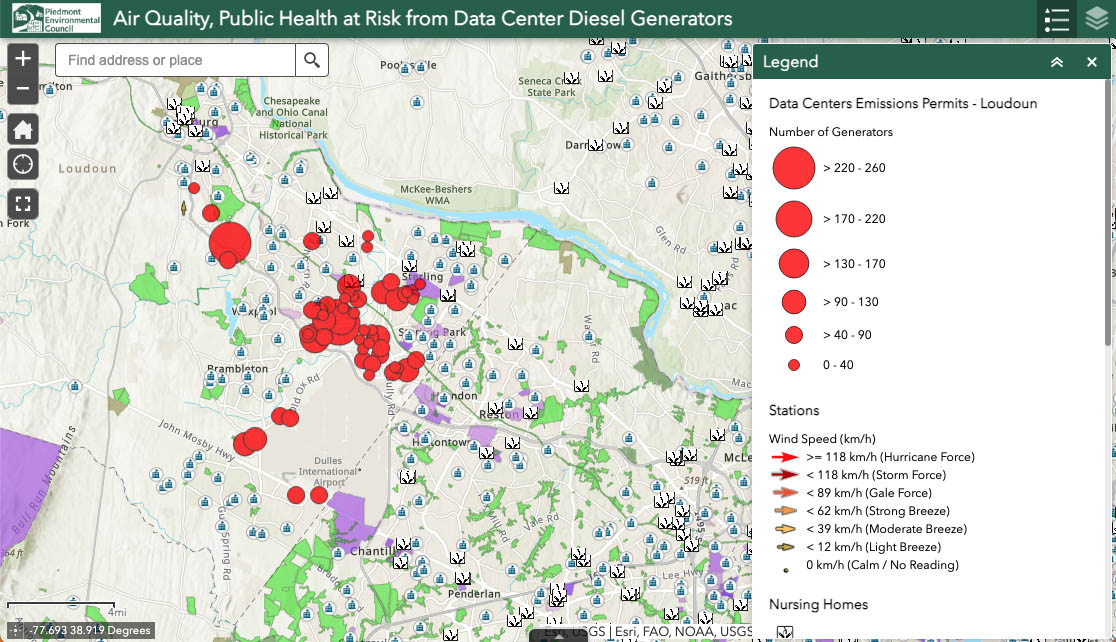
States such as Iowa, Nevada, South Dakota, and Kansas recorded the highest per capita premature mortality rates. Much of the demand originates hundreds of miles away in northern Virginia, which triggers power generation from older plants in the Ohio Valley.
Ammonia and Industrial Emissions Worsen Rural Health Risks
Atmospheric chemistry compounds the problem in downwind agricultural regions. Fertilizer ammonia in states like Nebraska and Iowa mixes with industrial emissions to accelerate the formation of fine particulate matter.
Rural communities face higher mortality risks from these regional emissions than dense urban populations do. The Lawrence Berkeley National Laboratory estimated that data center electricity demands accounted for roughly 4 percent of total U.S. energy demand in 2023 and caused about 4.4 percent of overall national emissions.
Those percentages continue to climb as infrastructure construction accelerates. The research team plans to examine the air quality consequences of onsite generation and explore whether flexible data center operations could mitigate grid strain.
Noelle Selin, an atmospheric chemist and associate professor at MIT, first joined the institute in 2007 as a postdoctoral fellow after completing a PhD at Harvard on mercury cycling and a Fulbright fellowship at the European Environment Agency in Copenhagen.
Her research group has since quantified the health and economic co-benefits of climate policy, finding in a 2014 study that air-quality improvements could recoup up to 10.5 times the cost of a cap-and-trade program.
“This is a good baseline to think about where we should build data centers and how we should supply those data centers with electricity,” Chen said.
Related reading

Trade Winds Strengthen Bringing Showers, Small Craft Advisory
Trade winds will strengthen to breezy and strong speeds heading into the weekend, bringing scattered showers to windward...

UK Braced for Coldest Autumn Night as -10C Forecast for Weekend
The UK braced for its coldest night of the autumn as a northerly wind swept Arctic air across...

Weekend Live Music, Festivals, Holiday Events, Theater, Comedy and 5K Across Metro Atlanta Nov. 20-22, 2026
Live music, community festivals and holiday stage productions fill venues across metro Atlanta and North Georgia from Nov....
Dean Health Plan by Medica Invests $120,000 in Muir Elementary for Student Safety, Learning Spaces and Family Support
A $120,000 investment from Dean Health Plan by Medica is reshaping John Muir Elementary School, targeting playground safety,...