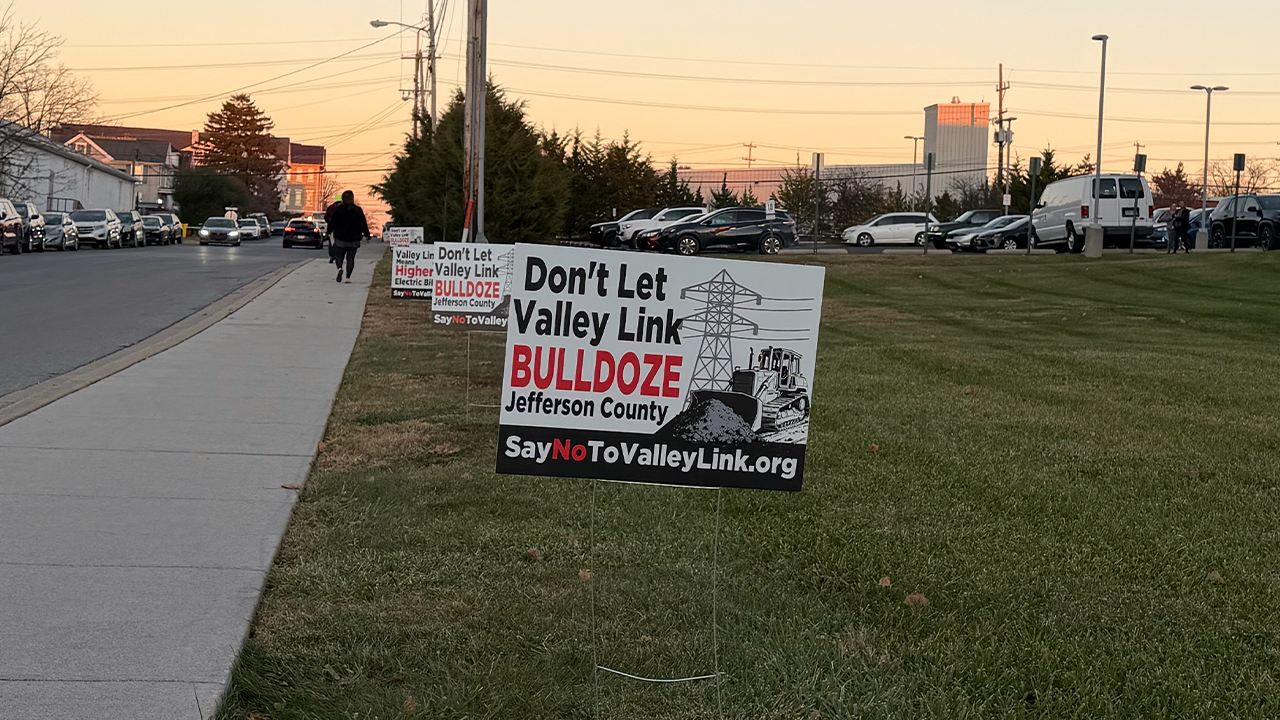
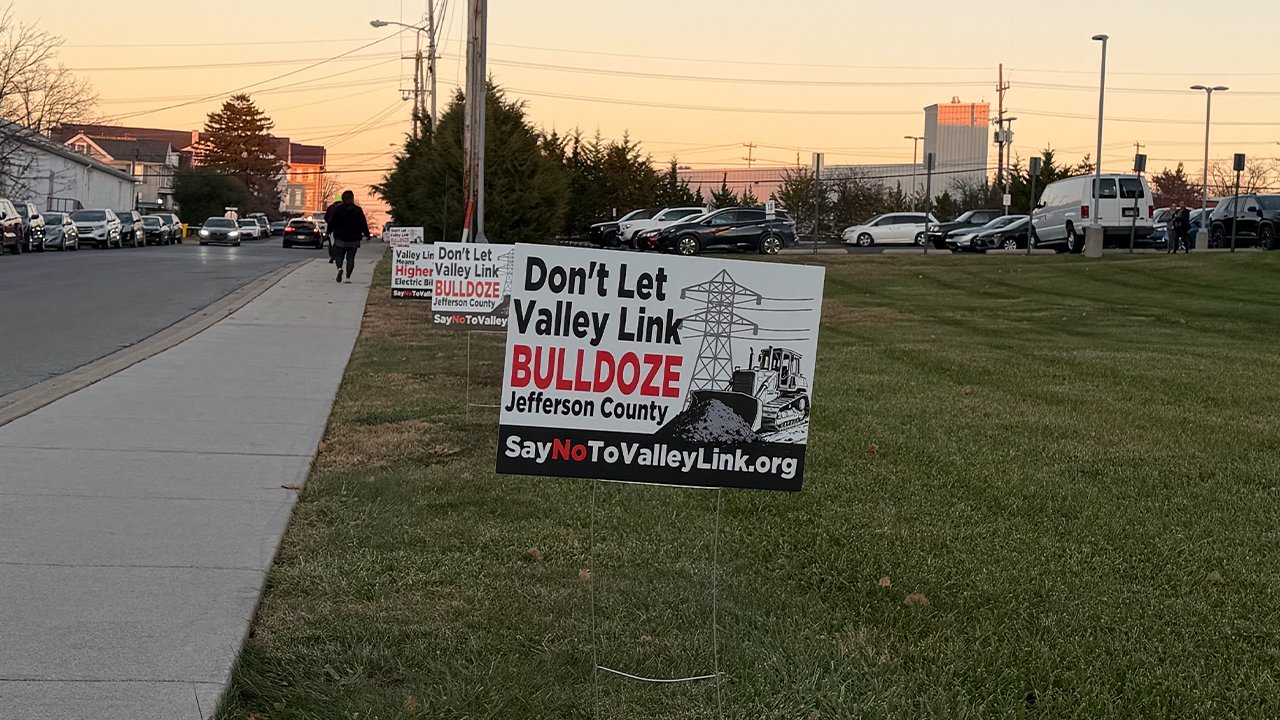
On Wednesday night in Ranson, West Virginia, a heated clash erupted at an open house as local residents gathered en masse to demand answers regarding the Valley Link Transmission Project, Fox News reported.
Critics of the project contend that the planned electricity corridor will carve a path through the Mountain State to deliver power to data centers in Northern Virginia. However, attendees asserted that achieving the goal does not excuse the methods used, specifically highlighting the condemnation of private land via eminent domain.
When Dan McGinn, a native West Virginian, spoke about why he attended, he told Fox News Digital that he and other Jefferson County residents received “a flyer in the mail, just a flyer in the mail, telling you they’re going to take your property.”
“Just a cheap flyer, nothing personal, no details, just a line on a map saying they are going to take your property.”
Dan McGinn told Fox News Digital.
Melissa Hope, a sixth-generation farm owner and one of the organizers of the protest complete with promised barbecue and cupcakes, explained her opposition. She noted she is near the lines rather than directly in their path, but has spent the past four or five months trying to share the word.
“We are going to bear the cost of these lines, but no benefit, especially in Jefferson County. Our history and our beauty are part of our economy.”
Melissa Hope told Fox News Digital.
Outside the civic center, a crane stood draped in a banner illustrating the planned 180-foot height of the transmission lines, which would dwarf every building in Ranson and nearby Charles Town. Both cities have experienced enormous growth in housing stock in recent years, fueling widespread concerns about strain on local resources and infrastructure.
Valley Link spokesperson Lauren Siburkis addressed the clamor, telling Fox News Digital that more than 7,000 people had offered input prior to Wednesday and their feedback had been taken into account. She described the open house as a second look for residents to examine potential routes so that community input is factored into the final design.
Despite those assurances, property owners remained skeptical while acknowledging broader energy demands. McGinn observed that objectors held diverse viewpoints on the matter.
Ranson, incorporated in 1910 after a 67–2 vote, took its name from Dr. James Ranson, a dentist and farmer. The Charles Town Mining, Manufacturing, and Improvement Company laid out the town on 850 acres in 1890, with early industry including the Goetz Saddlery and Vulcan Road Machine Company.
Its population surged from 2,951 in 2000 to 4,440 in 2010, a rise of over 50 percent, and reached 5,433 by 2020. Since 2004 the city has annexed roughly 5,000 acres, expanding its area to about nine square miles.
“We have pro-data center people and anti-data center people, pro-power line people and anti-power line people … but this power line is indefensible.”
McGinn said to Fox News Digital.
Danny Lutz, the conservation district supervisor of Jefferson County, expressed doubts about whether the power was genuinely needed, characterizing the project as a long-term solution to a short-term problem while referencing alternative tech initiatives like space-based data centers.
Related reading
Trade Winds Strengthen Bringing Showers, Small Craft Advisory
Trade winds will strengthen to breezy and strong speeds heading into the weekend, bringing scattered showers to windward...

UK Braced for Coldest Autumn Night as -10C Forecast for Weekend
The UK braced for its coldest night of the autumn as a northerly wind swept Arctic air across...

Weekend Live Music, Festivals, Holiday Events, Theater, Comedy and 5K Across Metro Atlanta Nov. 20-22, 2026
Live music, community festivals and holiday stage productions fill venues across metro Atlanta and North Georgia from Nov....
Dean Health Plan by Medica Invests $120,000 in Muir Elementary for Student Safety, Learning Spaces and Family Support
A $120,000 investment from Dean Health Plan by Medica is reshaping John Muir Elementary School, targeting playground safety,...