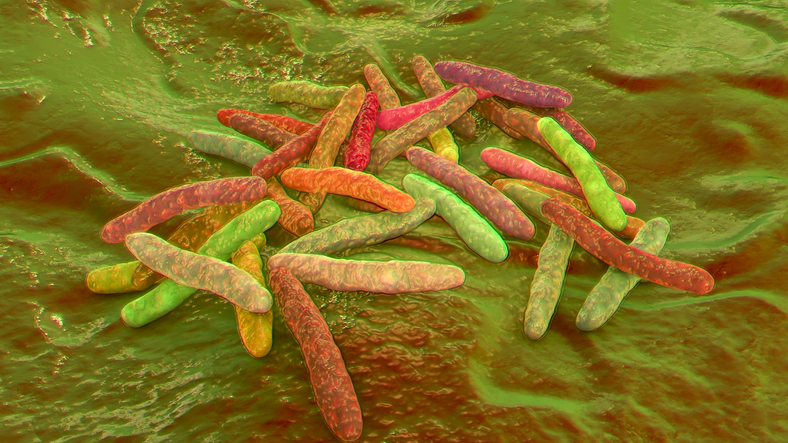
Researchers at the University of Massachusetts Amherst have developed an artificial intelligence model, MycoPermeNet, designed to identify chemical compounds capable of penetrating the outer membrane of Mycobacterium tuberculosis. Published in Nature Microbiology, the study addresses the primary barrier to treating the world’s deadliest single-agent infection, which caused 1.23 million deaths in 2024.
Mycobacterium tuberculosis (Mtb) presents a unique survival strategy that complicates medical intervention. The bacterium is shielded by two membranes, with the outer layer acting as a highly selective barrier that keeps most antimicrobial compounds out.
“Not only does it have two membranes that protect the cell from antimicrobial chemical compounds that we might use to kill it, its outer membrane is unlike any other biological barrier out there.”
The Challenge of Mycomembrane Drug Resistance
Because this mycomembrane effectively blocks most drugs, the medical community has faced a persistent struggle to develop effective treatments. Traditional drug discovery has relied on low-throughput experimental screens, which are often slow and resource-intensive when attempting to map the vast chemical space of potential antibiotics.

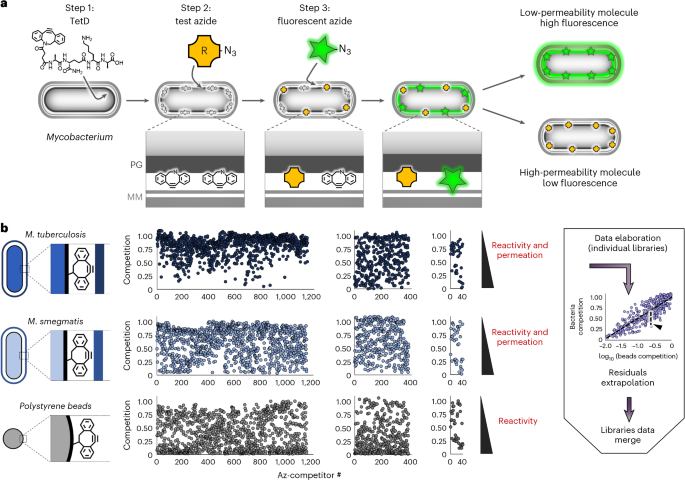
To train an effective AI model, researchers first needed a robust dataset of how various chemical compounds interact with the Mtb membrane. In 2023, Sloan Siegrist collaborated with Marcos Pires, a professor of chemistry at the University of Virginia, to publish the Peptidoglycan Accessibility Click-Mediated AssessmeNt (PAC-MAN).
This method allows scientists to test numerous compounds in parallel. The experimental procedure involved using the double auxotroph Mtb mc26206 strain, provided by Dr. William Jacobs. The researchers screened multiple libraries, including 40 commercially available azide compounds, the Enamine library, and the Dong/Sharpless azide library, to establish a clear picture of compound permeability.
Computational Modeling with MycoPermeNet
With the PAC-MAN screening data as a foundation, the team integrated computational biology to refine their search for effective drugs. Anna Green, a researcher at UMass Amherst’s Manning College of Information and Computer Sciences, joined the effort to interpret the complex data.

“Small molecules can be particularly difficult to analyze computationally. Because they come in all different sizes with a wide range of molecular connections, you can’t describe them with a single measurement, by weight, say, or size.”
The resulting neural network, MycoPermeNet, predicts a compound’s ability to permeate the Mtb membrane based solely on its chemical structure. This tool helps researchers understand which physical properties are essential for overcoming the bacterium’s defenses. The application of machine learning in this context is part of a broader shift in the academic sector to accelerate antibiotic discovery by exploring the “dark matter” of chemical space—an estimated 10^60 potential compounds.
Accelerating Antibiotic Discovery Through Virtual Screening
The integration of AI into antibiotic research aims to overcome the scarcity of novel drug classes. By predicting activity in silico before moving to wet-lab testing, the researchers hope to significantly increase the hit rate of potential treatments. This process allows labs to prioritize a smaller, high-probability subset of molecules for synthesis and biological evaluation.
“The mycomembrane lets some molecules through and keeps others out. There must be something about this membrane, and about the chemistry of each molecule, that decides which ones get in—and our combined tools help us figure out which ones can get through, and why.”
This methodology provides a roadmap for addressing the unmet need for effective antibiotics against multidrug-resistant pathogens. By identifying chemical features that facilitate membrane permeation, the UMass Amherst team has created a framework that could eventually lead to new therapeutic options for tuberculosis, moving beyond the limitations of traditional, low-throughput screening.
Find more reporting in our Science section.
Worth a look

Moon Passes in Front of Jupiter During Rare Occultation
Observers across North America watched the Moon conceal Jupiter on Tuesday morning in a rare planetary occultation that...

Researchers Suggest Animals May Have Evolved 200 Million Years Earlier
Using scanning electron microscopy on more than 140 samples, researchers analyzed the Kheseen Biota in Mongolia to test...
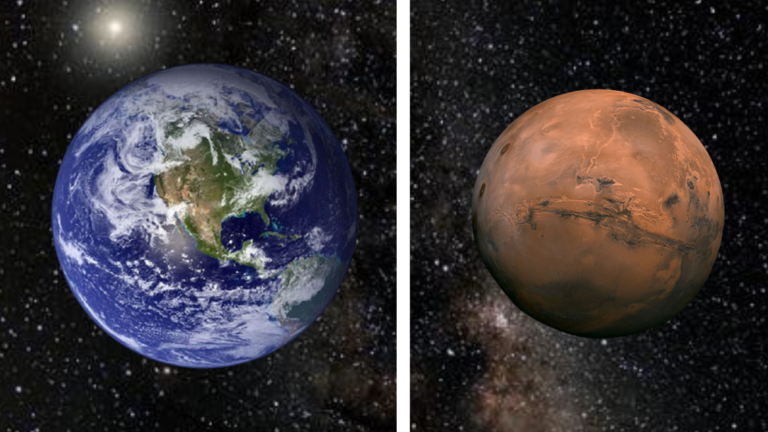
University of Copenhagen Researchers Reveal Earth and Mars Formed Differently
Earth and Mars formed side by side from the same cosmic cloud roughly 4.5 billion years ago, yet...

Moon to Occult Jupiter Over Eastern North America on October 6
Skywatchers across much of eastern North America can watch a rare lunar occultation early Tuesday morning as a...