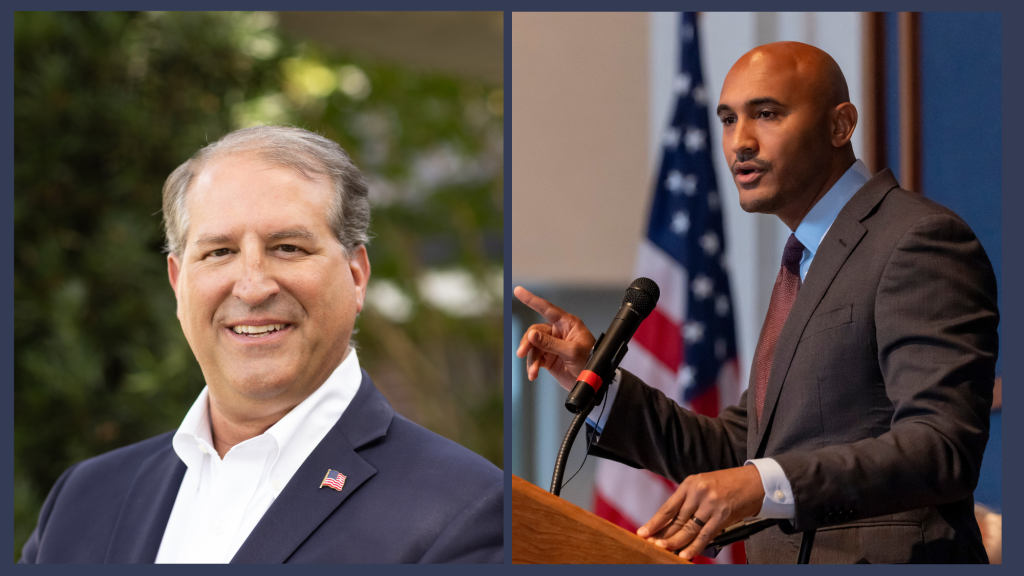
In the deep-red heart of south Alabama, a congressional race that once looked like a Republican lock is suddenly transforming into a high-stakes toss-up. With just 11 days until the midterms, Democratic incumbent Shomari Figures is fighting to hold Alabama’s 2nd District against Republican State Rep. Rhett Marques in a contest that has become a national focal point for voter turnout and the impact of redistricting.
The shift in momentum is reflected in the data. As reported, the Cook Political Report shifted its rating for the race from “likely Republican” to “lean Republican,” suggesting that Figures may have a path to victory if he can mobilize a coalition of voters frustrated by high prices.
The Battle Over the Map
The tension in this race isn’t just about candidates; it’s about the lines on the map. This year, Republicans redrew the 2nd District, a move Figures argues was a deliberate attempt to dilute the influence of minority voters. According to Alabama Daily News, the percentage of Black voters in the district dropped from nearly 49% under the previous court-drawn map to 40% under the new legislative lines.
Sabato’s Crystal Ball shifts AL-2 to a ‘toss-up’ between Shomari Figures and Rhett MarquesBy @CraigMonger1819 https://t.co/glUPZr8Mgf
Figures hasn’t shied away from this framing. At a rally in Dothan, he told the crowd that officials “took a pen” and “carved out some communities of people who look like me.” For Figures, the strategy is to turn this resentment into turnout.
Pocketbooks Versus Ideology
The two campaigns are running fundamentally different plays. Figures is leaning heavily into “pocketbook issues,” focusing on the rising costs of diesel, fertilizer, and prescriptions. This approach is designed to appeal to voters who feel the pinch of high prices.
New – As Shomari Figures and Rhett Marques traverse the new 2nd Congressional District, Figures focuses on the economy and redistricting and Marques frames the race as a fight against socialism. #ALPoliticsMy dispatch on Alabama's most competitive congressional race ⬇️ pic.twitter.com/FTMnkkxGia
On the other side, Rhett Marques is framing the election as a cultural and ideological crossroads. At a rally in Pike Road, Marques described the choice as “craziness versus common sense,” warning voters that a Democratic win would pave the way for “DSA crazy communist socialists” to lead the country.
The contrast is sharpest among the voters themselves. While cotton farmer Shep Morris told Alabama Daily News that he believes there is no other choice for voters, others have noted that issues like gas and food costs are primary concerns.
The Influence of National Heavyweights
The 2nd District has become a magnet for national figures and significant capital. AdImpact reports that outside groups and the campaigns have poured roughly $10.7 million into the race. Figures has been joined on the trail by U.S. Sen. Cory Booker and former U.S. Sen. Jon Tester, both of whom have focused on the moral implications of healthcare and agriculture costs.
Marques, meanwhile, carries the weight of the Republican establishment. He was encouraged to run by U.S. Sen. Katie Britt and has received the explicit endorsement of Donald Trump. In a recent social media post, Trump called Marques a “highly respected” leader while labeling Figures as “reckless, radical, and dangerous.”
The Turnout Equation
Ultimately, this race will be decided by who shows up. For the Democrats, the goal is a record-breaking turnout among Black voters to offset the district’s R+7 rating. U.S. Rep. Terri Sewell has emphasized that the current political climate—specifically following the Louisiana v. Callais ruling—makes voting a necessity for the survival of democratic representation in the state.
For the Republicans, the challenge is apathy. Marques has spent his closing pitches urging GOP voters not to take the seat for granted, stressing that flipping the district is essential for maintaining Republican control of the U.S.
WVTM 13 reports that the final outcome may hinge on a $1 million fundraising gap and the effectiveness of the candidates’ closing messages.
Bank of Canada raises benchmark interest rate to 2.50% to curb inflation
The Bank of Canada ended a prolonged "wait-and-see" approach on Wednesday, October 28, 2026, raising its benchmark interest...

Mountain West Power Rankings: New Mexico Top, Wyoming Moves to Third
New Mexico holds the top spot in the Mountain West power rankings, remaining undefeated in conference play following...
James Madison face Troy on October 29 at Bridgeforth Stadium
The James Madison Dukes enter their October 29 matchup against the Troy Trojans as heavy favorites, with sportsbooks...

Charleston Offers $1M to Settle 20-Year Longborough Park Dispute
The City of Charleston is offering $1 million to the Longborough Owner’s Association to settle a near 20-year...