
Due to vast geographical expanses and careful, envelope-by-envelope processing, ballot tallying in Alaska proceeds at a famously deliberate pace.
In the race for the state’s U.S. Senate seat, Democrat Mary Peltola is now just 157 votes short of an outright majority.
The Division of Elections unofficial summary report shows Peltola with 140,637 first-choice votes, or 49.94 percent. Republican Senator Dan Sullivan holds 129,424 votes, or 45.96 percent. Republican Gerald L. Heikes drew 6,002 votes, while Daniel J. Sullivan Jr., a retired Petersburg teacher who shares the senator’s name, drew 4,652 votes. Write-ins accounted for 872 votes.
The Associated Press estimated that 97 percent of the vote had been counted as of 8:29 a.m. Eastern on Sunday without calling the race. A candidate who wins more than half of first-choice votes is elected outright. If no one clears that threshold, the Division of Elections begins a ranked-choice tabulation on November 18.
The arithmetic of remaining ballots
The 157-vote gap refuses to hold still. Each newly counted ballot raises the total required for an absolute majority, meaning Peltola must capture a share of everything left in the unsealed pool. Overseas mail ballots can continue to arrive through November 18.
Alaskans are ready for a Senator who fights to lower costs and take on DC corruption, and when every vote is counted, Mary will deliver for Alaska. pic.twitter.com/LUCb4yUUAM
Sullivan trails by 11,213 votes. Newsweek’s analysis of the AP estimate found that deficit exceeds the total number of Senate votes that appear to remain. For the senator, the math leaves little room on first choices alone.
“Alaskans have spoken, and it is clear that in the coming days Mary Peltola will be officially elected as their next United States Senator,” said Cheryl Bruce, Alaskans for Mary Campaign Manager, in a statement shared with Newsweek.
Ranked-choice tabulations and independent models
If Peltola finishes below a majority after all valid ballots arrive, the contest moves to ranked-choice redistribution. Newsweek ran an independent analysis using open-source software and the Division’s cast vote record covering 282,698 ballots.

That independent model of scanned ballots places Peltola at 51.83 percent, or 143,127 votes, to Sullivan’s 48.16 percent, or 132,985 votes. That run reflects a lead of 10,142 votes, though it excludes hand-counted ballots and items yet to be processed by the state.
Sullivan’s campaign has not conceded the race. “Look forward to a complete and accurate count,” said Nate Adams, a campaign spokesperson, in a statement.
The naming controversy and federal court action
The presence of Daniel J. Sullivan Jr. on the ballot has shadowed the race for months. Drawing upon the AP’s race summary, The New York Times covered how Peltola’s team participated in strategies to bring Sullivan Jr. into the race in order to draw support away from the incumbent.

In an earlier legal challenge, the Justice Department sought to prevent the election results from being certified if the incumbent senator fell short due to votes deflected to Sullivan Jr. A federal judge dismissed that suit on November 1 for lack of standing, writing that segregating ballots to investigate voters would violate the right to a secret ballot. The department appealed the decision.
President Donald Trump posted on Truth Social on November 5 calling Sullivan Jr. “Fake Dan Sullivan.” About a week after Election Day, Trump posted again writing “Dan Sullivan PLUS Dan Sullivan” in reference to the contest.
What comes next in Alaska
On Wednesday, the final ballots mailed from overseas are due. If no candidate secures a majority of first-choice votes, the Division begins its official ranked-choice tabulation, with certification targeted for November 25.
Securing this win would capture the state’s first upper-chamber seat for the party since Mark Begich’s 2014 defeat to Sullivan. If no candidate wins outright, voters’ rankings will determine which candidate captures a majority of the active ballots.

WVSSAC Football Playoffs Move Into Quarterfinal Round – My Buckhannon
The West Virginia Secondary School Activities Commission football playoffs move into the quarterfinal round this weekend with 16...

Jamie D. Brooks to Read From New Memoir at UI Press Event
Author Jamie D. Brooks will read from her new memoir during a special event organized by University of...

Young Paraglider Dies After Reported Emergency Sends Him Crashing Into Field During Illinois Flight
A 21-year-old paraglider died after experiencing a mid-flight emergency and crashing into an Illinois farm field on Saturday....
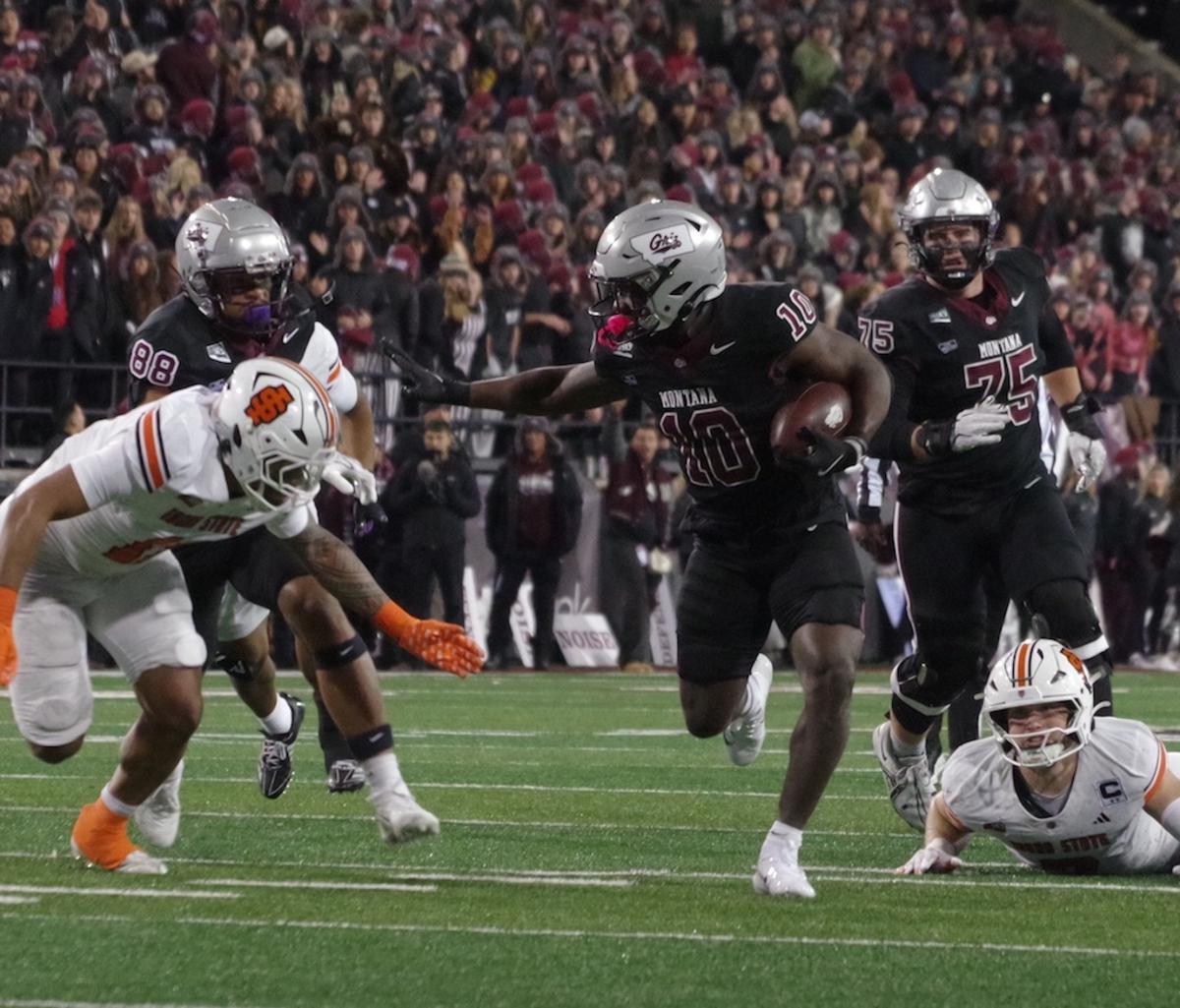
Griz Survive Idaho State’s 460 Yards of Offense – Missoula Current
Montana earned a 38-30 victory on Saturday night at Washington-Grizzly Stadium, as reported by the Missoula Current. The...