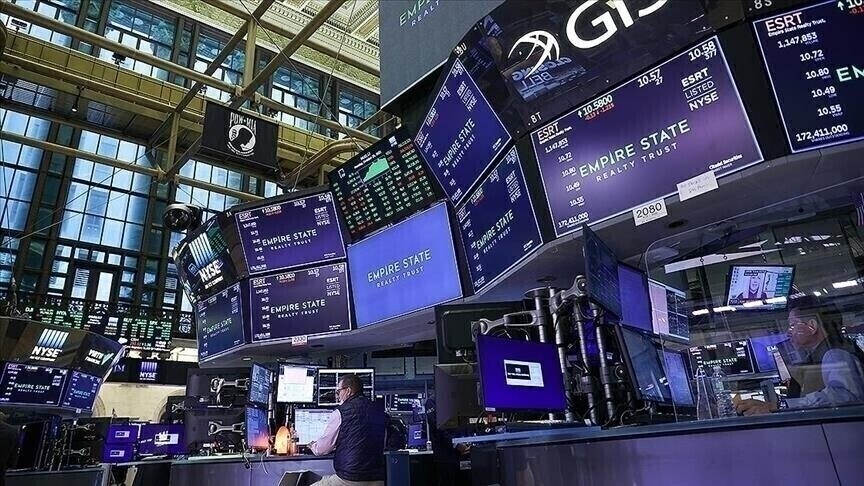
Anthropic’s record-breaking IPO failed to arrest a global selloff in AI-linked stocks on Friday, with Asian chipmakers leading the steepest weekly decline since the pandemic crash of 2020.
Shares fell 8 percent in premarket trading to around $89. The liquidity drain pulled capital from the semiconductor and hardware names that dominate Asian benchmarks.
Asia’s chip-heavy markets bear the brunt
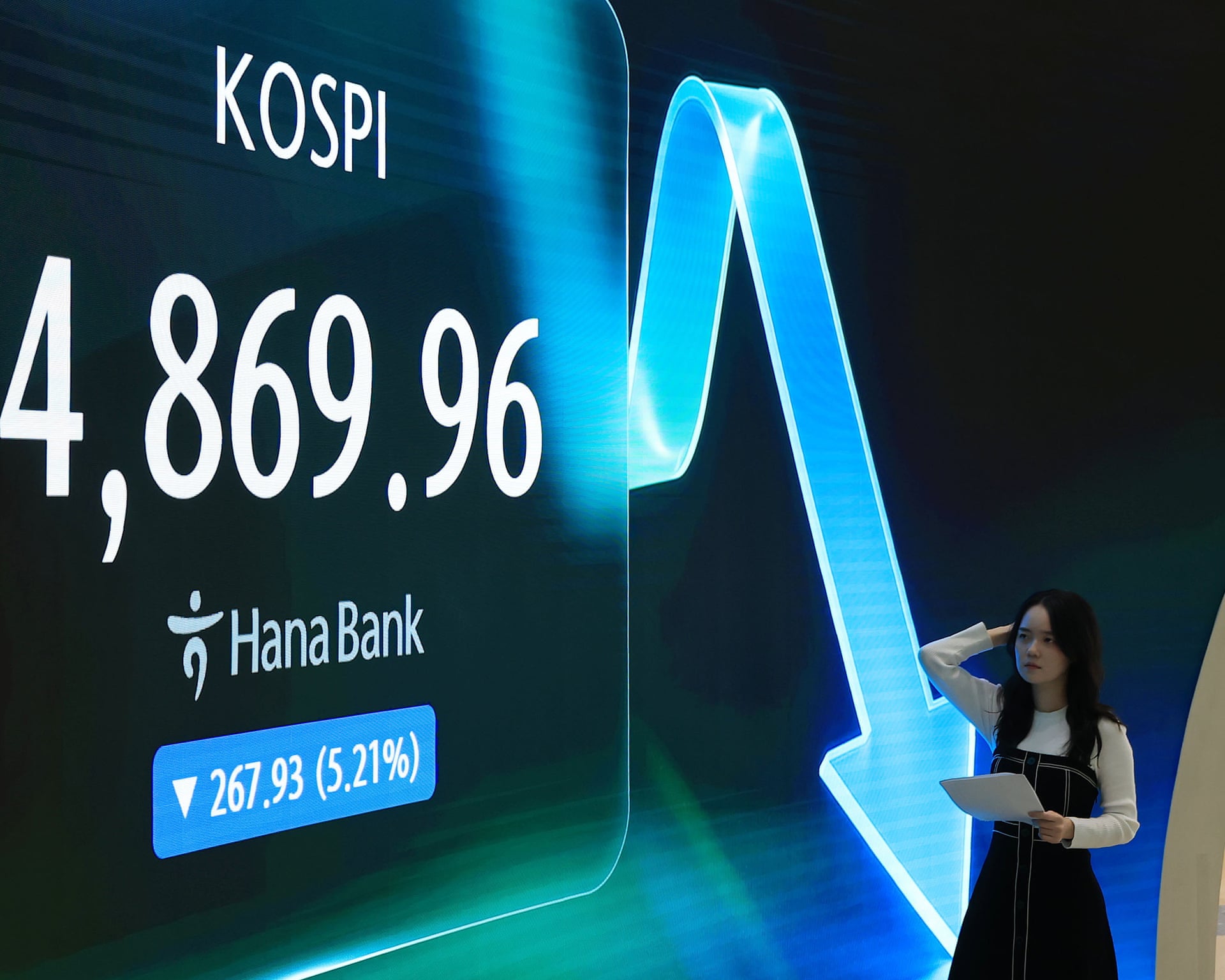
Tokyo’s Nikkei 225 tumbled 5.1 percent. South Korea’s Kospi fell 5.2 percent. In Taipei, the Taiex plunged 6.2 percent — its worst weekly performance since 1990. Hong Kong’s Hang Seng Index closed down 1.9 percent.
AI pain after a broad-based Thursday selloff with 464 SPX stocks red…$SPY -0.7%$QQQ -1.6%$SMH -3.3%$EEM -2.4%$GLD -2.4%$TLT +0.8% @finviz_com pic.twitter.com/l0LxSi866J
SoftBank Group, with its massive AI exposure through the Vision Fund, dropped 14.5 percent. That marked its steepest daily fall in more than two years. Samsung Electronics and SK Hynix each declined 6–7 percent, dragging the Korean index to its sharpest one-day drop of the week.
The selloff was broad. Japan’s Advantest and Tokyo Electron slid more than 9 percent and 7 percent respectively. Taiwan Semiconductor Manufacturing fell about 5 percent. European chip equipment makers ASML and Infineon both slumped over 5 percent in morning trade. The STOXX 600 fell 1.5 percent, down 5 percent from a record high set on November 12. European markets are on track for their worst week since March.

Wall Street’s losing streak extends to seven days
The rout originated on Wall Street Thursday. The Nasdaq Composite dropped 2.3 percent and the S&P 500 fell 2 percent — its sixth straight decline. Futures pointed to a seventh down day for the S&P 500 on Friday. That would mark the longest losing streak since the onset of the coronavirus pandemic in 2020. The Dow Jones Industrial Average shed about 1,100 points. It closed below 50,000 for the first time since June.
Big tech names across the board retreated. Amazon, Alphabet, Meta and Nvidia each lost more than 3 percent. AMD fell 7.7 percent. The Philadelphia Semiconductor Index has now lost 15.4 percent in October and another 10.6 percent so far in November.
The S&P 500 fell 2% today, closing at its lowest level since April. This was the 26th trading day this year with a loss above 1%. This is perfectly normal volatility for the stock market and the price of admission for equity investors. Without it, there would be no reward. pic.twitter.com/vGpIZTW97u
IPO liquidity drain becomes its own headwind
Market analysts described a mechanical liquidity squeeze. Investors sold existing AI and semiconductor holdings to fund Anthropic allocations. The year’s most anticipated debut became a catalyst for broader sector weakness.
The slide from yesterday's highs sends a message that there might be more at work here than investors realise, and while brokers are scrambling to buy more, that liquidity has to come from somewhere, and the other tech names may be the first ones to feel the pressure. Chris Beauchamp
Charu Chanana, chief investment strategist at Saxo, said the market has moved beyond demanding proof of AI demand. “The market is no longer looking for proof of AI demand alone,” she said. “It wants evidence that the extraordinary spending across the ecosystem can generate sustainable returns.”
Macro pressures compound the AI reckoning
The AI selloff coincides with rising rate expectations. The U.S. 10-year Treasury yield touched 5.11 percent on Thursday before settling at 5.05 percent. Futures price in a Federal Reserve rate hike in December and two more in 2027. Higher yields disproportionately hit growth stocks valued on distant cash flows.
The dollar climbed to a 19-month high. The VIX volatility index jumped nearly 16 percent Thursday to close at 28.44 — its highest level since March.
Worth considering: On the day of a highly successful mega-IPO, with Anthropic closing its first trading session 17% above its launch price, the VIX (commonly referred to as Wall Street’s “fear index”) spiked again to 29. While the enthusiasm for frontier AI is undeniable and… pic.twitter.com/fiRJVRy1p6
Regulatory overhang adds to uncertainty
Taiwan’s regulator tightened short-selling rules effective Friday. The move bars short sales below the prior close for stocks that fall 3.5 percent or more in a session. The Taiwan Stock Exchange chair pledged to ensure stable market operation and reassure investors in the fundamentals of Taiwanese companies.
SoftBank Group, founded in 1981 by Masayoshi Son as a software distributor, pivoted to internet investing in the 1990s and made a $20 million stake in Alibaba in 2000 that grew to $60 billion by its 2014 IPO.

Its Vision Fund, launched with over $100 billion in capital, became the world’s largest technology-focused venture fund and holds stakes in Arm, OYO Rooms, WeWork and Deutsche Telekom. The group also joined OpenAI, MGX and Oracle in the $500 billion Stargate AI infrastructure project announced in January 2025.
Anthropic shares were trading around $91.30 by Friday afternoon. That is down 6 percent from Thursday’s close but still above the $83 offer price. The company’s $1.5 trillion fully diluted valuation — and its nearly $9 billion in computing spend in the first half of 2026 — now stand as the clearest test yet of whether AI economics can justify the capital deployed.
For those surprised that the NASDAQ and other US stock market indices are down 1.5–2% (CNBC data below) while Anthropic is trading 20% above its IPO price, remember this isn't just about the promise of AI, but about making room for it. In a narrow sense, investor financing of the… pic.twitter.com/oG2kLbB543
Related reading
Megyn Kelly Calls Leonardo DiCaprio ‘Disgusting Slob,’ Accuses Him of Drug Use in Birthday Rant
Megyn Kelly devoted a full hour of her SiriusXM show on Wednesday to dissecting Leonardo DiCaprio’s 52nd birthday...

Eight Irish Pubs Where Exceptional Food Rivals the Pint
Eight Irish pubs are proving that exceptional cooking can share equal billing with a properly poured pint, offering...

Bruno Mars Announces Death of His Father Peter Hernandez at 74
Bruno Mars announced the death of his father, Peter Hernandez, at the age of 74, sharing a series...

Wayne Rooney Breaks Silence on Coleen’s Wagatha Christie Trial Ordeal on I’m a Celebrity
Wayne Rooney spoke about the toll of the Wagatha Christie libel battle on his wife Coleen while competing...