Army National Guard senior commanders gathered Nov. 6-8 at Camp Robinson in North Little Rock, Ark., for the 2026 Green Tab Commanders Conference to align on large-scale mobilization and combat readiness, the National Guard Bureau announced Nov. 19.
Hosted by Lt. Gen. Jonathan M. Stubbs, director of the Army National Guard, the conference brought together O-6 and above command teams for direct engagement on operational demands and Total Army priorities. The theme, “Preparing for Large-Scale Mobilization Operations and Large-Scale Combat Operations,” reflects the Guard’s responsibility to mobilize, validate, move and integrate forces at the scale required for a major conflict.
“Preparing for large-scale mobilization and large-scale combat operations starts with being brilliant at the basics,” Stubbs said. “We need qualified, disciplined and fit Soldiers, lethal crews and squads, maneuver-proficient platoons, and staffs that can command and control at echelon. That foundation is what allows us to mobilize at scale, integrate with the Total Army and deliver combat power when our nation calls.”
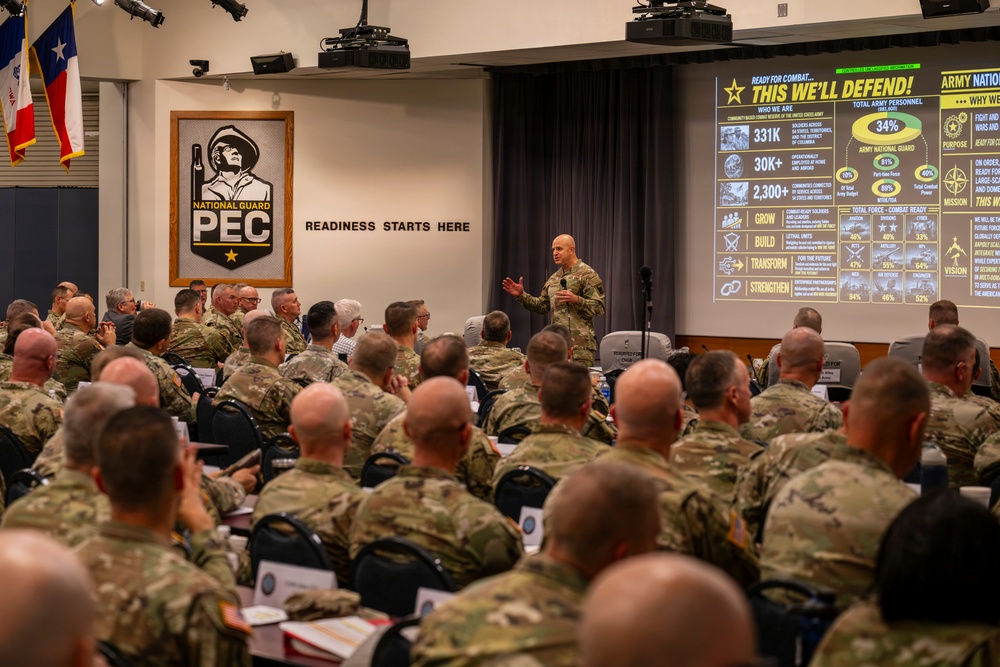
The Army National Guard provides over 40% of the Total Army’s combat power from a force of 329,000 Soldiers organized across 54 states, territories and the District of Columbia. Generating that power at scale requires synchronized actions from home station through mobilization, validation and onward movement — processes commanders must understand and rehearse before a crisis demands them.
Discussions centered on maximizing drill and annual training time to build readiness, division alignment, Army National Guard transformation, and training necessary to build readiness at echelon. The fiscal year 2028-2030 training guidance reinforces this direction, challenging commanders to protect training time, prioritize mission-essential task proficiency and build lethal, adaptable and cohesive formations.
“Large-scale combat operations demand that we think and train beyond individual units or capabilities,” said Maj. Gen. Richard A. Wholey Jr., commander of the 263d Army Air and Missile Defense Command.
“Divisions must synchronize formations across states and components, integrate capabilities and effects at echelon, and ensure subordinate commanders understand their unit’s contribution to the larger fight. The GTCC is a vital platform, enabling the shared understanding we need to align training, mobilization, and readiness at scale.”
As formations adopt new capabilities, technologies and force structures, commanders must integrate change without sacrificing the fundamentals required to mobilize, deploy, fight and sustain operations. Readiness begins with Soldiers and the noncommissioned officers responsible for training and leading them.
Huntsville Council Postpones Depot Railcar Vote After Resident Outcry
“Maybe we could leave like a couple of cars here or something like that,” 10-year-old Kane Garcia said...

FBI Investigates Valcour Software Breach; Vermont Police, Fire Shift to Paper Records
Vermont police, fire and EMS agencies are operating on paper and radio this week after the FBI and...

Sci-Fi Inspires Shape-Shifting Antenna Breakthrough With UNM Ties
"When we got to the point where we could actually do it, there had already been a first...

Texas Democrats Sweep 18 Statewide Races, Flip Governor’s Mansion in 2026 Midterms
Texas Democrats swept every statewide race on November 3, flipping the governor's mansion, a U.S. Senate seat, and...