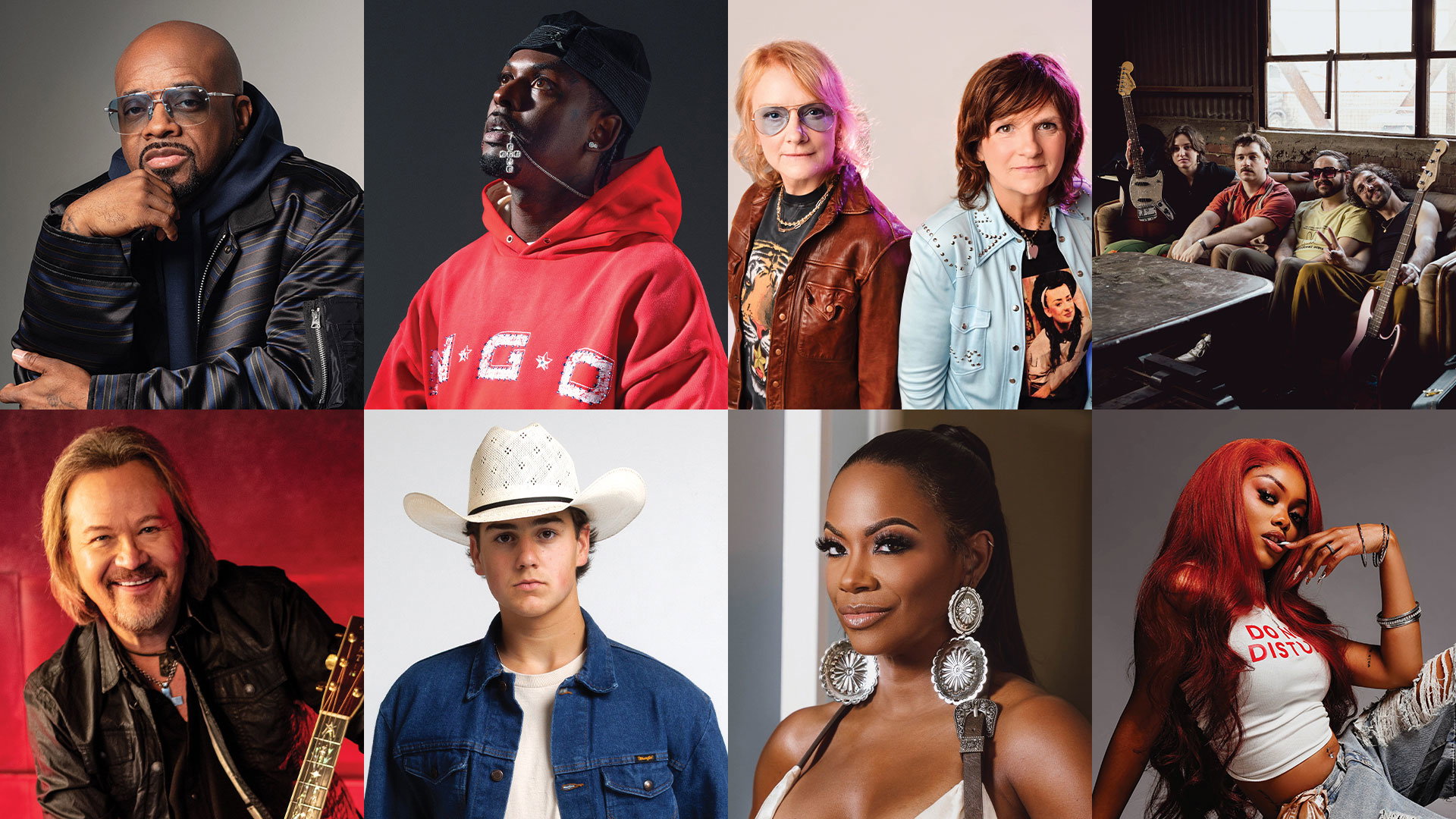
Ever since Blind Willie McTell ambled into town in the 1920s and began crooning about “the Atlanta strut,” this city has been woven into the mythos of American music. Now, as Atlanta Magazine reported in its music issue, four of the city’s most celebrated hometown heroes are passing the torch — naming the emerging artists they believe will carry the city’s sound into its next chapter.
The legends in question span generations and genres: Jermaine Dupri, the Grammy-winning producer and rapper; the Indigo Girls, the folk-rock duo; Kandi Burruss, the singer-songwriter and reality television powerhouse; and Travis Tritt, the country star. Their legacies reach far beyond Atlanta, but for the magazine’s feature, they are hometown heroes — artists who blazed new trails and made space for the countless musicians who came after them.
Four GOATs, One Hometown
Generations of artists have made their mark on Atlanta with sounds as diverse as the city itself, and these four represent the breadth of that legacy. Dupri’s production work helped shape the sound of a region; the Indigo Girls brought an independent, harmony-driven voice out of the Southeast; Burruss turned songwriting craft into mainstream success across R&B and television; Tritt carried a Southern rock edge to country radio. Together they embody the range of what “Atlanta music” has meant over the past several decades.
For the feature, the magazine asked each icon to reflect not only on their own work but also on the artists they see as standard-bearers for the next chapter of music. Their answers point to a new generation of Atlanta music-makers: SwaVay, Equal Creatures, Rocco Gorelik, and Jada Denise. These emerging talents, the magazine writes, mark a new generation of Atlanta artists driving the city’s creative story wherever it goes next.
Why This Moment Matters for the City
The handoff matters because Atlanta’s music economy has always run on succession — from McTell’s street performances in the 1920s to the studio and stage scenes that followed. Each wave of artists built on the infrastructure the last one left behind, and the naming of new standard-bearers is how that chain stays visible to the next wave. When established legends publicly anoint emerging acts, it signals to fans, bookers, and the industry itself where the city’s creative energy is heading.

The feature, written by Allison Entrekin, Rachel Garbus, Christina Lee, and Mara Reinstein and edited by Rachel Garbus, frames the story as a tribute as much as a forecast: a homage to local legends who are also, right now, looking forward. That dual focus — honoring the past while spotlighting who comes next — is what gives the piece its shape.
What remains constant is the city itself. The “Atlanta strut” McTell sang about a century ago still describes the confidence with which new artists leave this town and carry its sound outward. The names change — SwaVay, Equal Creatures, Rocco Gorelik, Jada Denise now among them — but the current runs the same direction it always has: out of Atlanta, and into the future of American music.
Related reading

US Stock Futures Mixed as Investors Weigh Midterm Results and Oil Prices
U.S. equity futures traded mixed early Thursday, November 5, 2026, as Wall Street digested a powerful rally that...

SWAT Team Arrests Cheyenne Man Following Felony Strangulation Warrant
When the flash-bang detonated outside the house at 8512 Cowboy Road just after 8 a.m. Wednesday, the sound...
39 Best Art Galleries and Museums in Downtown Charleston: An Interactive Guide
Thirty-nine galleries and museums now anchor downtown Charleston's cultural landscape, stretching from the French Quarter down to Gallery...
UW-Madison Campus Features Autumn Colors and Wildlife
Four sandhill cranes were photographed frolicking near Rennebohm Hall and the Nielsen Tennis Stadium during an autumn evening,...