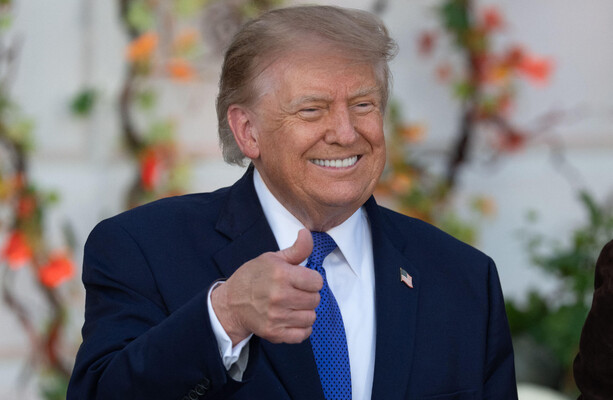
The Decade That Broke the American Psyche: Why 2016–2026 Feels Like a Horror Film
For Americans weary of the news cycle, Halloween has become less a celebration and more a necessary dissociation. Dressing homes, children, and pets in fake blood and cobwebs offers a welcome respite from doomscrolling and the relentless drumbeat of global crises. As The Journal observed, one could simply drape a white sheet scrawled with “2016–2026” and watch the color drain from every face—a succinct metaphor for a decade that has tested the resilience of the republic and its citizens.
The period from 2016 to 2026 has not merely been turbulent; it has delivered a continuous carousel of shocks that have directly eroded American economic security, physical safety, and collective confidence. This is not statistical abstraction. It is the lived experience of a nation that began the decade with the sudden death of David Bowie on January 10, 2016—an event that, as actor Gary Oldman noted in 2025, many felt marked the moment “the world’s gone to shit,” as if the artist had been “cosmic glue” holding civilization together. The losses did not stop there. That same year also claimed Muhammad Ali, Prince, Leonard Cohen, Carrie Fisher, and George Michael.
Trump’s Second Term Deepens Political Divisions
Politically, 2016 delivered Brexit and the election of Donald Trump, events The Journal and europesays.com both identify as the sealing of what the columnist calls the “Decade from Hell.” Trump’s initial victory was viewed by many as a temporal anomaly, but his return to the White House in 2024—after the January 6, 2021 Capitol riot over claims of a stolen election—cemented an era of what the source describes as “unbridled greed and corruption” and “unhinged streams of bile” from the commander-in-chief. For the American public, this has translated into volatile trade wars, hostility toward longtime allies, and a commander-in-chief whose rhetoric has normalized cruelty and xenophobia, altering the nation’s standing and domestic discourse.
The violence has not been confined to rhetoric. The decade has seen a litany of attacks with horrificly cinematic qualities: the truck attack in Nice, the Brussels airport bombings, the Manchester Arena massacre, the Bondi Beach shooting, and the Christchurch mosque killings. As The Journal notes, it sometimes seems America has entered its “Mad Max era, with added Teslas.”
The Economic and Health Cataclysms
The economic impact on American households has been severe and direct. The COVID-19 pandemic, which killed at least seven million people globally, terrified half the world and enraged the other, fundamentally disrupting American life and labor markets. More recently, the Russian invasion of Ukraine in February 2022 and the subsequent Israel-Gaza war following the October 7, 2023 Hamas attacks have destabilized global energy markets.

A Glimmer of Redemption
The stunning outcome of the U.S. midterms, following democratic victories in Brazil and Serbia, has offered what The Journal calls a “glimmer of redemption” and a potential plot-twist in the horror show of “Planet Earth: 2016 to 2026.” The columnist invokes another line from Theognis: “Hope is the only good god remaining among mankind.” This hope was embodied even in tragedy by Olympian Ciara Mageean, who died in the final weeks of 2026. In one of her last interviews, she urged people to “celebrate the joys in life” and “smell the roses,” suggesting that verbalizing joy may not solve the madness, but offers a place to start.
Whether that hope can withstand the remaining weeks of 2026—and the structural damage done to American institutions, alliances, and civic trust—remains the open question. The decade has proven that crises compound, and the algorithms of despair are still running. But as the sheet with “2016–2026” comes down, Americans are left wondering not just how they survived, but whether the next decade can offer something better than survival.
Arrest Trump NOW https://t.co/jjNe3SpFNO
More on David Bowie
Trump is fucking retarded. https://t.co/VXjSmnyvpl
Fuck Trump pic.twitter.com/kjfQxUod65
Trump is a murdering rapist. https://t.co/eHytyOitku
Related reading
- Benedict Oramah Says Africa should keep reserves on the continent
- Democrats win both US chambers in 2024 midterms; Trump accepts defeat, warns of veto power
- JD Vance Blames Trump’s Iran War for GOP Midterm Election Wipeout (archyde.com)
- What Trump’s election meltdown means for the UK – from Farage to fuel prices (newsarchyuk.com)

Benedict Oramah Says Africa should keep reserves on the continent
What was billed as a routine anniversary lecture turned into a direct challenge to the global financial order....

Democrats win both US chambers in 2024 midterms; Trump accepts defeat, warns of veto power
Democrats won control of both the US Senate and the House of Representatives on Tuesday in a midterm...
China Eyes Southeast Asia’s nuclear sector amid trust Gaps
China Eyes Southeast Asia's Nuclear Future, but Trust Gaps Remain China is poised to break into Southeast Asia's...
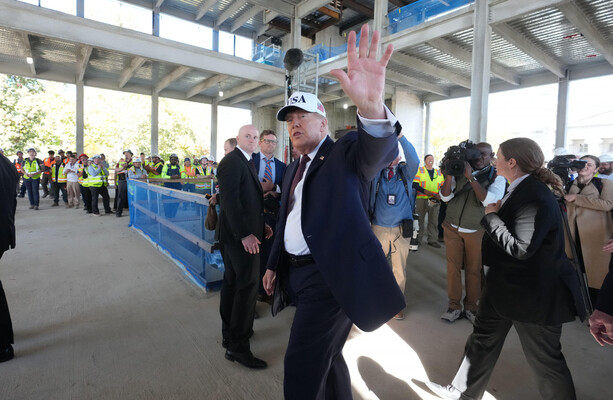
Trump claims midterms lost without him: ‘If I were on the ballot, we would have won’
Trump Delivers First Remarks Since Midterm Rout From White House Ballroom Construction Site President Donald Trump held his...