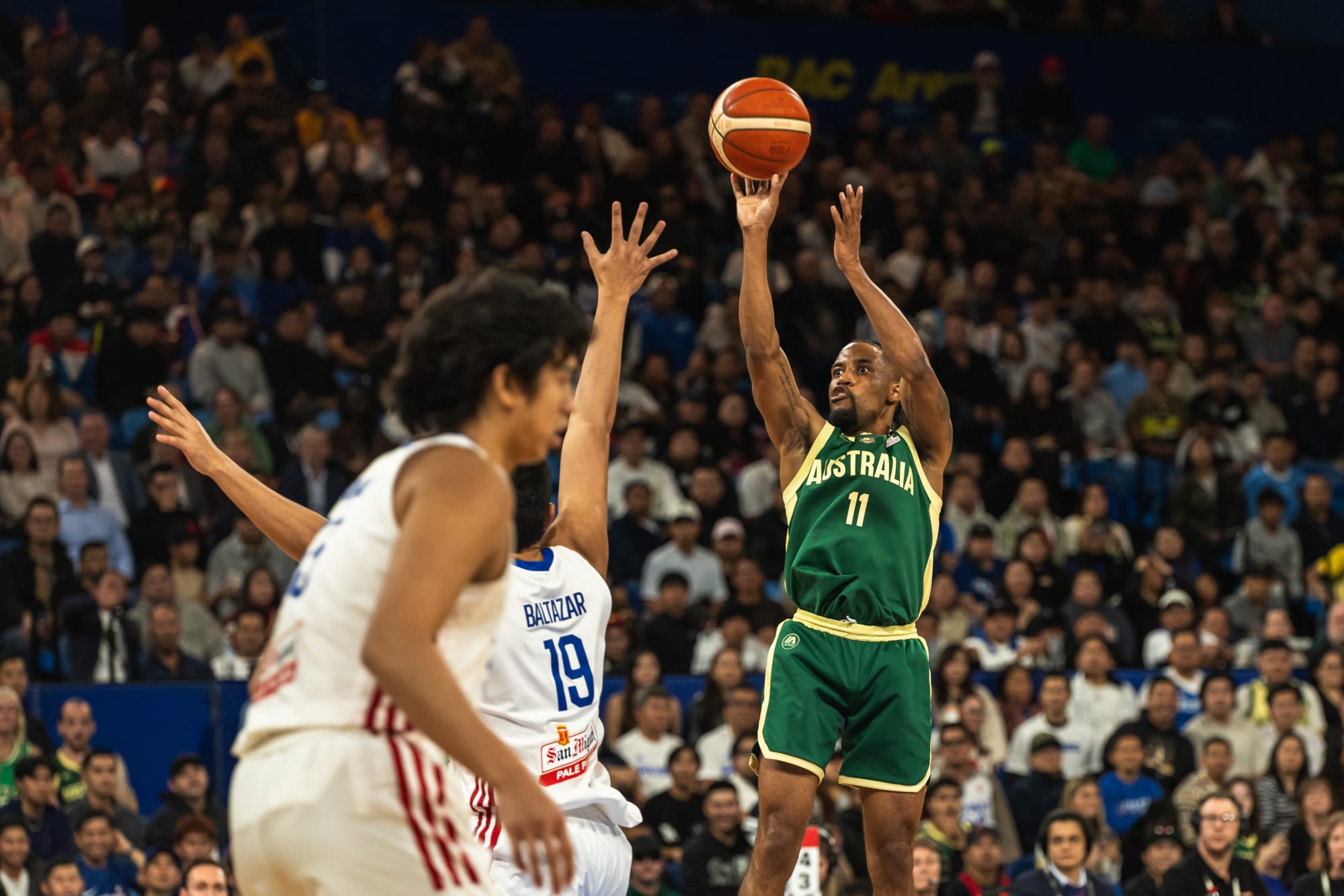
Australia Dominates Philippines 92-49 in FIBA Qualifiers, Secures Unbeaten Group A Lead
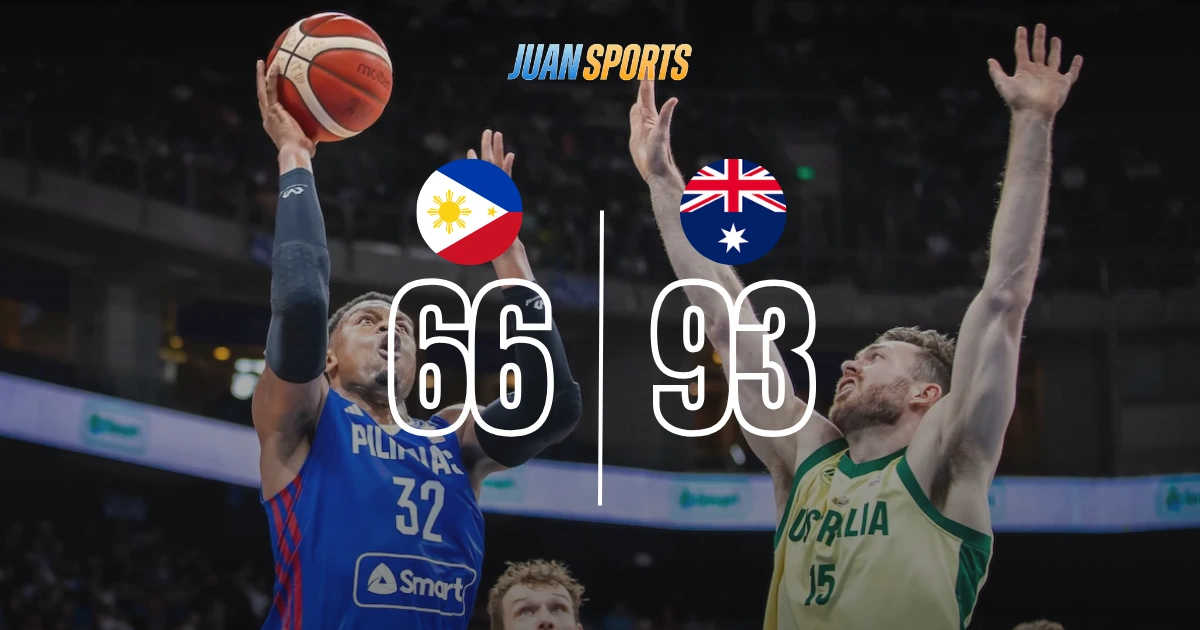
Australia extended its perfect record in the FIBA Basketball World Cup 2027 Asian Qualifiers with a decisive 92-49 victory over the Philippines in Perth on Monday. The win, marked by a 16-0 run in the first quarter, propelled the Boomers to a 6-0 record in Group A, securing the top spot ahead of New Zealand (4-2) and the Philippines (2-4). The result ensures Australia’s passage to the Second Round, which begins in August, as the only team in the group to remain unbeaten.
The game highlighted Australia’s offensive efficiency and defensive resilience. The Boomers shot 40% from the field, including 56.7% from inside the arc, capitalizing on the Philippines’ lack of size without injured star Justin Brownlee. Meanwhile, the Philippines struggled offensively, with no player scoring in double figures. Dwight Ramos led Gilas with 9 points, while Kevin Quiambao and June Mar Fajardo each added 8.
Bryce Cotton Drives Australia’s Commanding Performance

Bryce Cotton, a 6-time NBL MVP, was the standout performer for Australia, tallying a game-high 21 points, 5 assists, 2 steals, and 2 rebounds. His impact was immediate, as he spearheaded a 16-0 run in the first quarter to establish a 24-8 lead. Cotton’s 13 points in the opening period included four three-pointers, showcasing his ability to elevate the Boomers’ offense.
Australia’s depth also shone through. Tyrese Proctor contributed 16 points, 4 rebounds, and 4 assists, while veteran guard Mitch Creek added 13 points and 7 rebounds. Forward Josh Bannan recorded a double-double with 11 points and 11 rebounds, and Keanu Pinder (9 points, 6 rebounds) and Alex Condon (3 points, 8 rebounds) provided additional support. Every Australian player scored at least 3 points, underscoring the team’s balanced attack.
The Philippines, meanwhile, faced challenges beyond their offensive struggles. They committed 19 turnovers in the second half, and their defense, though effective in the second quarter (holding Australia to 8 points), could not sustain its effort. The loss marked their fourth consecutive defeat, following a 106-102 double-overtime setback to New Zealand in Auckland on Friday.
Philippines’ Struggles Highlight Injuries and Tactical Challenges
The Philippines’ poor performance against Australia was exacerbated by the absence of Justin Brownlee, who sat out due to a hamstring strain and peroneal tendinopathy. Brownlee’s injury, revealed on the eve of the game, left Gilas without its primary scorer and a key defensive presence. Without him, the team struggled to create consistent scoring opportunities, with Mike Phillips (6 points, 12 rebounds) and Dwight Ramos (9 points) as their primary contributors.
Coach Tim Cone acknowledged the team’s difficulties, particularly in the second quarter, where Australia’s physicality and foul-drawing tactics disrupted Gilas’ rhythm. “That second quarter was really difficult for us,” Cone said. “The way they were drawing fouls and slowing the game… we’re just trying to adapt.” Despite a brief defensive surge in the second period, the Philippines could not close the gap, trailing 41-27 at halftime.
The loss also underscored Gilas’ fatigue. Coming off a grueling double-overtime game against New Zealand, the team appeared physically and mentally drained. The Philippines’ 2-4 record in Group A leaves them in fifth place ahead of the Second Round, where they will face Group C teams Iran, Jordan, and Syria.
Second Round Challenges and Path to the World Cup
Australia and the Philippines will now turn their focus to the Second Round, which begins in August. The group structure has shifted, with Group A and Group C teams forming a six-team bracket known as Group E. Australia, with 12 points from a 6-0 record, leads the standings, followed by Iran and Jordan (11 points each), New Zealand (10 points), and the Philippines (8 points). Syria sits last with 8 points.
The Second Round format requires teams to play home-and-away matches against opponents from the other group. At the end of three windows, the top three teams and the best fourth-place team will qualify for the 2027 FIBA World Cup. For the Philippines, the path is steep: they must accumulate enough points to overcome a deficit against stronger opponents like Iran and Jordan.
Coach Adam Caporn of Australia emphasized the challenges ahead, noting that the Second Round will likely be held on neutral courts. “My understanding is that it will be on neutral sites,” he said. “We’re just treating every position of basketball we play the same—being at a very high standard.”
For the Philippines, the loss to Australia has intensified the pressure. Star Dwight Ramos acknowledged the team’s need to “remember this game, remember the feeling of getting embarrassed” and “come back” stronger. With Brownlee’s availability still uncertain, Gilas faces a critical test as they aim to secure a World Cup berth.
Historical Context and Qualifiers Implications
Australia’s dominance in the qualifiers echoes its recent success, including back-to-back FIBA Asia Cup titles. The Boomers’ 6-0 record in Group A positions them as strong favorites for the Second Round, while the Philippines’ struggles highlight the challenges of competing without key players.
Find more reporting in our Sports section.

Related reading
Jannik Sinner Ends 2026 Tennis Season Early Due to Knee Injury
World No. 1 Jannik Sinner has ended his 2026 tennis season early due to an ongoing right knee...
Mumbai Name Ayush Mhatre Vice-Captain, Leave Out Suryakumar Yadav
Mumbai left veteran Suryakumar Yadav out of their Ranji Trophy season-opener against Chandigarh despite his availability, naming Siddhesh...

All Whites Face Japan in Kirin Cup Final at Tokyo National Stadium
The All Whites face seventeenth-ranked Japan in Tokyo tonight for the Kirin Cup final, offering New Zealand one...

Tobias Harris Questionable for Season Opener After Left Calf Strain
San Antonio Spurs forward Tobias Harris will miss the preseason and is questionable for the October 20 regular-season...