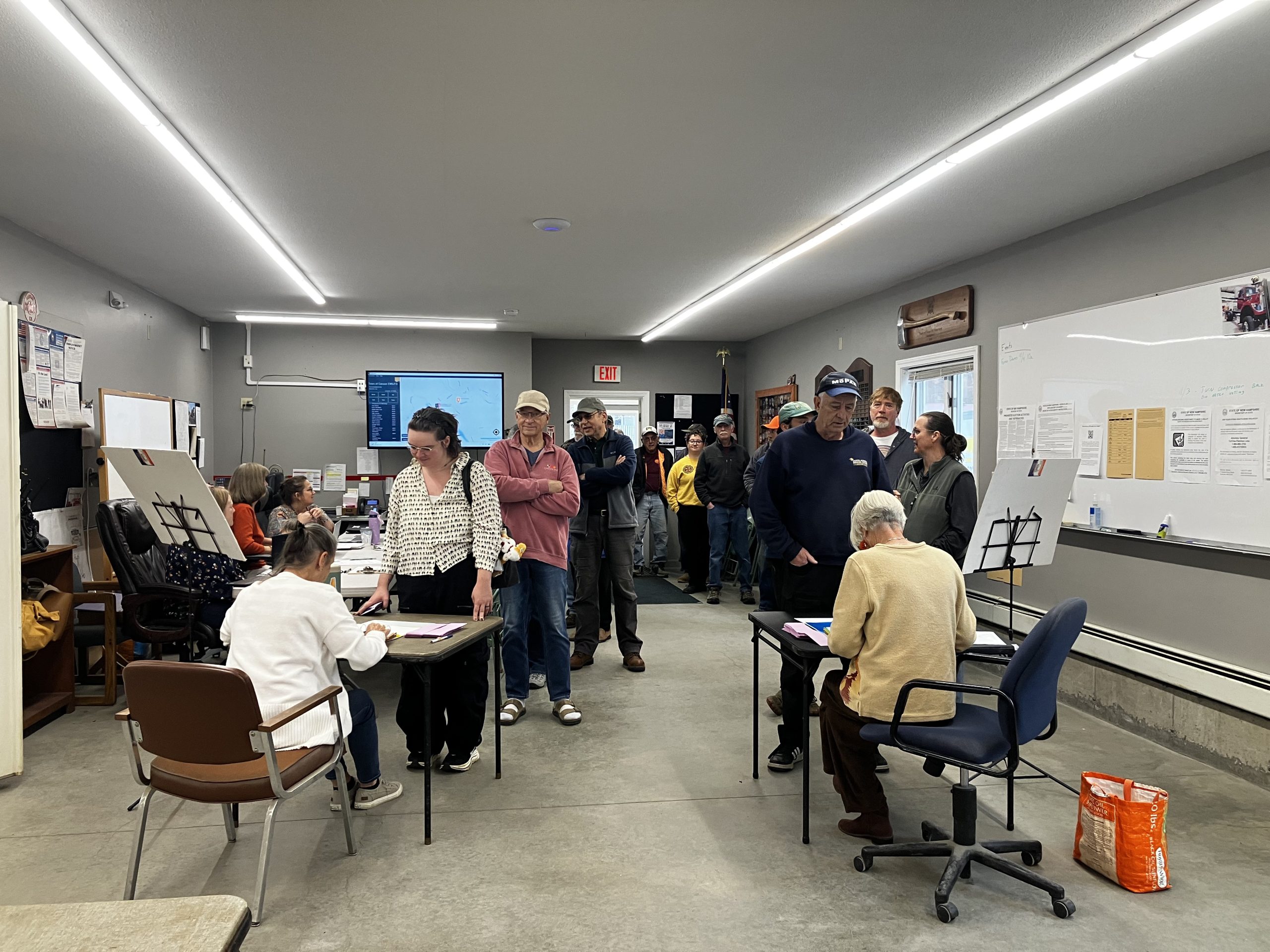
Ayotte Wins, Pappas Makes History, and the Upper Valley Splits on Taxes: Five Takeaways from New Hampshire’s 2026 Election
Republican Kelly Ayotte secured a second two-year term as New Hampshire governor with 51% of the statewide vote, defeating Democrat Cinde Warmington 47% in a race the Associated Press called at 12:42 a.m. Warmington, who served two terms on the Executive Council and previously ran for governor in 2024, fell short despite a strong showing. Yet Ayotte’s victory comes with a significant catch: Democrats swept control of the state House, Senate, and Executive Council, meaning the governor’s veto pen—already the busiest in state history—will face a legislature empowered to override it.
With 90% of votes counted, Ayotte’s margin held steady, but the down-ballot math tells a different story about who truly holds power in Concord for the next two years.
A Record Veto Streak Meets a Strengthened Blue Legislature
Ayotte rejected 33 bills this year, a state record for a governor whose own party had controlled the state legislature, spanning contentious issues from separation in bathrooms by biological sex to proposed changes in animal care laws. When the Senate and House met on veto day in August to consider 31 of those rejections, lawmakers overrode seven.
Pappas’ Historic 56% and the Limits of Moderation
In the U.S. Senate race, Democrat Chris Pappas didn’t just defeat Republican John E. Sununu—he shattered a barrier, winning 56% to 42% in a contest the AP called at 8:20 p.m. Tuesday to become the first openly gay man elected to serve in the Senate. Both candidates campaigned on relatively moderate perspectives, yet their attack ads pulled no punches on corruption accusations: Pappas accused Sununu of working in tandem with Trump and being named in the Epstein files, while Sununu called out Pappas for a “No” vote on a working family tax cut that passed regardless.
“He listened to Washington party politics instead of thinking about New Hampshire values,” Sununu said in a July 4 video.
Despite Sununu’s attempts to separate himself from Trump—stating he had never met him and did not support his presidential candidacy—his Republican affiliation proved enough to write him off for some voters in this purple state.
The 60% Tax Cap Wall That Divided the Upper Valley
Question 2 asked voters whether to impose a tax cap on school district taxes, allowing increases only consistent with inflation and capital projects, and requiring a 60% supermajority to pass. Single-town districts Cornish, Grantham, Hanover, Lebanon, and Plainfield all rejected the measure, with Hanover showing the weakest support at just under 35% and Plainfield failing at 42%. Croydon, Lyme, and Orford each garnered majority support but fell short of the 60% threshold. Even Grafton’s 73% approval—the highest of any Upper Valley town—couldn’t save the five-town Mascoma Valley School District, which includes Enfield, Canaan, Dorchester, and Orange and failed to reach 60% across the combined vote. SAU 60, encompassing Charlestown and four non-Upper Valley towns, failed with 49% support. Only SAU 6 (Claremont and Unity, where Unity gave 71%) and SAU 23 (Haverhill, Piermont and three non-Upper Valley towns, passing with just over 60%) approved the cap.
Democratic Dominance Reshapes Valley Politics
In state Senate District 5, Democrat Sue Prentiss of Lebanon crushed Republican Conrad Schoeffter of Plainfield 75% to 25% in a race the AP called at 11:23 p.m.
Lebanon, Hanover, and Lyme delivered Democratic wave elections, with all three top Democratic candidates—Warmington, Pappas, and U.S. House candidate Goodlander—garnering at least 70% in each town; Hanover specifically gave 80% to Warmington, 87% to Pappas, and 88% to Goodlander. Other blue towns included Plainfield, Piermont, Orford, Claremont, Charlestown, Canaan, Enfield, and Grantham. In contrast, Haverhill, Grafton, and Croydon remained red across all three statewide races, with Croydon backing Republican Lily Tang Williams 75% for the U.S. House seat.
Two Senate Districts Still Too Close to Call
As of Wednesday afternoon, the AP had yet to call winners in District 1 and District 8. In District 1, which includes Haverhill, Republican incumbent David Rochefort leads Democrat Cathleen Fountain by less than 10 percentage points with 77% of votes counted. District 8 is even tighter: Republican Joe Creighton holds a 50.8% to 49.2% lead over Democrat David Trumble—a margin of fewer than 300 votes—with 76% reporting. The seat, representing Claremont, Newport, Croydon, Charlestown, Sunapee, and Unity, was held for five terms by Republican Ruth Ward, who opted not to seek reelection; Trumble had lost to Ward by a similar margin in 2024.
The final certified tallies will be maintained by the New Hampshire Secretary of State, whose office oversees official election records.
Keep reading

Florida DT Jeramiah McCloud Suspended One Game for Team Conduct
McCloud Sidelined for Oklahoma Clash GAINESVILLE, Fla. — Starting defensive tackle Jeramiah McCloud will miss Saturday's home game...

Fargo Landmark The Bowler Bowling Alley Goes on Sale for $4.3 Million
The Bowler, a bowling alley on University Drive in Fargo, is on the market for $4.3 million, Valley...
NYSUT Members Drive Major Election Victories Across New York
When Cait Conley won New York's 17th Congressional District on Tuesday, New York State United Teachers members played...
NYSUT members deliver election Wins across New York
11,000 Shifts and Half a Million Contacts: NYSUT's Ground Game Delivers Sweeping Election Wins Across New York Tuesday...