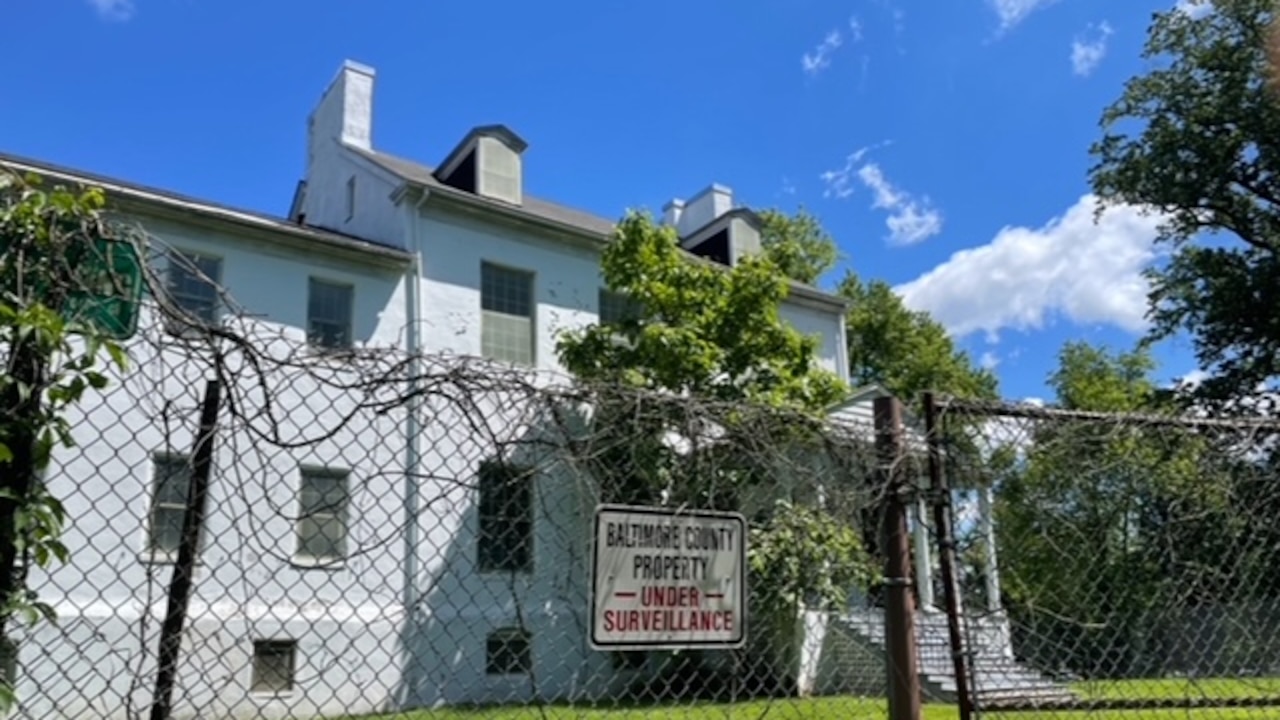
Baltimore County has agreed to transfer the Perry Hall Mansion to a preservation nonprofit for $1, ending a search for a sustainable future for the 1773 landmark.
The County Council on Monday approved the sale to the Preservation Alliance of Baltimore County, a deal that includes a $250,000 county grant for renovations and $10,000 toward closing costs, The Banner reported. An additional $93,000 in donations collected by the Perry Hall Recreation Council will also convey with the property, according to the Capital Gazette.
“It’s the right thing to do,” said Councilman David Marks, a Republican from Upper Falls who has championed the mansion’s preservation for more than two decades. “Sometimes, when government owns a historic place, properties get lost in the weeds,” Marks told The Banner.

The agreement caps a ownership history. The county purchased the stucco-covered structure on four acres in northeastern Baltimore County for $335,000 in 2001 and subsequently spent more than $3 million on stabilization, HVAC, and fire suppression systems, the Capital Gazette reported. A county appraiser ultimately valued the mansion at $0 because of the renovation backlog required to make it usable.
The cradle of Methodism
The mansion’s significance extends well beyond local history. Built by Corbin Lee and completed by Baltimore merchant Harry Dorsey Gough, who renamed it for his ancestral English home, the property became a central gathering place for early Methodist leaders. In 1784, preachers met in the basement to plan the Christmas Conference at Baltimore’s Lovely Lane Meeting House, where the Methodist Church in America was formally organized.
“It’s definitely a structure that’s worth preserving,” Marks told Yahoo News. “The county has really tried every option to sell this to a private party. We just came to the conclusion that maybe a nonprofit could help restore the mansion, solicit funds for repairs, and then make a decision whether they keep owning it or they turn it over to another party.”
Gough, who enslaved dozens of people on the 1,000-acre plantation, kept a jail and chains in the basement, according to Sean Kief, a descendant of a former resident who wrote a history of the property, The Banner reported. A fire in 1839 destroyed more than half the original Georgian structure; Gough’s grandson later reconstructed it.
A failed private sale clears the path
The nonprofit’s path to ownership opened only after a previous deal collapsed. In May 2024, the council approved a $5,000 sale to Kingsville landscaper Robert Lehnhoff, who planned a bed-and-breakfast and event venue. Months later, Lehnhoff withdrew, writing to county officials that “the challenges with this property and its use within the residential community surrounding it appear to be too significant,” The Banner reported.
That failure prompted the Preservation Alliance, formerly the Baltimore County Historic Trust, to step forward. “In many ways, that’s the best way to preserve historic buildings,” Anne Gryczon, executive director of the Preservation Alliance of Baltimore County, told The Banner. “Unless we own something, we really aren’t able to fully protect it.”
The immediate priorities are unglamorous but essential: moving the mansion off a failed septic system by connecting to a new sewer line—amortized on the property tax bill over 40 years—replacing the roof, repairing porch decking, and painting the interior, board chair Bryan Fischer told The Banner. The $343,000 in combined public and private funds is “enough to get us started,” Fischer said.
The property remains bound by a Maryland Historical Trust easement that requires special review for renovations, preservation of archaeological resources, and public access at least five days a year, the Capital Gazette noted. That easement also complicates full compliance with the Americans with Disabilities Act, a conflict county officials previously cited as a barrier to public use.
A “home run. Maybe. or a triple.”
Pat Keller, president of the Perry Hall Improvement Association and a former county planning director, offered a measured assessment. “I think this is probably the home run. Maybe. Or a triple,” Keller told The Banner. “It’s pretty much a win-win for everybody.”
The nonprofit envisions a small event space, art gallery, or artist studios, alongside restoration of the historic landscape with period-appropriate trees and shrubs. “Historic preservation is under attack,” Fischer said. “So by us effectively controlling this building’s future, we’re ensuring that it’s going to survive.”
Perry Hall Mansion stands on a hill above the Gunpowder River Valley in the community that took its name. The 16-room house began under Corbin Lee in 1773 and was finished by merchant Harry Dorsey Gough in 1776.
Gough named it for his family’s ancestral home in Perry Barr, England, a northern suburb of Birmingham, and ran a 1,000-acre plantation from the estate. More than 2,000 people attended his funeral there in 1808. The mansion appears in three large paintings by Francis Guy from about 1803 and was listed on the National Register of Historic Places in 1980.
Closing is scheduled for on or before March 1.
Related reading

Minnesota Opens Charleston Classic With 85-70 Win Over Oklahoma State
Minnesota opened the Charleston Classic with an 85-70 win over Oklahoma State on Friday, improving to 6-0 after...

USU Study: Baja Ocean Pattern Caused Utah Snow Drought, Frequency to Nearly Double
Utah State University researchers have traced last winter's missing snowpack to a stalled storm belt south of Baja...

Downtown Little Rock Bright the Night set for Nov. 23, KARK reports
Downtown Little Rock will launch the holiday season Monday with the Bright the Night tree-lighting celebration at Capitol...

National Weather Service: Florida Flood Warnings Stretch North
"I have never ever seen this much water in the 25 years I've been in Florida," said Sara...