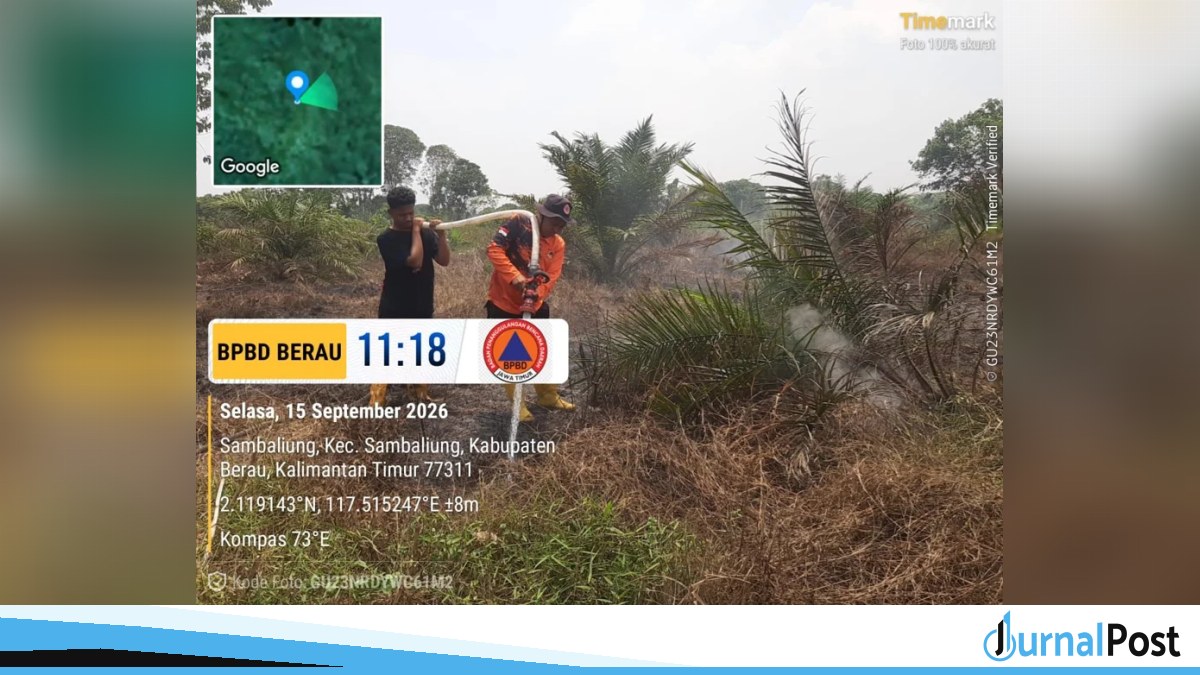
Volunteer fire groups in Berau face safety risks as occupational health and safety is overlooked in forest fire response. Forest and land fires are a recurring disaster in Berau Regency, East Kalimantan. The size of the scorched land is affected by several elements, such as the length of the dry spell and the El Niño weather pattern, JurnalPost reported. The first line of defense against fires consists of the Regional Disaster Management Agency (BPBD), Manggala Agni, the Forest Management Unit (KPH), and corporate fire brigades. However, a vital unit is frequently neglected: the fire volunteer associations, which encompass the Fire Care Community (MPA) and the Fire Care Farmer Group (KTPA). These units are typically the first to spot hotspots and initiate initial containment. Their effectiveness is judged by the speed at which fires are put out, not by their well-being. Concerns about the security of volunteers during their duties, the sufficiency of their gear, and the health dangers they encounter have not yet emerged as a central concern in forest fire response strategies. The equipment gap between official crews and volunteers persists as a problem. MPA and KTPA participants frequently venture into the field dressed only in long-sleeved shirts, lightweight rubber boots, and fabric or surgical masks, often without any form of respiratory protection. Dangers for volunteers are grouped into four types: physical dangers like burns and wounds; health dangers from smoke inhalation leading to breathing problems; psychological dangers such as stress; and operational dangers stemming from poor coordination. To reduce dangers, four core elements of occupational health and safety (OHS3) must be addressed: Personal Protective Equipment (PPE), skills, Standard Operating Procedures (SOP), and funding.
Many MPA and KTPA members still use improvised outfits during firefighting activities. This predicament cannot be attributed only to the volunteers but is also connected to the insufficient supply of proper PPE, JurnalPost reported.
Volunteers require instruction on identifying fire dangers, operating firefighting machinery, field communication methods, first aid, coping with fatigue and dehydration, and emergency retreat protocols.
SOPs for forest fire reaction should incorporate reporting systems, the appointment of an operations leader, task distribution, health screenings, PPE usage, communication networks, and the creation of escape routes.
All OHS3 protection initiatives need sufficient monetary backing. This can be resolved through a common understanding and dedication from all parties involved, including the regency and provincial administrations, and the commercial sector.
To reinforce OHS3, seven tactical measures can be considered, including setting minimum safety benchmarks, conducting regular OHS3 instruction, providing suitable PPE, and creating a volunteer health tracking system.
Preserving the health of Berau’s forests is a prolonged challenge. Cooperation between the local administration, BPBD, forestry departments, businesses, and community associations is indispensable.
The effectiveness of forest fire management is not determined solely by how many hectares of land are spared from the flames, but also by the capacity to guarantee that every volunteer who enters the front line can come back home unharmed and well. It is time for the OHS3 element to be established as a fundamental pillar, not merely an afterthought, in all initiatives to empower the Fire Care Community and Fire Care Farmer Group in Berau Regency.
Worth a look

Trump Pressures Intel Board Into 10% Equity Stake for CHIPS Grants
President Donald Trump pressured Intel's board into handing the U.S.

90-Year-old Woman Achieves Full Independence via Home-Visit Rehab, Cureus
A 90-year-old woman with chronic heart failure achieved full independence following a two-year multidisciplinary home-visit rehabilitation program, according...

Multi-Vehicle Crash Blocks N40 South Ring; Douglas Village Evacuated for Fire Alarm
A multi-vehicle crash blocked the eastbound N40 South Ring Road between Junction 4 Sarsfield Road and Junction 5...

Yakult Nutritionist Lucy Jones Advises ‘Low and Slow’ Fibre Intake for Winter
"It's positive to see fibre getting more attention," said Lucy Jones, a registered nutritionist for Yakult, commenting on...