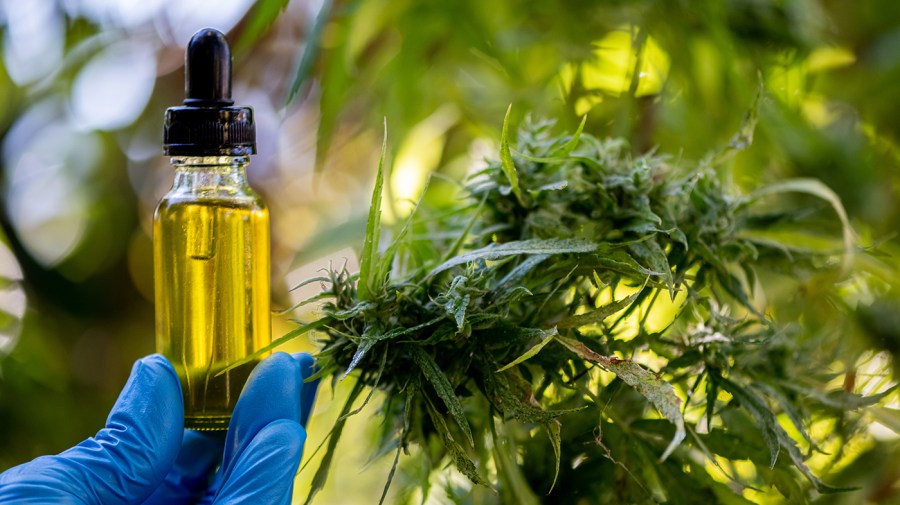
Kentucky’s hemp industry has three weeks before a federal cap effectively wipes most of its products off store shelves.
The rule, which takes effect Dec. 11, bans any hemp-derived product containing more than 0.4 milligrams of total THC per container, along with anything made with synthetic cannabinoids, WLKY reported. Most THC beverages and gummies currently on the market carry 5 to 10 milligrams — 12 to 25 times the new limit — meaning drinks, edibles and similar items would largely disappear from retail.
“I am concerned about the ban. This is something they should let us regulate here in Kentucky,” Gov. Andy Beshear said during his weekly Team Kentucky update Thursday. “We can do it in a safe way for our people without them ultimately bankrupting this entire industry. It’s wild to me that a Kentucky senator helped create a program that he’s now killing.”

The governor’s target was Senate Republican Leader Mitch McConnell, who championed industrial hemp legalization in the 2018 farm bill. The way that law defined hemp — cannabis with no more than 0.3 percent delta-9 THC by dry weight — left a loophole that allowed manufacturers to concentrate hemp-derived cannabinoids into products with intoxicating effects.
McConnell, who opposes marijuana legalization, later called the result an “unintended consequence” and moved to close the loophole in a federal spending bill signed into law Nov. 12.
“Kentucky farmers built America’s hemp industry, and they deserve certainty,” Senator-elect Andy Barr said in a news release. “I’m working with our agricultural producers and industry stakeholders on a long-term, commonsense path forward for legal hemp. That means keeping these products out of kids’ hands, cracking down on bad actors, and protecting the farmers who play by the rules.”
Senator-elect Andy Barr, via FOX 56
Barr introduced the Lawful Hemp Protection Act, House Resolution 9830, on July 22. The bill proposes national standards for cultivation, production, labeling and quality control, along with age restrictions and a ban on synthetic ingredients. But with Congress showing no sign of passing it before the Dec. 11 deadline, the ban will proceed as scheduled unless lawmakers intervene in the next few weeks.
Lawmakers voted in September to delay implementation by one month, but efforts to secure a longer reprieve have stalled. For Kentucky companies like Cornbread Hemp, which recently opened a new Louisville facility, the cap threatens to cripple a sector the state helped nurture.
Beshear’s argument — that Kentucky can oversee hemp-derived THC safely without destroying the businesses that have grown up around it — puts the Democratic governor at odds with the federal approach and with McConnell’s effort to shut down the market his own legislation helped create.
The distinction between hemp and marijuana, which come from the same plant species, has driven the policy debate from the start. The 2018 farm bill legalized hemp as an agricultural commodity; a federal spending bill signed into law on Nov. 12 closed a loophole by redefining hemp in a way that effectively bans most intoxicating hemp-derived THC products. As of now, most hemp-derived THC products become illegal on Dec. 11.
Boston City Council Votes to Eliminate Parking Minimums for New Housing
Boston’s City Council voted Wednesday to strip minimum parking requirements from new residential projects, a move supporters call...

Missouri Delays Complex Care Assistant Program for Second Year Amid Internal Approval Process
Missouri lawmakers put $11 million on the table two years running for a program to pay family caregivers,...
Survey: 78% of Vermont Units Expected to Stay Affordable After Obligations End
Vermont landlords kept affordable rents on 78 percent of units after their five-year obligations expired, a new state...

Drone Operator Films Pochettino’s First Man United Session, Leaks Video on YouTube
A drone operator filmed Manchester United's first training session under new head coach Mauricio Pochettino on Thursday and...