The Washington Post argues that closed primaries, restricted to registered party members, are the most viable reform to prevent future presidential nomination debacles, as the 2028 cycle approaches with both national parties weakened.
George F. Will, writing for The Washington Post, frames the looming 2028 nominating contests as a crisis of democratic excess: the parties have become spectators while primaries, driven by ideological intensity rather than electability, select nominees who reflect the passions of a sliver of the electorate.
The ratchet of democratization
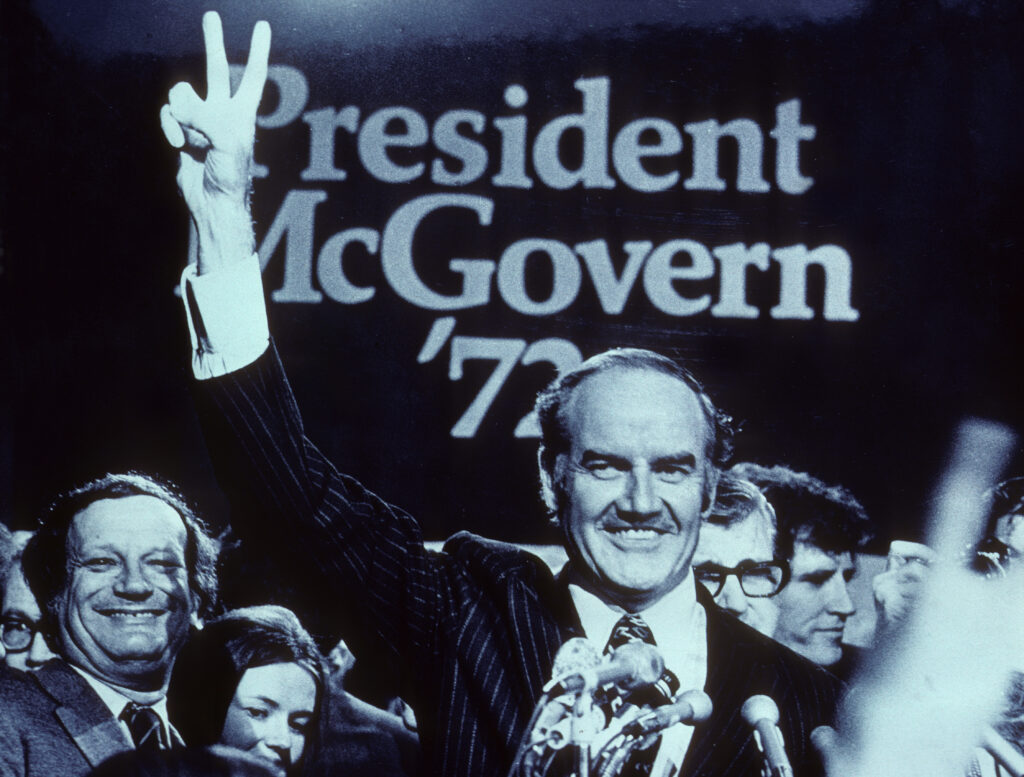
The current system is the product of a half-century ratchet. When John F. Kennedy won the 1960 Democratic nomination, just 16 states held primaries; local machines, rooted in communities and patronage, controlled the rest. The 1968 chaos — Hubert Humphrey securing the nomination without entering a primary — triggered a commission that flooded the zone with primaries. By 1972, that reform produced the nomination of commission co-chair George McGovern, who lost 49 states.
Joseph Postell of Hillsdale College, writing for the Civitas Institute at the University of Texas at Austin, traces the decay in an essay titled “Bring Back the Smoke-Filled Room.” He says that 19th-century conventions featured delegates chosen by local parties with deep community ties. They prioritized electability over the “personal catharsis” of ideological factions.
The smoke-filled room at Chicago’s Blackstone Hotel in 1920 gave Republicans Warren G. Harding — a flawed argument for party boss rule, Will concedes, but no worse than the party establishment salvaging Joe Biden in 2020 only to anoint his vice president by fiat four years later.
“Democratization — not a synonym for rule by meaningful majorities — has made the parties bystanders in candidate selection.”
Today, candidates operate as entrepreneurial startups: they curate their brand, secure early investors, and market directly to primary voters. National parties function mainly as post-hoc fundraisers. Recent cycles — Democratic debacles in 2020 and 2024, Republican ones in 2016, 2020, and 2024 — suggest the pattern is hardening.
Why closed primaries?
Will’s proposed fix is structural, not aspirational: more closed primaries, open only to registered party members. The constitutional hook is the First Amendment’s freedom of association, which includes the right not to associate.
State laws mandating open primaries may violate that right by forcing parties to admit voters who reject their platform. Open primaries also invite strategic sabotage — members of one party crossing over to nominate the other side’s weakest general-election candidate.
The Washington Post column highlights the stakes: without party gatekeeping, the nominating process stays captive to “ideologically intense but unrepresentative factions for whom politics often is more about personal catharsis than governance.”
Will, born in Champaign, Illinois, in 1941, earned a PhD from Princeton in 1968 with a dissertation titled “Beyond the Reach of Majorities: Closed Questions in the Open Society,” alluding to Justice Robert H. Jackson’s opinion in West Virginia State Board of Education v. Barnette.
He served on the staff of Republican Senator Gordon Allott of Colorado from 1970 to 1972 and assisted Ronald Reagan with debate preparation for the 1980 presidential campaign. A former Republican, he left the party in 2016 to become an independent, later voting for Joe Biden in 2020 and Kamala Harris in 2024.
The practical effect would be to re-empower party regulars — the voters who show up for school-board races and midterms — over the activist fringe that dominates low-turnout open contests. It would not restore the smoke-filled room, but it would restore a minimal filter: a nominee must first persuade the people who actually belong to the party.
Boston City Council Votes to Eliminate Parking Minimums for New Housing
Boston’s City Council voted Wednesday to strip minimum parking requirements from new residential projects, a move supporters call...

Missouri Delays Complex Care Assistant Program for Second Year Amid Internal Approval Process
Missouri lawmakers put $11 million on the table two years running for a program to pay family caregivers,...
Survey: 78% of Vermont Units Expected to Stay Affordable After Obligations End
Vermont landlords kept affordable rents on 78 percent of units after their five-year obligations expired, a new state...

Drone Operator Films Pochettino’s First Man United Session, Leaks Video on YouTube
A drone operator filmed Manchester United's first training session under new head coach Mauricio Pochettino on Thursday and...