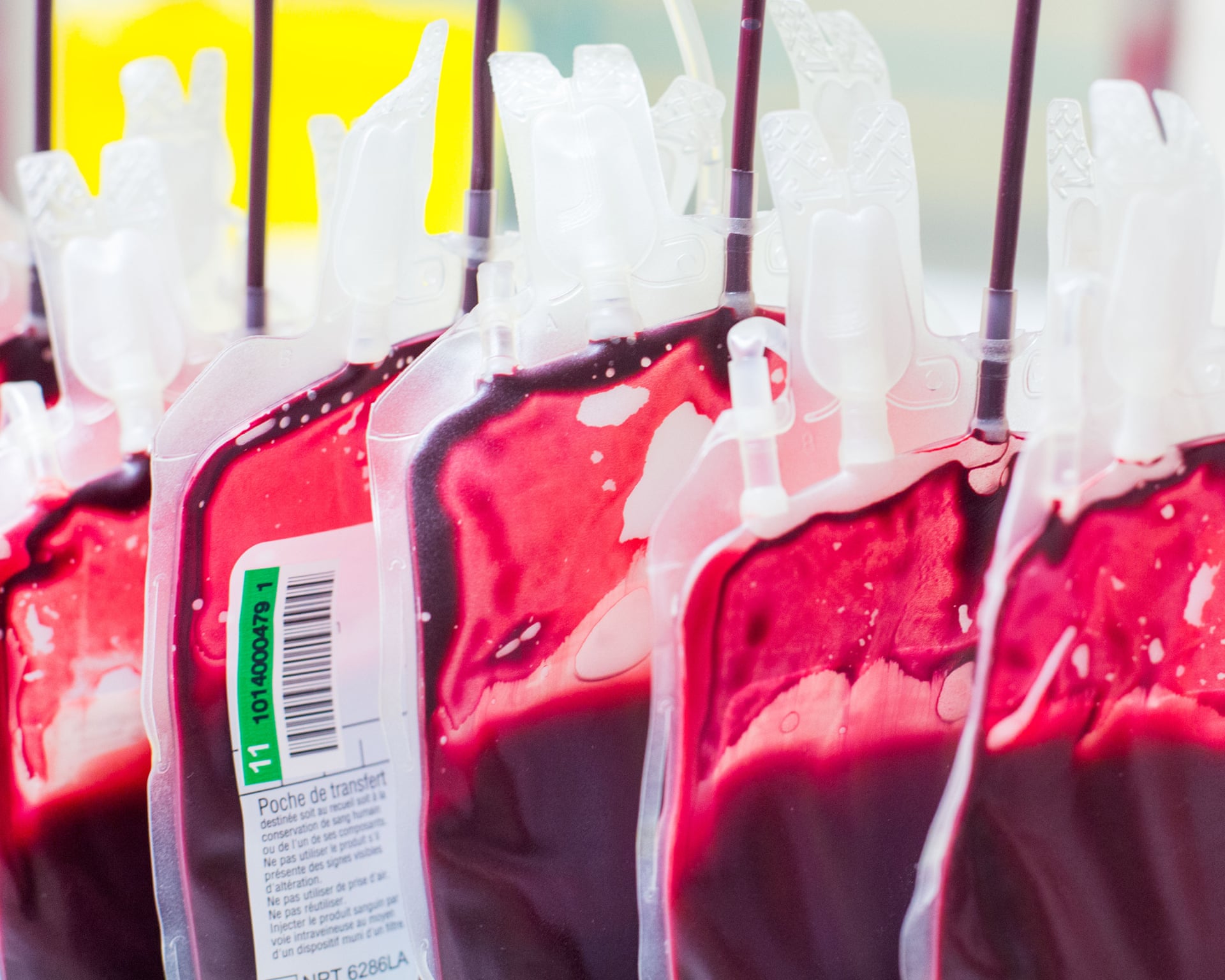
Hackers remotely reprogrammed cold stores holding France’s national blood supply to climb toward 110°C overnight on November 1-2. An on-duty technician spotted the rise, the French Blood Establishment said, and no blood products were lost. The attack on the EFS unfolded alongside a larger wave of refrigeration sabotage that hit supermarkets in about a dozen European countries.
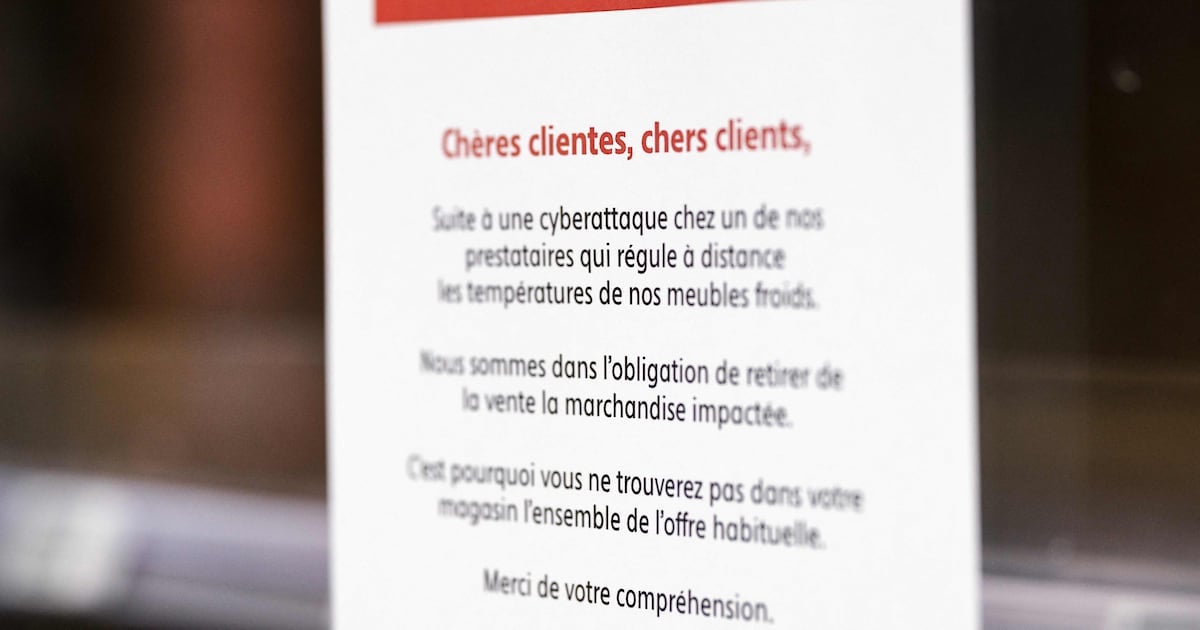
Shoppers did not. Supermarket fridges and freezers across the continent had their thermostats cranked as high as 50°C (122°F) and defrost cycles switched on remotely, forcing retailers to throw out millions of euros of fresh and frozen food.
From -30°C to 110°C at three EFS cold stores
French weekly Le Canard Enchaîné reported that the attack took place overnight from November 1 to 2. It changed refrigeration settings at facilities including sites in Bourgogne-Franche-Comté, the region worst affected. The units, normally held at about -30°C to preserve donor blood, were programmed to reach 110°C.
The EFS said it was not the direct target: the attackers reached cold-storage units at three of its preparation and distribution sites operated by outside contractors, including Coolworld, a specialist supplier. According to the EFS statement, temperature and defrost thresholds were set to excessively high levels
. The units store blood products before delivery to healthcare facilities, plus samples destined for EFS biobanks — including frozen plasma for transfusions and for manufacturing medicinal products.
🚨 Before Monday morning even came, French blood bank freezers were already set to 110°C. Fridge hacks just made their most dangerous jump yet, toward medical infrastructure. Hackers breached Coolworld, a contractor for France's national blood service. The plasma deep-freeze:… pic.twitter.com/t6hVyMpoNq
Alarms caught the change. The French Health Ministry said the blood supply was preserved thanks to the facilities’ monitoring and alarm systems, as well as precautionary measures immediately implemented
, and that there were no consequences for patients and no plasma destroyed. Affected products were moved to other sites. The EFS said it alerted France’s cybersecurity agency, ANSSI, and the health ministry while reinforcing monitoring of all its equipment. A surgeon, speaking to Le Canard Enchaîné, put the stakes bluntly: At that temperature, it would be black pudding!
The supermarket wave: millions in spoiled food across a dozen countries
The blood-storage strike landed in the middle of a rolling wave against retail refrigeration. On Monday, Belgium, Estonia, Ireland, Finland, Luxembourg, the Netherlands and Sweden reported problems. On Tuesday, retailers in Italy, Germany, Romania and the UK were hit, with cases since confirmed in Portugal. A Delhaize branch in Hoeilaart, Belgium, told news website Het Laatste Nieuws it had lost €100,000 (£83,500) worth of produce.
The wave followed a bigger French attack in mid-October. Hackers seized control of cooling units in as many as 700 of the country’s 10,000 supermarkets, hitting chains including Carrefour, Coopérative U, Intermarché and Monoprix. In Britain, hackers also struck Langridge Organic, a west London wholesaler supplying Whole Foods Market, Riverford and Able & Cole. Six of its 10 cold-room systems were taken over, with defrost cycles activated and maximum temperatures set to 66°C, as the company described.
Richard Horne, chief executive of the UK’s National Cyber Security Centre, said small meat-processing firms had also been targeted but the impact was minimal. The NCSC was aware of instances where vulnerable technology has been exploited in the UK
. The Association of Independent Meat Suppliers told the BBC that some of its 300-plus members had become collateral
in the attacks; two reported their fridges had begun defrosting. Retailers responded by hardening systems: Sweden’s Coop began switching to 5G networks and modern modems, and seven affected shops reopened with their refrigeration disconnected from the internet. Danfoss, whose controllers were among the systems struck, urged customers not to leave systems directly accessible online.
ANSSI warned about medical fridges three weeks earlier
ANSSI’s CERT-FR unit published a security alert on October 12 warning of hacks into multiple refrigeration systems. On October 21, director general Vincent Strubel told a senate hearing of the risks to refrigerators — including medical refrigerators in research laboratories, pharmacies and medical facilities.
In an updated alert, ANSSI said it was aware of compromised remote controllers including Danfoss AK-SM and AK-SC Series, Copeland xweb and Dixell xweb, and that it was working at the European level with counterparts. The EU’s cybersecurity agency, ENISA, said the large-scale attacks on retail across several member states underscore the importance of European co-operation, rapid information-sharing and co-ordinated responses to cyber incidents
. After Italy held emergency talks with intelligence officials, EU spokesperson Thomas Regnier said the bloc’s agencies were in urgent discussions with national authorities. He added: These are not isolated incidents and of course we have to be collectively resilient and prepared for such cyber incidents.
🇫🇷 🚨 FRANCE: HACKERS HIT BLOOD SERVICE COLD ROOMS, SETPOINTS PUSHED TO 110°C The refrigeration attacks hitting Europe have reached France's national blood service (EFS). Overnight on Nov 1–2, 2026, unauthorized actors took control of refrigeration controllers in EFS cold… pic.twitter.com/zEy2OowCTB
No one has claimed the attacks
Rafe Pilling, senior director for threat intelligence at Sophos, told the Guardian the most plausible attribution scenarios were a state-based signalling and demonstration of capability
or a lone-wolf hacker. Similar fridge malfunctions hit commissaries at least six US military bases in early August, and the Pentagon is investigating a suspected hack.
Horne described the UK’s position as a digital Leaning Tower of Pisa
of exploitable vulnerabilities.
In the coming months, we face a real prospect of an unprecedented rise in the number of cyber incidents,
Richard Horne, chief executive of the UK’s National Cyber Security Centre
No group has claimed responsibility for the November incidents. No motive has been established. And it has not been determined whether the blood-storage and supermarket attacks were connected — the same focus on refrigeration does not prove a common campaign.
More on Le Canard Enchaîné
A cyberattack affected a supplier of the French Blood Establishment (EFS) during the night of November 1 to 2, 2026, in France. According to the newspaper Le Canard Enchaîné, the attackers manipulated the refrigerated camera control systems used to preserve blood samples. The… pic.twitter.com/CXqyMxx6nA
Worth a look

Trump Agrees to Grant Visa to Mother of Ghanaian Boy Killed in Bronx
Javits Frimpong, a 15-year-old Ghanaian boy who had lived in the Bronx for barely a year, was chased...

Chinese Embassy Claims Artillery Projectile Found in PNG Is Wine Bottle
Four Chinese nationals remain in custody in Port Moresby after police discovered a 32-kilogram Chinese Type 59 artillery...
Fake nuclear warnings issued after Ukrainian and Russian air alert apps hacked
Ukrainian and Russian emergency alert apps were hacked on Sunday night, spreading fake warnings about nuclear attacks, radiation,...

Ryanair says it may freeze workers’ pay and raise airfares
Ryanair is considering a temporary wage freeze for staff and confirmed airfares will be materially higher next summer...