Huntsville residents who suffer serious harm from prescription or over-the-counter medications may file product liability claims under Alabama Code § 6-5-521 when a drug’s design, manufacturing process, or warnings create an unreasonable danger.
While prescription and over-the-counter drugs are designed to address medical conditions, a medication can still inflict serious injury if its design, production methods, or safety warnings pose an unreasonable risk. In such situations, a Huntsville dangerous drugs attorney from Siniard Law, LLC might investigate the point at which the manufacturer learned of the hazard and whether the prescribing doctor received sufficient details about it. Those questions can affect whether the circumstances support a product liability claim. The firm’s personal injury attorneys review medical records and prescribing information while evaluating the drug’s labeling and the manufacturer’s conduct. They determine whether medication is the cause of the injury and identify the parties whose actions may create legal responsibility.
Alabama Code § 6-5-521 Opens Multiple Stages for Defective Drug Claims
Under Alabama Code § 6-5-521, state law recognizes product liability claims involving defects and inadequate warnings. These claims may arise from a product’s manufacture, design, formula, testing, warnings, marketing, packaging, or labeling.
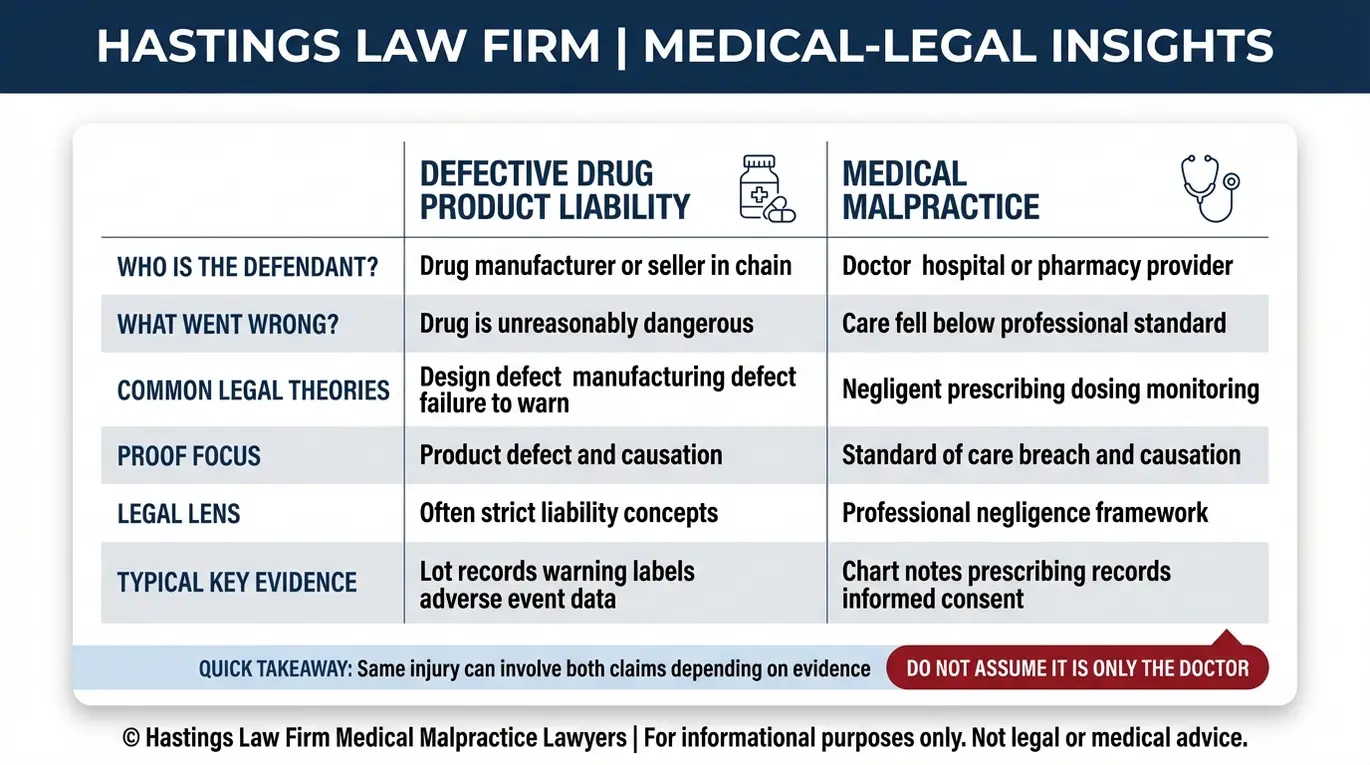
Consequently, Huntsville defective drug lawyers may look at multiple phases of a drug’s creation and supply chain instead of concentrating solely on the prescription. A claim may involve a drug that is unreasonably dangerous because of its formulation. Another possibility involves a medication with contamination that occurred during manufacturing. A further potential issue is whether the manufacturer adequately discloses a risk they are aware of. The specific drug, the injury, and the warnings available at the time of the medication’s prescription or use may determine the necessary evidence.
The Learned Intermediary Doctrine Shapes Prescription Drug Warning Cases
Prescription medication cases involve a distinctive state rule known as the learned intermediary doctrine. According to the Alabama Supreme Court, a prescription drug maker typically satisfies its duty to warn by giving sufficient hazard details to the prescribing medical professional, who acts as a go-between for the manufacturer and the patient.
When handling an unsafe medication case, Huntsville lawyers examine whether the manufacturer gave the prescriber sufficient information about the drug’s risks under state law. An inadequate-warning claim generally requires more than showing that a patient experienced a serious side effect from a medication. Proof may be required to show that the maker failed to properly inform the prescribing doctor and that this insufficient warning led to the harm. Medical records and testimony concerning the prescribing decision can become central to establishing that connection.
Statute of Limitations and Contributory Negligence Create Timing Traps
Drug injury cases can involve specialized filing deadlines. Section 6-5-502 sets time limits for specific product liability suits against original vendors and contains special provisions for hidden injuries caused by contact with or consumption of dangerous materials. Timely evaluation matters since the relevant cutoff may vary based on who is being sued, the legal argument used, and the manner in which the harm unfolded.
The state also follows contributory negligence rather than comparative fault, and that doctrine’s application depends on the particular claim. Alabama courts have acknowledged that contributory negligence connected to how someone used a product can serve as a possible defense under the Alabama Extended Manufacturer’s Liability Doctrine, whereas actions not tied to the product’s use might be treated in another way. Huntsville attorneys examine how a client took the defective medication and anticipate defenses involving use, warnings, or causation.
Understanding whether a medication caused an injury requires a close review of the medical evidence and the warnings associated with the drug. A Huntsville dangerous drugs attorney might evaluate how those circumstances fit within state statutes and spot concerns that could influence the schedule or success of a possible claim. If a resident believes they suffered harm from a prescription or over-the-counter medication, the firm’s team could review the evidence, explain legal options, and determine whether there is a basis to pursue compensation.
Worth a look
Richard Ojeda Defeats NRCC Chair Richard Hudson in NC 9th District
Ojeda Unseats NRCC Chairman Hudson in North Carolina's 9th District With all 169 precincts counted early Wednesday morning,...

SB Nation Survey: Are Seahawks Fans Sure Sam Darnold Starts in 2027?
Seahawks fans are openly questioning whether Sam Darnold will still be Seattle's starting quarterback in 2027, after a...

Elaine Luria Reclaims Virginia’s 2nd District Congressional Seat in Election Rematch
At the Holiday Inn Virginia Beach-Norfolk, a crowd of about 200 Luria supporters cheered as unofficial results showed...

Strut Your Mutt Raises Over $50,500 for No-Kill Shelters
This year, attendees at Best Friends Animal Society's Strut Your Mutt raised more than $50,500 for animals at...