
“The primary responsibility, actually only responsibility, is just making the next event,” said Asher Almanza, president of the hall council representing Driscoll, Kaiser, Morrison, Taylor, Syringa, and Chaffee Halls.
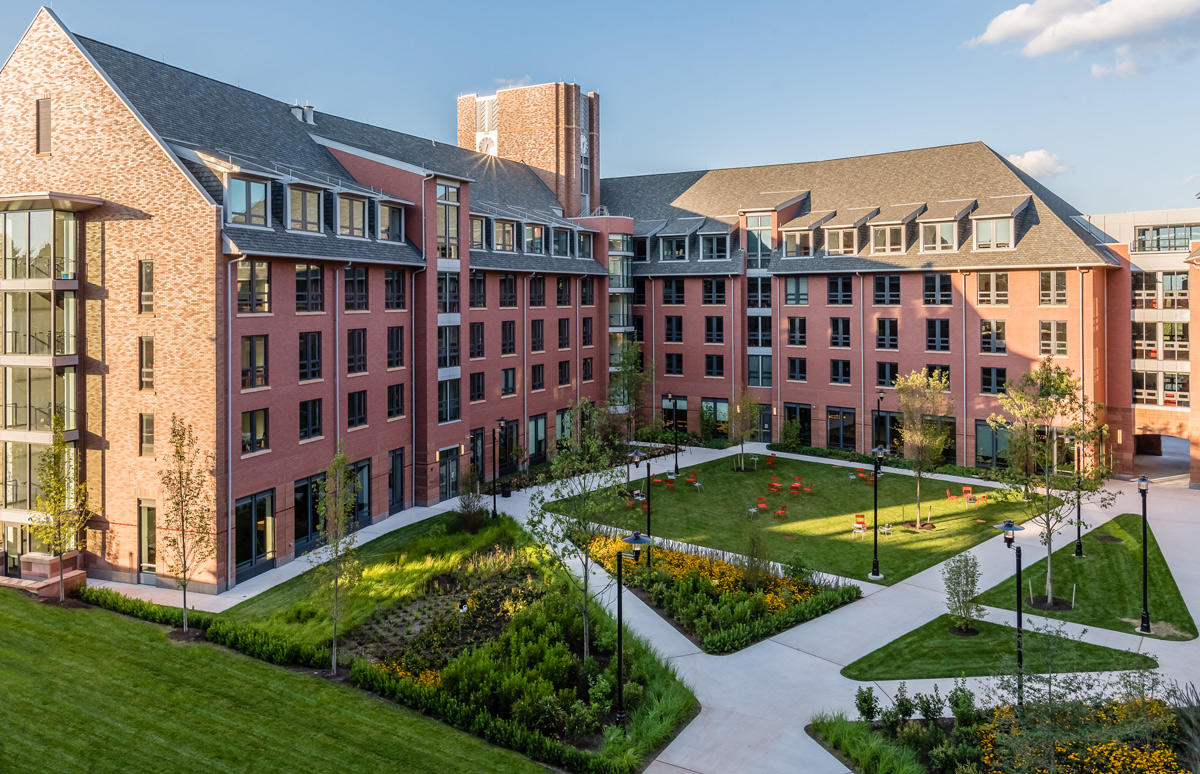
While social planning sits at the forefront of their calendar, student-led hall councils at Boise State University function as an essential, though often unseen, layer of campus governance and advocacy. These organizations operate independently of the Resident Advisor (RA) staff, placing the burden of community building and problem-solving directly into the hands of the students living in the residence halls, The Arbiter reported.
The distinction between professional staff programming and student-led initiatives is a matter of agency. Unlike typical hall programming managed by university employees, hall councils are composed of the residents themselves, working with limited assistance from campus staff to shape their own living environments.
Student leadership drives campus infrastructure
The influence of these councils extends far beyond the logistics of a weekend social. They serve as a direct conduit for resident needs to reach university administration, transforming small student observations into campus-wide physical improvements.
The model successfully installed water bottle refill stations throughout the residence halls. These stations were not part of the original building infrastructure, but rather the result of collective student advocacy.
“Those weren’t a thing originally in the residence halls, and so all councils across Boise State saw a need for that in the buildings,” Liam Szlachtowski, area director for Chaffee, Syringa and Sawtooth Halls, Honors College and Lincoln Townhomes, told The Arbiter.

Szlachtowski said that this specific demand moved through the council structures to eventually trigger permanent changes in each residence hall on campus.
A decentralized model of community management
Boise State utilizes a decentralized structure to manage its various residential zones, grouping halls into five separate councils to balance administrative efficiency with localized representation. This grouping allows certain councils to use larger budgets and wider collaborative networks.
| Council Coverage Area | Included Residence Halls |
|---|---|
| Council A | Sawtooth Hall, Honors College, and Lincoln Townhomes |
| Council B | Driscoll, Kaiser, Morrison, Taylor, Syringa, and Chaffee Halls |
| Council C | Towers Hall, Osprey, University Suites, and Square |
The councils for Sawtooth, the Honors College, and Lincoln Townhomes benefit from a combined pool of resources, according to Szlachtowski. Meanwhile, the distance of Towers Hall, Osprey, and University Suites from the main residential clusters necessitates their own independent councils.
These groups meet weekly to address the granular details of student life, ranging from upcoming social gatherings to systemic issues affecting the student body. For Almanza, a sophomore transfer student from the University of Idaho, the role is a transition from structured athletics to formal student governance.
“I’ve loved the prospect of leadership. I was a part of football teams, wrestling teams in middle school. I’ve always done things like that. But as far as officially overseeing, this would be my first college-based thing,” Almanza told The Arbiter.
Balancing social engagement with resident safety
The mandate of a hall council president involves a delicate tension between fostering a vibrant social scene and maintaining the stability of the living environment. Almanza has identified this duality as a core priority for his administration.
While organizing events like upcoming Halloween parties is a primary task, the broader mission involves creating a sense of security that encompasses more than just physical well-being. Almanza emphasizes that “safety” in a residential context is a multi-dimensional concept.
“Goal number one is always to make sure everyone feels safe, and that isn’t just physical safety – it’s emotional safety, it’s academic safety,” Almanza said.
This approach seeks to mitigate the isolation often felt in large university settings by using events as a tool for integration. The objective is to ensure that the residence halls function as cohesive communities rather than just collections of individual dorm rooms.
“You always want to ensure that you can make a very welcoming environment for everyone, and make Boise State Hall Council a good community because that’s what we’re all about,” Almanza said.
Related reading

Goldbelt Cruise Port Could Cause Emergency Service Delays in Juneau
Emergency responders may face delays and resource shortages if Goldbelt's proposed cruise port moves forward on West Douglas...
Pinedale Home Prices Rise as Mayor Tracks Loss of Public Workers
Pinedale home prices have climbed by roughly $200,000 in recent years as the Wyoming town struggles to balance...

Milwaukee Residents Weigh in on New Midtown Center Branch Library Design
Milwaukee Public Library officials and architects met with community members on Tuesday to discuss the future of the...

The History of Hartline and the Development of Grant County, Washington
Voters approved the incorporation of Hartline by a margin of just three votes on February 2, 1907, according...