
The Boston City Council voted Wednesday to eliminate minimum parking requirements for new housing developments, a 9-to-4 decision that marks the biggest rewrite of the city's zoning code since the mandates were introduced in the 1950s.
The measure, led by Councilor Sharon Durkan, now heads to the Boston Zoning Commission for final approval. If ratified, developers would no longer be forced to include a set number of off-street spaces — currently ranging from 0.5 to two spots per unit depending on the neighborhood — and could instead build parking based on actual market demand and project financing, The Real Deal reported.
“Most of Boston’s housing was built before parking minimums were established in the 1950s under the misguided assumption that parking would reduce congestion,” Durkan said at Wednesday’s meeting. “Instead, these mandates have made it harder to build housing and forced developers to build more parking than we actually need.”
The cost argument
Housing advocates and industry groups have long argued that mandatory parking acts as a hidden tax on construction. Building above-ground parking runs roughly $40,000 per space, while underground spots can exceed $100,000 each, according to figures cited by the Greater Boston Real Estate Board during the debate. Those costs are typically passed through to renters and buyers in the form of higher rents and sale prices.
A 2023 report commissioned by the Boston Planning Department concluded that eliminating parking minimums would be the “single substantive change” to the zoning code that would “do the most good for the city.”
Researchers at the Metropolitan Area Planning Council found in 2019 that the region already had 33 percent more residential off-street parking than it needed; at peak times, only about 70 percent of spaces at apartment complexes were occupied, and at a quarter of surveyed sites, less than half were in use.
“Removing parking mandates increases the financial viability of smaller, ‘missing middle’ housing projects on constrained parcels, which are currently often denied financing because the cost of required parking exceeds the potential rental income of the units.”
the proposal stated, according to The Real Deal. About 34 percent of Boston households do not own a car, according to American Community Survey data.
Councilors split over citywide parking mandate
The vote was not unanimous. Councilors Ed Flynn, Erin Murphy, John Fitzgerald and Brian Worrell voted against the measure; Councilor Julia Mejia voted present. Opponents argued that a citywide mandate ignores the reality of neighborhoods with limited transit access, where families, seniors and workers with irregular shifts depend on cars.
“We cannot make public policy based solely on our own lifestyles or an idealized vision of how people should live,” Murphy said during the nearly two-hour debate. “Boston will never be a city without cars. … We must make practical decisions grounded in reality. Eliminating parking requirements does not eliminate cars.”
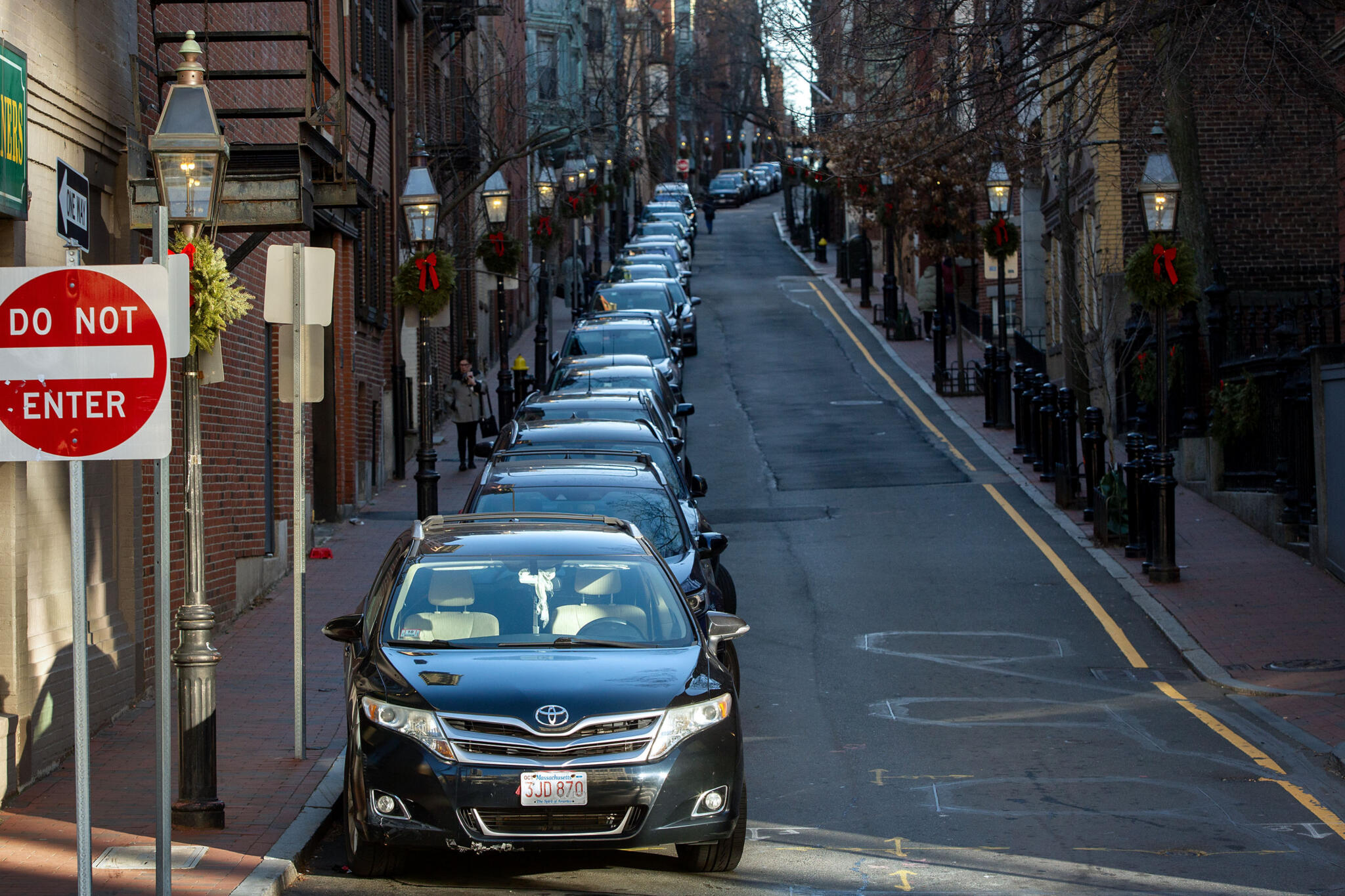
Flynn echoed that concern, writing on social media this week that when new buildings lack parking, “those cars invariably wind up on the street and exacerbate our existing parking crisis for residents,” WBUR reported.
To secure votes, the council adopted temporary exemptions for East Boston, Charlestown and Mattapan — areas that recently completed neighborhood-level rezoning efforts that already adjusted parking rules. Those exemptions expire in early 2029.
Other Massachusetts cities already eliminated minimums
Boston follows a growing list of Massachusetts cities that have scrapped minimums. Cambridge led the way in 2022, followed by Somerville and Salem. Nationally, Austin, Texas eliminated its requirements in 2023 — the largest U.S. city to do so — and has since seen average rents decline, bucking national trends, masslive.com reported.
The Boston measure also builds on a 2021 council vote that removed parking minimums for affordable housing developments. Wednesday’s action extends that logic to all residential construction.
The Zoning Commission is expected to take up the petition in the coming months. If approved, the new rules would take effect citywide, with the three exempted neighborhoods joining on a delayed timeline.
Keep reading
Amtrak Opens Renovated South Concourse at Philadelphia’s 30th Street Station
Amtrak cut the ribbon Friday on the newly renovated South Concourse at William H. Gray III 30th Street...

Yankees Agree to Two-Year, $18M Deal With Loaisiga, 2029 Option
The Yankees were supposed to be out on Jonathan Loaisiga. By Thursday night they had agreed to a...

Anthropic Shares Sink Near IPO Price as Tech Selloff Deepens
Anthropic shares fell to an $85 handle on Friday as the record-breaking IPO failed to halt a global...
Federal Appeals Court Halts Army Detonation of Unstable Lead Azide at Iowa Plant
A federal appeals court halted the U.S. Army’s plan to detonate nearly five tons of unstable lead azide...