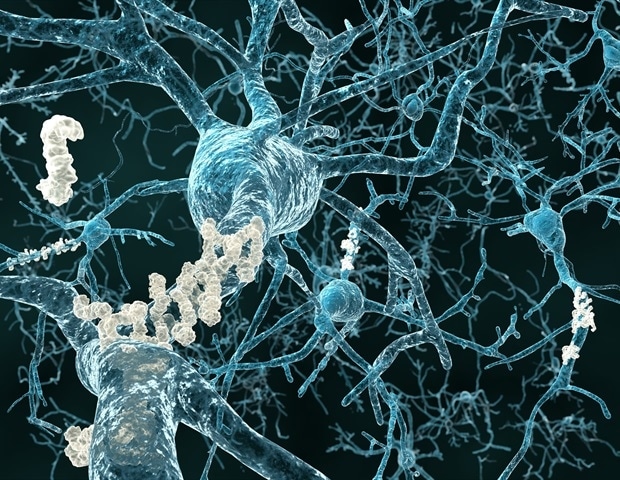
Brain shrinkage begins in specific regions up to ten years before clinical memory loss appears, according to a Johns Hopkins University study published in NeuroImage: Reports and presented this week at Neuroscience 2026, the annual meeting of the Society for Neuroscience.
Researchers analyzed hundreds of magnetic resonance imaging (MRI) and positron emission tomography (PET) scans from two independent cohorts: the Alzheimer’s Disease Neuroimaging Initiative and the Biomarkers of Cognitive Decline Among Normal Individuals study.
The analysis revealed that the entorhinal cortex and the amygdala show greater relative atrophy and volume loss than the hippocampus during the early phase of the disease. While doctors typically examine the hippocampus for evidence of Alzheimer’s, these two neighboring regions begin shrinking significantly earlier.
The entorhinal cortex handles the retrieval of old memories, while the amygdala links to emotional memory.
“We have found that there are early changes in the brain manifesting the clinical biomarkers of atrophy as much as a decade before there are clinical symptoms,” said Michael Miller, biomedical engineer and senior author at Johns Hopkins University.

“It’s at least a 5-to-10-year play where your brain is changing. Imagine if we could start to treat the neurodegenerative changes at the 2, 3 or 4-year point rather than after 15 years when the changes are manifesting in memory symptoms. That’s the great promise here for your loved ones who are at risk,” Miller told News-Medical.
Alzheimer’s remains the leading cause of dementia worldwide, developing in the brain decades before symptoms emerge. Researchers intend to develop reliable biomarkers so treatments can begin during these early years.
“Our goal is to be able to treat individuals before the symptoms of Alzheimer’s disease develop so that they may [be] delayed or even stopped,” said Marilyn Albert, co-author and director of the Johns Hopkins Alzheimer’s Disease Research Center.
“As biomarkers and treatments become increasingly available, knowing who is going to have cognitive decline is going to be really important,” said co-author Meaghan Morris, a neuropathologist who studies Alzheimer’s and other dementias.
“This could really play into better risk stratification for identifying who is going to have cognitive decline in the near future—and treating people earlier and earlier to hopefully slow the course of the disease,” Morris told News-Medical.
More work remains before these findings translate into routine diagnostic tools. The research team aims to examine these key brain areas to understand the molecular mechanisms occurring as the disease progresses.
“Our future work is to better show the molecular neighborhoods associated with these Tau protein changes as localized by these clinical biomarkers of atrophy,” Miller told News-Medical. “Once we know more about the molecular neighborhoods, we can develop therapies.”
In parallel research reported by Science Daily, scientists at the University of Central Florida discovered that genetic mutations associated with familial Alzheimer’s can interfere directly with motor neurons controlling muscle movement, operating independently of the brain or spinal cord.
Using human-on-a-chip laboratory technology, the University of Central Florida team found that these mutations disrupt connections responsible for muscle control in individuals aged 40 to 65, potentially explaining walking and balance changes that precede memory symptoms.

NASA Probe From the ’70s Will Be a Light-Day Away on Wednesday
Nearly 50 years after leaving Earth, NASA’s Voyager 1 probe is set to cross a historic barrier on...

How Napping Patterns May Predict Health Risks and Mortality in Older Adults
For millions of older adults, a mid-day rest is a cherished ritual, a quiet pause to recharge in...

MPR Schedules Dec 9 Session to Elect New Vice President After Gibran Resigns
The People's Consultative Assembly (MPR) has set a special plenary meeting for Dec. 9 to name and swear...
Why Sleep Matters When It Comes to Weight Gain and Loss – NPR
If you want to maintain a healthy weight, you probably know you should watch what you eat and...