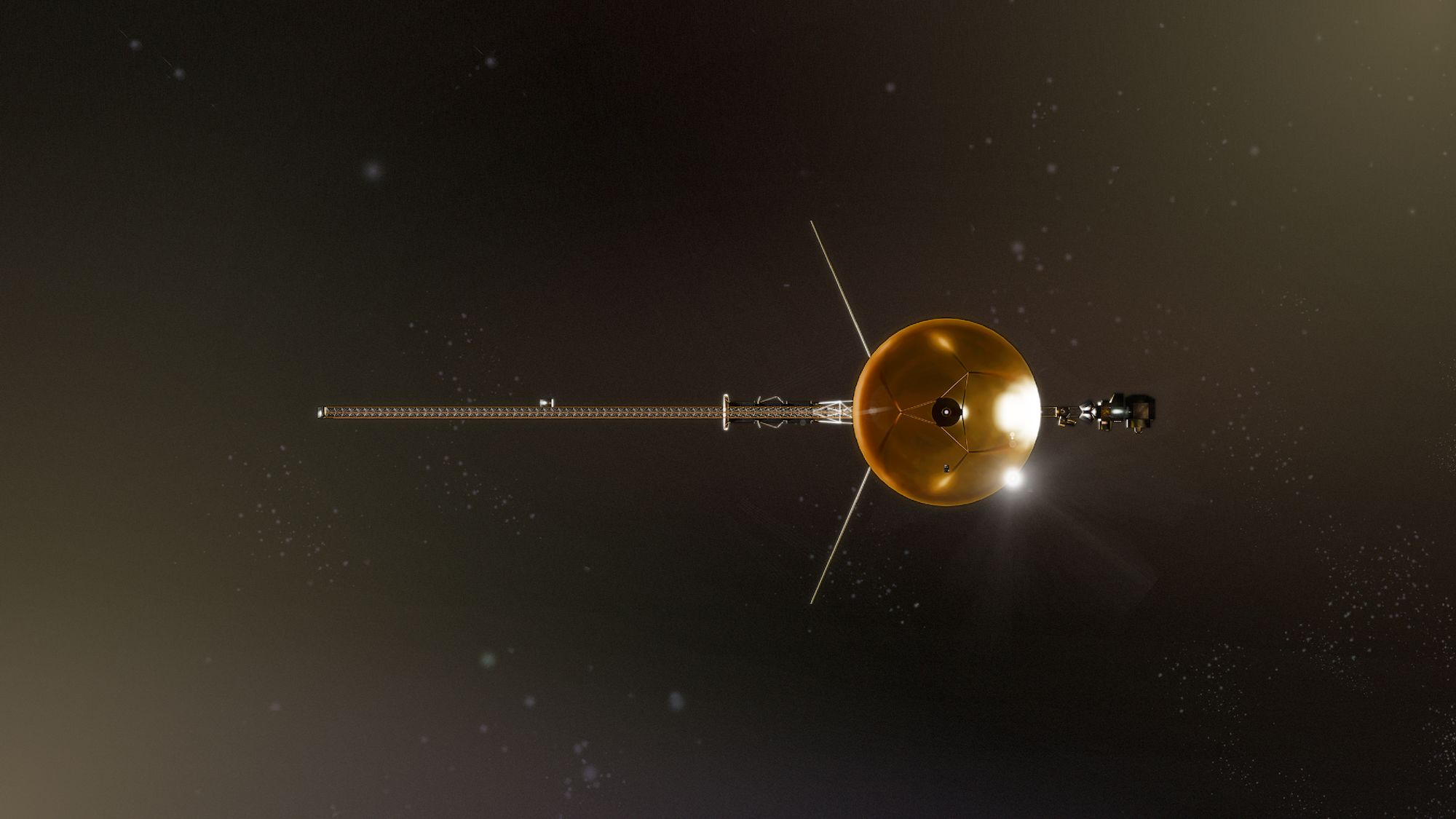
Nearly 50 years after leaving Earth, NASA’s Voyager 1 probe is set to cross a historic barrier on Wednesday becoming the first human-made object to reach one light-day away from our planet.
The milestone arrives at 5:16:07 a.m. EST, marking a journey of 49 years, two months, and 11 days since the spacecraft lifted off from Kennedy Space Center on September 5, 1977. Traveling at roughly 38,000 mph, Voyager 1 sits more than 16 billion miles away in interstellar space, a vast expanse beyond the protective bubble of the sun’s heliosphere.
NASA’s Jet Propulsion Laboratory in Southern California built both spacecraft and still operates them. The Voyager mission is funded by NASA’s Heliophysics Division at NASA Headquarters in Washington. The total mission costs from launch to Neptune, spanning about 12 years from 1977 to 1989, reached $865 million, with an additional $30 million budgeted for its extended mission.
What a Light-Day Means for Deep-Space Communication
A light-day measures the distance light covers in 24 hours at approximately 186,000 miles per second. For Voyager 1, that distance translates to about 16.09 billion miles, or 25.9 billion kilometers.

That immense separation transforms how mission engineers operate the nuclear-powered probe. A radio signal sent from Earth now takes 24 hours to reach the spacecraft, and any reply requires another full day to make the return trip.
Voyager 1 can be reached through the network’s two Northern Hemisphere complexes, located in California and Spain, and antenna time there is shared with other missions; NASA’s inspector general called it oversubscribed in a 2023 audit. During the light-day crossover, the spacecraft will be in contact with the Deep Space Network that monitors deep-space missions.
Because of this lag, Voyager 1’s automated fault-protection systems must handle anomalies independently. Any onboard safety response occurs two full days before Earth can intervene or answer, meaning the decision after a fault belongs to onboard software rather than a flight controller.
Power Management and Dwindling Instruments
Built with 1970s technology, the aging probe relies on radioisotope thermoelectric generators that lose about four watts of power each year. To keep the spacecraft functioning in the extreme cold of deep space, NASA engineers have progressively shut down instruments and power-hungry systems.
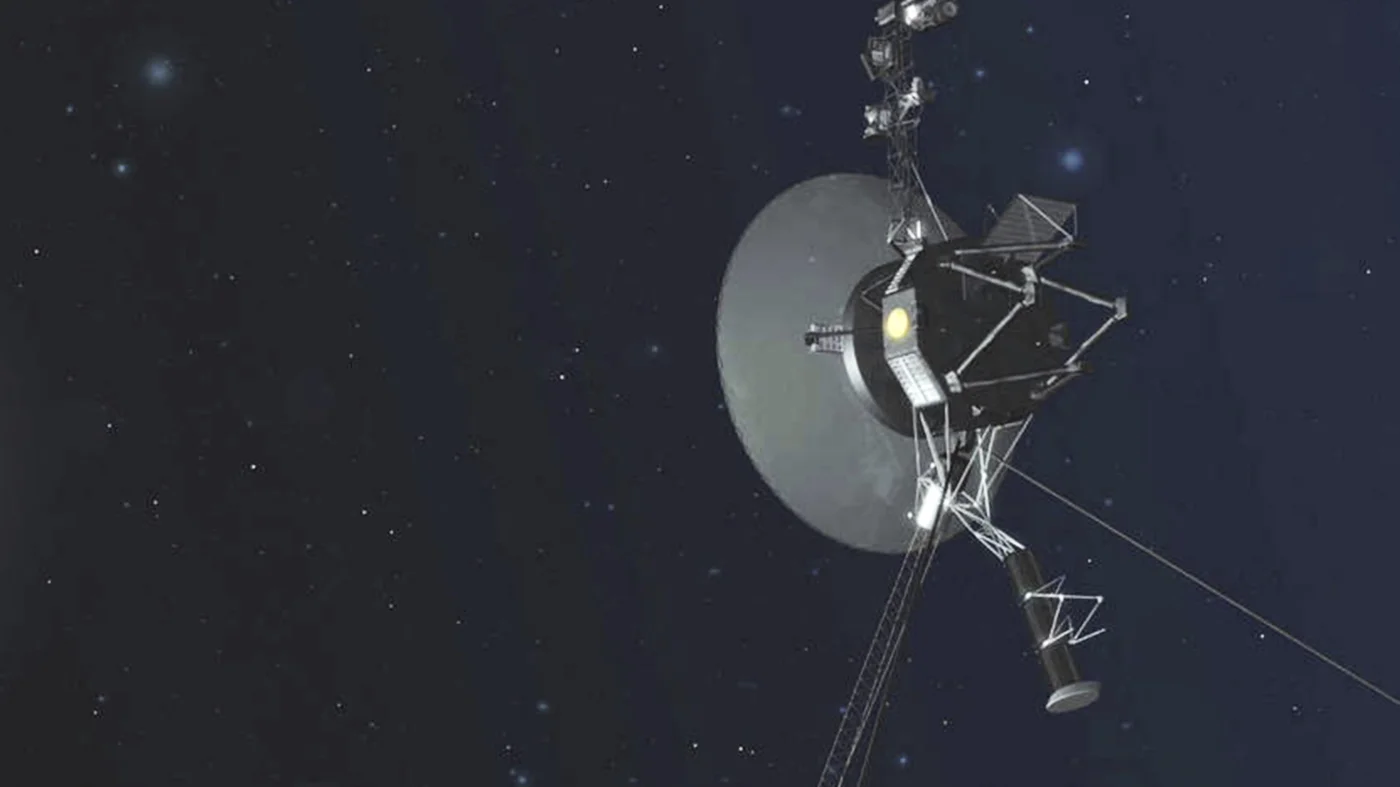
Earlier this year, the agency turned off the low-energy charged particles experiment to conserve electricity. Only two science instruments remain operational: one measuring magnetic fields and another listening for plasma waves. Mission teams also completed an internal power-saving initiative that shut down three devices and powered on low-power alternatives, extending the probe’s operating life.
In October, Voyager 1 experienced a temporary two-day signal blackout when a group of thrusters went offline and backup thrusters engaged automatically, prompting an investigation by JPL engineers.
Global Celebrations and Public Tributes
To mark the historic crossing, NASA organized a symbolic public salute titled Shine Bright for Voyager’s Light-Day. On Tuesday evening, the agency invited people around the world to flash lights toward the sky in Morse code, spelling out the spacecraft’s call sign “V-G-R” using three short flashes and one long flash for V, two long and one short for G, and a short-long-short sequence for R.
Institutions such as Caltech hosted local gatherings outside Beckman Auditorium in Pasadena, inviting residents to raise a light to the evening sky in honor of the JPL-built probe. JPL scheduled a moderated discussion with mission leadership to review the status of both Voyager probes.
Legacy Beyond the Solar System
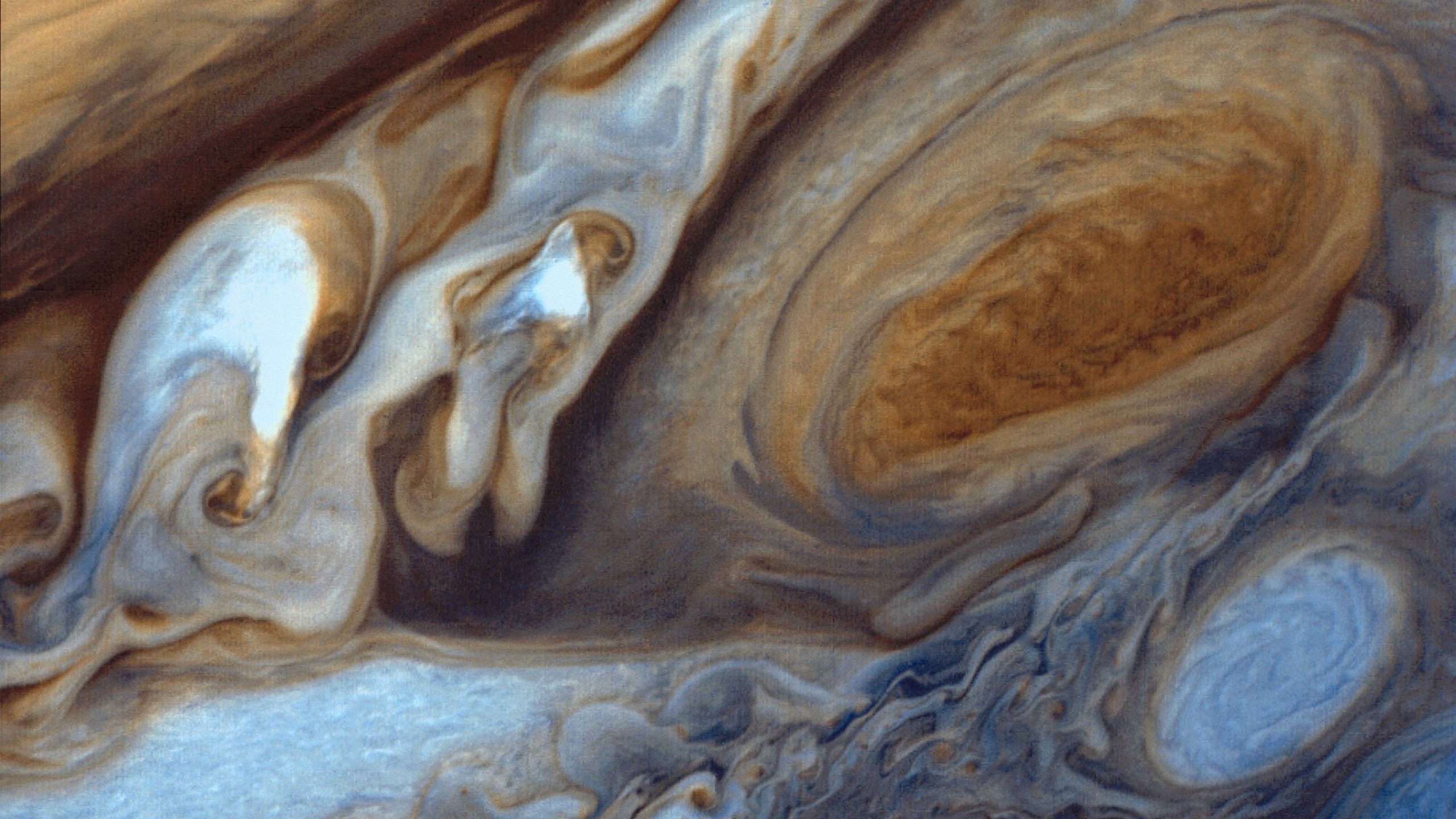
Long before reaching interstellar space in August 2012, Voyager 1 transformed human understanding of the outer planets. During its grand tour, it flew past Jupiter and Saturn, capturing unprecedented close-up imagery of turbulent atmospheres and discovering faint ring systems. It also photographed Saturn’s moon Titan, finding an atmosphere rich in nitrogen.
Casey Dreier, chief of space policy for The Planetary Society, emphasized the enduring significance of the mission. “This is the furthest out that any human thing has been sent that is still talking to us. That is just truly remarkable,” Dreier told ABC News.
Both Voyager 1 and its twin, Voyager 2, carry the Golden Record—an interstellar time capsule containing spoken greetings in multiple languages, natural sounds, music, and images designed to communicate Earth’s story. While Voyager 1 will exhaust its power in the 2030s, it continues its silent trajectory outward, eventually passing within 1.7 light-years of the star Gliese 445 in roughly 40,000 years.
Worth a look
Brain Shrinkage May Predict Alzheimer’s a Decade Before Symptoms – News-Medical
Brain shrinkage begins in specific regions up to ten years before clinical memory loss appears, according to a...

How Napping Patterns May Predict Health Risks and Mortality in Older Adults
For millions of older adults, a mid-day rest is a cherished ritual, a quiet pause to recharge in...

MPR Schedules Dec 9 Session to Elect New Vice President After Gibran Resigns
The People's Consultative Assembly (MPR) has set a special plenary meeting for Dec. 9 to name and swear...
Why Sleep Matters When It Comes to Weight Gain and Loss – NPR
If you want to maintain a healthy weight, you probably know you should watch what you eat and...