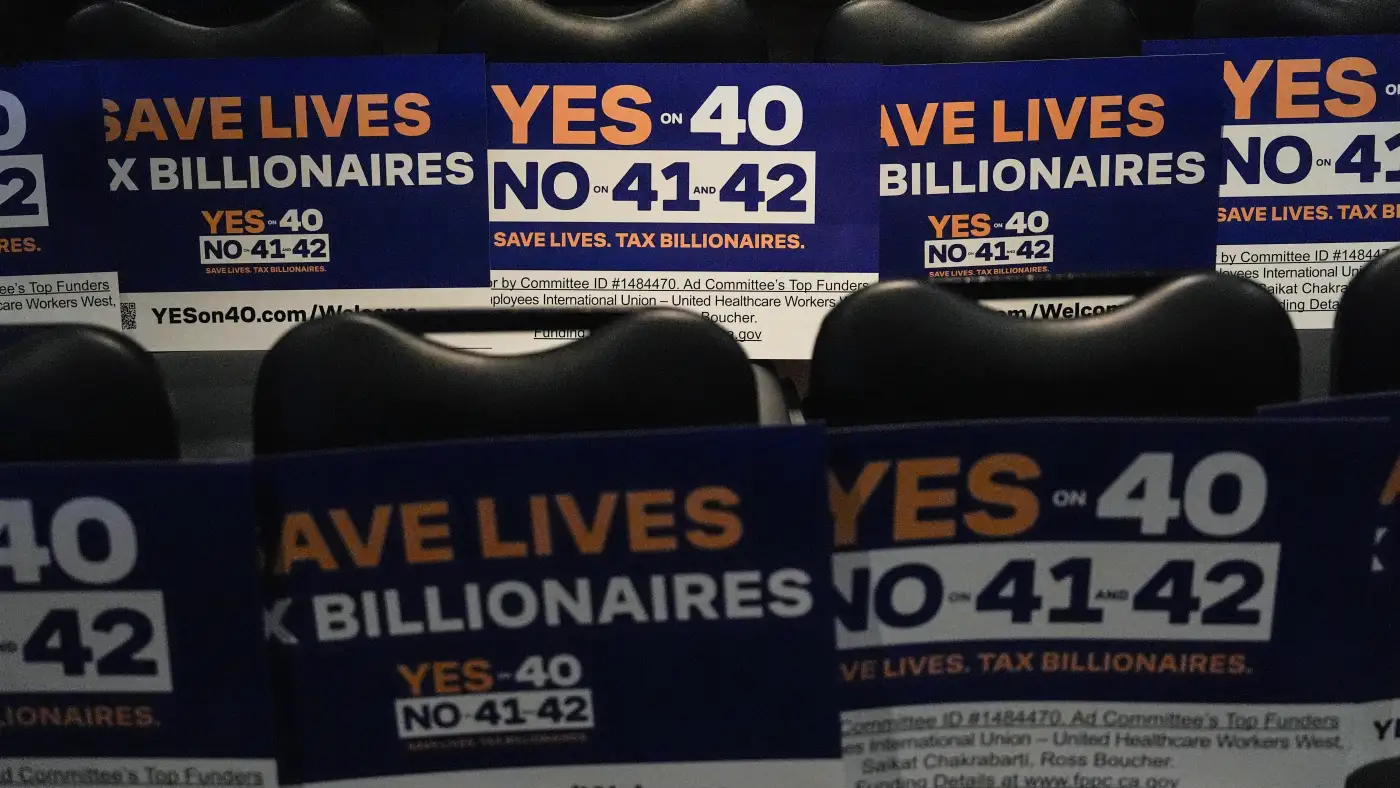
California voters have rejected a proposal to charge billionaires a one-time 5% tax on most of their wealth, NPR reported.
The defeat of Proposition 40 changes state fiscal policy after a high-stakes battle that deeply divided the Democratic Party. While proponents argued the measure was a necessary fix for healthcare funding, the outcome suggests voters were wary of the economic consequences promised by opponents.
The measure would have targeted the state’s massive concentration of wealth, with estimates suggesting California is home to more than 200 billionaires, and some figures placing that number in the hundreds. According to data from the Legislative Analyst’s Office, the proposal aimed to levy the tax on total wealth, including assets such as company shares.
The campaign for Proposition 40 created a rare and public rift among California’s Democratic leadership. On one side, the state’s Democratic Party supported the measure, bolstered by high-profile endorsements from Rep. Ro Khanna, D-Calif., and Sen. Bernie Sanders, I-Vt., who traveled to the state to advocate for the tax.
On the other side, the state’s top Democrats voiced opposition. Governor Gavin Newsom argued that a national tax on the wealthy would be a more effective approach than a state-level mandate. Democratic candidate for governor Xavier Becerra also stood against the proposal.

The divide extended to organized labor as well. While the SEIU-UHW, a union representing healthcare workers, led the charge for the tax, a prominent teachers union opposed it. That opposition stemmed from concerns that the measure would only set aside a small portion of the projected revenue for schools.
The economic arguments centered on the potential for capital flight. Opponents claimed the tax would drive the state’s wealthiest residents to other jurisdictions, ultimately harming the local economy and reducing overall tax revenue.
The opposition spent more money than the supporters of the measure. Jingletree.com reported that at least five times as much money was spent opposing Proposition 40 as was spent in favor of it.
Google co-founder Sergey Brin emerged as a central figure in the opposition movement. Brin led a surge of campaign spending from wealthy Californians to defeat the tax. Beyond direct spending, Brin also drove a campaign to place two additional proposals on the ballot designed to block the billionaire tax from taking effect even if voters had approved it.
The debate highlighted two fundamentally different visions for California’s fiscal future:
| Perspective | Primary Argument | Proposed Outcome |
|---|---|---|
| Proponents (e.g., SEIU-UHW) | Wealthy citizens should fill gaps left by federal healthcare cuts. | Raise over $100 billion for state healthcare funds. |
| Opponents (e.g., Gov. Newsom, Sergey Brin) | A state-level wealth tax would drive billionaires out of California. | Protect the state economy and prevent revenue loss. |
Supporters maintained that the tax was a direct response to a Republican-controlled Congress cutting healthcare programs, arguing that California’s wealthiest residents should help bridge the resulting funding gap. Jingletree.com noted that the outcome of this vote could potentially hinder the momentum of the wealth tax movement in California and across the country in the coming years.
The rejection of Proposition 40 leaves the state’s massive healthcare funding needs unresolved, even as the debate over how to tax concentrated wealth continues to simmer in the political arena.
Related reading

Candlelight Weekend Kicks Off Holiday Festivities in Downtown Frankfort
Downtown Frankfort transitions into the holiday season this week as Candlelight Weekend kicks off on Thursday. The multi-day...

Liv Diaz named Peach Belt Defensive Player of the Week – Georgia College
Liv Diaz recorded a career-high 27 digs in a single match to help secure her selection as the...

Central Florida Cold Front to Bring Weekend Lows in the 40s
Central Florida weather will change late Thursday night as a strong cold front approaches the region. According to...

Capital for Change Celebrates 10 Years of Expanded Operations
“To go into Bloomfield and to an all-white neighborhood to pose as the buyer of a house and...