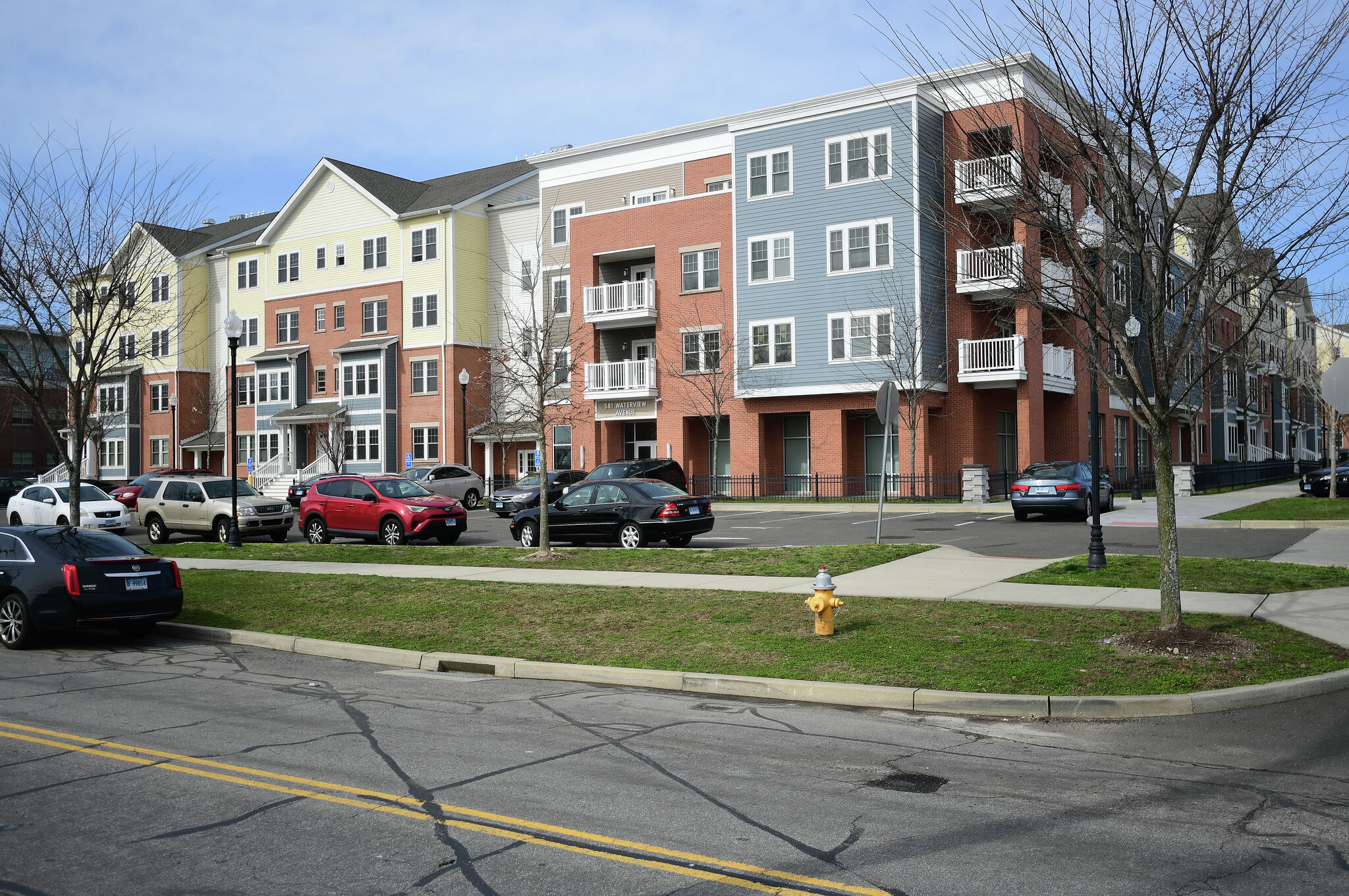
Connecticut Community Renewal Associates plans to add 73 apartments to the Crescent Crossings development in Bridgeport.
The developer submitted a proposal for Phase 1D, which features a new four-story residential building at 560 Crescent Ave., CTPost reported. This upcoming stage advances the master development plan for the property at 252 Hallett St., expanding a housing community that has completed two phases and has a third under construction.
The project would introduce a 16th building to the site. This structure is designed with a central corridor and multiple entrances to serve its future tenants. To support the influx of residents, the developer intends to install additional parking spaces along Cutter Drive.
The site holds deep roots in the local community, as it serves as the former location of Father Panik Village, a public low-income housing development. The transition from public housing to the current multi-phase residential complex marks a significant shift in the area’s urban landscape.
Construction on the surrounding infrastructure is already well underway. Portions of Cutter Drive and the parking areas along Church Street, which runs along the southern edge of the site, have already been built. Much of the ground designated for this new phase has been prepared during the work performed on previous stages of the project.

During an Oct. 26 meeting, the Planning and Zoning Commission heard the formal proposal from the applicant. As the development moves closer to implementation, concerns regarding environmental impact have been addressed by the legal team representing the developer.
“The proposed development would not have any impact on the Yellow Mill Channel or Long Island Sound,” attorney Christopher Russo, representing the applicant, said in a letter to the Zoning Department, according to CTPost.
The expansion of Crescent Crossings comes as Bridgeport continues to manage its housing inventory and land use. By utilizing land that was previously prepared for construction, the developer aims to integrate these 73 new units into the existing fabric of the neighborhood with minimal additional disruption to the local ecology.
Related reading

No. 9 Tennessee Faces Texas A&M in Crucial SEC Road Matchup
No. 9 Tennessee faces a critical road test against Texas A&M this Saturday at 3 p.m. Eastern Time....

Oregon Progressives Gain Power to Push Wealth Tax and Policy Shifts
Oregon progressives roughly doubled their presence in the House and Senate during last week's election as the Democratic...

Why Beating Michigan Is the Only Nonnegotiable Left for Ohio State
In a column for Land-Grant Holy Land, a contributor argues that while Ohio State has three games remaining...

Proposed SNAP Rule Changes Could Impact Nevada Families and Retailers
Federal regulators are moving to tighten how families qualify for food assistance, a decision that could strip nutrition...