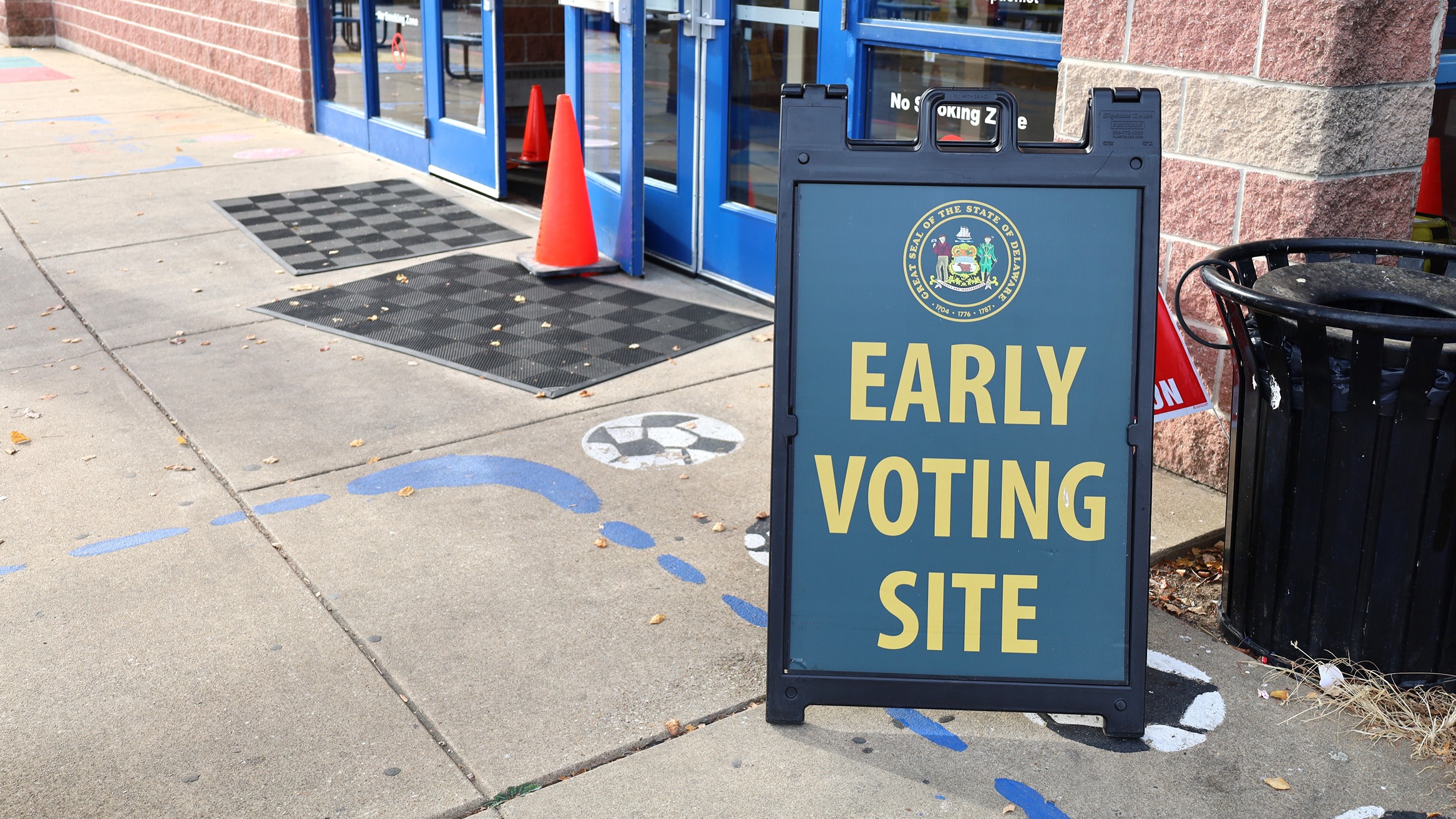
“The states — not the president — run elections,” Delaware Attorney General Kathy Jennings told WHYY News.
A federal judge dismissed a lawsuit on Tuesday brought by the U.S. Department of Justice that sought to force Delaware to hand over unredacted voter registration data. U.S. District Court Judge Richard Andrews ruled that the federal government failed to demonstrate a legal necessity for the sensitive information to ensure compliance with the Civil Rights Act of 1960.
The legal battle centered on the DOJ’s attempt to obtain voter records that include highly sensitive personal details, such as Social Security numbers, dates of birth, and home addresses. While the federal government argued that access to data from all states was required to maintain election integrity, the court found the government’s case insufficient to compel the release of the unredacted files.
This decision marks a significant setback for the Trump administration’s efforts to access state-level voter rolls. According to Bloomberg Law, Judge Andrews said that electronic voter roll files created by state officials are not records that federal law authorizes the attorney general to request.
He also indicated agreement with the U.S. Court of Appeals for the Sixth Circuit and other trial judges who have reached similar conclusions in other jurisdictions.

A dispute over federal overreach
The tension between federal authority and state sovereignty has intensified since the DOJ first requested the data voluntarily in July 2025. When Delaware refused, the Justice Department filed suit in December to compel Elections Commissioner Anthony Albence to produce the records, WHYY reported.
Delaware officials have framed the lawsuit not as a matter of integrity, but as an intrusion into state governance. Attorney General Jennings characterized the DOJ’s pursuit as “illegal” and an example of “federal overreach,” adding that the state’s responsibility is to keep voter data secure.
The case also drew intervention from private citizens and non-profit groups concerned about the privacy of the electorate. Among those allowed to intervene were Gemma Lowery, a Middletown resident, and Beth Jennings, the director of Widener University’s Delaware Law School.
“With today’s ruling, every single one of the federal district courts with active cases — 28 in total — has rejected the attempt by President Trump’s Department of Justice to turn a law intended to protect civil rights into a tool to seize Americans’ private voter data,” said Elisabeth Frost, litigation chair at Elias Law Group.
Frost represented the individuals and organizations that intervened in the litigation to protect voter privacy.
The tension between security and privacy
The core of the disagreement rests on how the Civil Rights Act of 1960 should be applied in the modern era of digital record-keeping. The DOJ maintains that broad access to unredacted data is a prerequisite for verifying the accuracy of election rolls across the country. They argue that without seeing the raw data, including Social Security numbers, the federal government cannot effectively oversee the integrity of the process.
Conversely, state officials and privacy advocates argue that the collection of such granular data by the federal government creates unnecessary security risks. For the residents of Delaware, the stakes involve the protection of their most sensitive identity markers from potential federal misuse or secondary data breaches.
The ruling in Delaware follows a pattern of judicial resistance to similar federal requests. As Elisabeth Frost noted, this decision joins a total of 28 federal district courts that have now rejected the Department of Justice’s attempts to obtain this specific type of private voter information.
The DOJ has not yet indicated if it will appeal the decision made by Judge Andrews.
Keep reading

No. 9 Tennessee Faces Texas A&M in Crucial SEC Road Matchup
No. 9 Tennessee faces a critical road test against Texas A&M this Saturday at 3 p.m. Eastern Time....

Oregon Progressives Gain Power to Push Wealth Tax and Policy Shifts
Oregon progressives roughly doubled their presence in the House and Senate during last week's election as the Democratic...

Why Beating Michigan Is the Only Nonnegotiable Left for Ohio State
In a column for Land-Grant Holy Land, a contributor argues that while Ohio State has three games remaining...

Proposed SNAP Rule Changes Could Impact Nevada Families and Retailers
Federal regulators are moving to tighten how families qualify for food assistance, a decision that could strip nutrition...