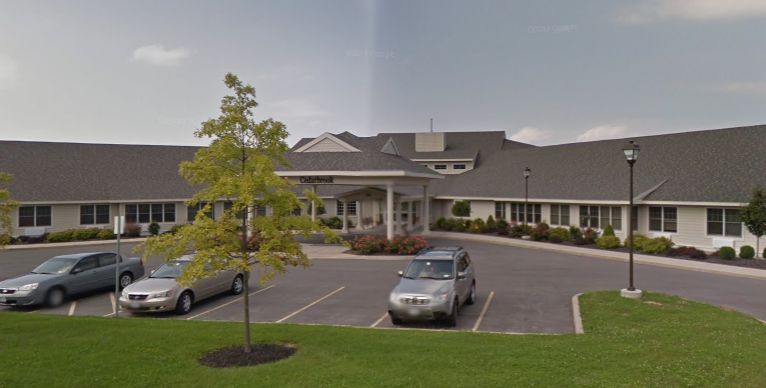
Cedarbrook Village carries a price tag that tops the local market by roughly two hundred dollars a month, according to the latest figures compiled by CareScout.
The nonprofit community on Sitrin Lane in New Hartford lists a starting rate of $6,100 per month, while the surrounding area averages $5,900, CareScout reported. For families comparing options in Oneida County, that gap can mean an extra thousands of dollars a year before add-on services are calculated.
Being Patient, which aggregates state licensing data and provider-supplied details, confirms the facility holds an active Enriched Housing Program license from the New York State Department of Health, with capacity for 65 residents aged 62 and older. The licensee, Cedarbrook Village, Inc., operates as a nonprofit, a structure that often signals mission-driven governance but does not guarantee lower out-of-pocket costs.
“Cost is the first filter for most families, but it’s the clinical capacity that determines whether a parent can age in place,” said a senior-living consultant who reviews state inspection reports for placement agencies. “An Enriched Housing license allows a higher level of nursing oversight than standard adult care, yet Cedarbrook does not hold a separate dementia-care license.”
New York’s Enriched Housing Program framework authorizes communities to provide 12 to 16 hours of nursing coverage daily, medication management, and assistance with activities of daily living such as bathing and dressing. CareScout notes Cedarbrook advertises a 24-hour call system and on-site supervision around the clock. Being Patient’s directory lists home health aide services, scheduled medical transportation, case management, and restaurant-style dining among the included amenities.
The absence of a dedicated dementia-care license means residents who develop significant memory impairment may need to relocate to a specialized memory-care unit or a skilled-nursing facility. That transition risk is a standard question families are advised to raise during tours, according to Being Patient’s care-finder guidance.
Nonprofit operators reinvest surplus revenue into the organization rather than distributing it to owners, yet pricing is still driven by local labor markets, real estate costs, and the staffing ratios required by state regulation.
The monthly premium over the New Hartford average may reflect the one- and two-bedroom apartment layout — larger units than the studio norm in many comparable communities — or the 65-bed scale, which spreads fixed costs across a mid-sized census.
Nearby alternatives include The Grand Rehabilitation and Nursing at Utica on Kemble Street, which carries a 3.4-star rating from 11 online reviews, and another community on Middle Settlement Road in New Hartford. Neither outlet published current rate sheets for those competitors, limiting direct apples-to-apples comparison.
State inspection reports, which Being Patient notes are available upon request, remain the most objective window into staffing consistency, deficiency history, and correction timelines. Families are encouraged to request the most recent survey and the provider’s plan of correction before signing a residency agreement.
The license remains active as of the October 2026 state data pull.

Seattle City Council Approves 2027 Budget 7-2; Rivera, Rinck Vote No
The Seattle City Council voted 7-2 Friday to adopt a $9.2 billion budget for 2027, restoring fire department...

No. 14 Oregon routed Michigan State 45-7 in East Lansing
No. 14 Oregon routed Michigan State 45-7 on Friday night in East Lansing, a margin built on a...

RFK Jr. Says US Will Stop Measles Outbreaks to Regain Status
The Pan American Health Organization confirmed this week that the United States has lost its measles elimination status...
Mayor Greenberg Urges Toy Donations for Kids With Cancer Through Dec. 4
Louisville Mayor Craig Greenberg urged residents to donate new, unwrapped toys for children battling cancer through the annual...