Changi Airport is upgrading its iFerret runway surveillance network with advanced artificial intelligence to detect foreign objects as small as 4 cm with 95% accuracy. Announced on October 29, the partnership between Changi Airport Group and technology services provider NCS arrives as the airport prepares for its fifth passenger terminal.
Singapore’s aviation hub is pushing its automated safety infrastructure further into the digital age. The airport was named the world’s best airport at the 2026 Skytrax World Airport Awards, finishing ahead of Incheon International Airport in South Korea and Haneda Airport in Japan. Rather than resting on its accolades, the aviation center is overhauling the machinery that keeps its tarmac clear of hazards.
The Evolution of the iFerret Surveillance Grid
The core of the upgrade centers on iFerret, an intelligent runway monitoring platform jointly developed by Changi Airport Group and NCS, a subsidiary of Singtel. The system relies on a network of high-definition cameras fixed along the runways to hunt for stray metal fragments, loose aircraft components, and other dangerous debris.
.@ChangiAirport is using iFerret, a high-performing #FOD detection system backed by a set of electro-optical sensors and proprietary software, to provide 24/7 surveillance of the #runway in all-weather conditions https://t.co/VakJQg7C9M pic.twitter.com/ojau1BcZ6j
While an early version of the monitoring software debuted in 2009, a subsequent iteration rolled out in 2021 successfully drove down false alerts by roughly 90 percent. Those prior gains largely stemmed from the software’s ability to filter out harmless visual distractions, such as shadows and rain reflections on wet tarmac.
The newly announced third-generation system aims to sharpen those tolerances even further. By incorporating advanced artificial intelligence, the platform will spot minuscule obstacles measuring roughly four centimeters across while maintaining an accuracy rate of about 95 percent. Operating around the clock, the technology grants airport personnel the ability to catch potential threats much faster than periodic manual inspections allow.
Broader Artificial Intelligence Expansion Across Sectors
The runway overhaul forms part of a wider series of memorandums of understanding signed on October 29. Beyond its transport agreement with Changi Airport Group, NCS also partnered with the Institute of Mental Health and biotechnology firm Life3 Biotech to push practical computing applications into healthcare and advanced manufacturing.
In the healthcare sector, NCS and the Institute of Mental Health collaborated on a facial recognition system designed to verify patient identities and replace traditional plastic wristbands, which some patients occasionally damage or remove. During a two-month trial involving more than 180 patients, the technology completed roughly 8,000 facial checks and hit an accuracy rate of 99.9 percent.
Building Enterprise Infrastructure and Engineering Talent
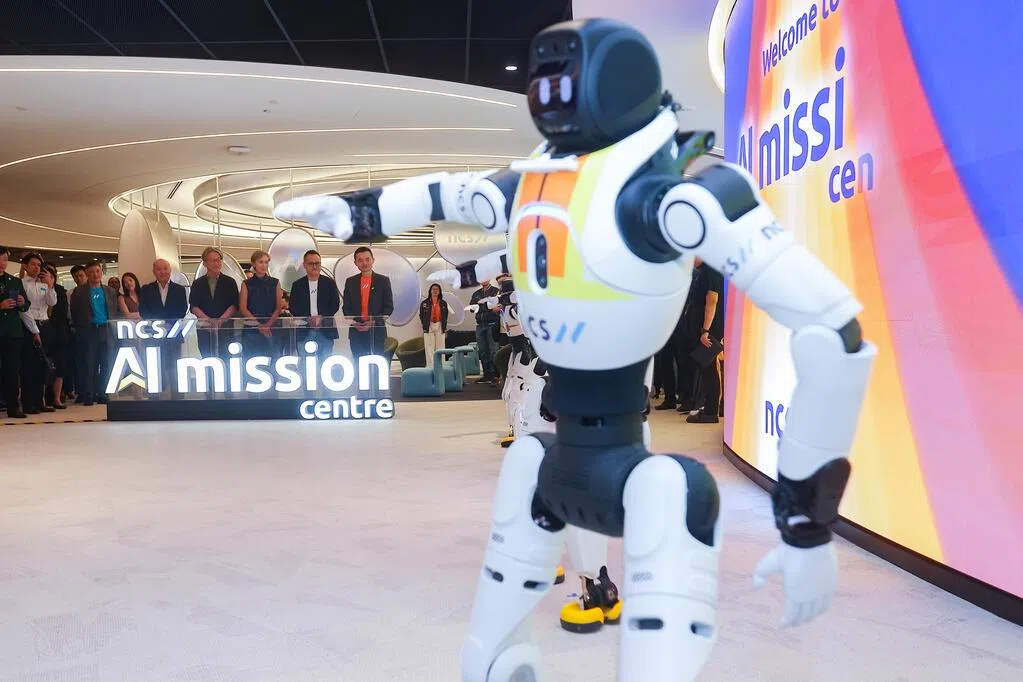
To spearhead these large-scale public and private deployments, NCS formally established its new AI Mission Centre. Speaking at the facility’s opening ceremony, Minister for Digital Development and Information Josephine Teo stressed that strategy alone is not enough for modern technological shifts.

What really matters is the infrastructure, data centres and pipelines, mobile networks that can handle huge volumes of traffic, and computing capacity.
Josephine Teo, Minister for Digital Development and Information
To support this push, Sam Liew disclosed that the firm intends to scale its specialized engineering staff from roughly 100 professionals to more than 300. These forward-deployed engineers embed directly within client teams to integrate machine learning into day-to-day operations without being bound to any single technology vendor’s ecosystem.
While NCS has not yet specified a completion date for the third-generation iFerret runway deployment, the ongoing surveillance enhancements align with the airport’s long-range blueprint. Changi is actively preparing for major structural growth, anchored by plans to open its fifth passenger terminal by the mid-2030s.
Related reading
Top health leaders to address Patient Solutions 2026 – Irish Medical Times
Derek Tierney Outlines Healthcare Reform Vision at Dublin Conference Ireland’s top health civil servant addresses clinicians, patients, and...

Manila Memorial Park logs over 140,000 visitors on All Souls’ Day – Inquirer.net
Millions Visit Cemeteries Across the Philippines for Undas 2026 As millions of Filipinos gathered across the nation to...
Extreme Heat Linked to Surge in Cardiac Arrest ICU Admissions
When the Thermometer Climbs, ICU Admissions for Cardiac Arrest Follow As summer temperatures push past 90 degrees Fahrenheit,...

Supreme Court Refuses Urgent Hearing on 700% Airfare Hike, Tells Petitioner Don’t Travel by Air
The Supreme Court on Monday dismissed an urgent hearing request for a petition challenging a steep 700 percent...