China Eyes Southeast Asia’s Nuclear Future, but Trust Gaps Remain
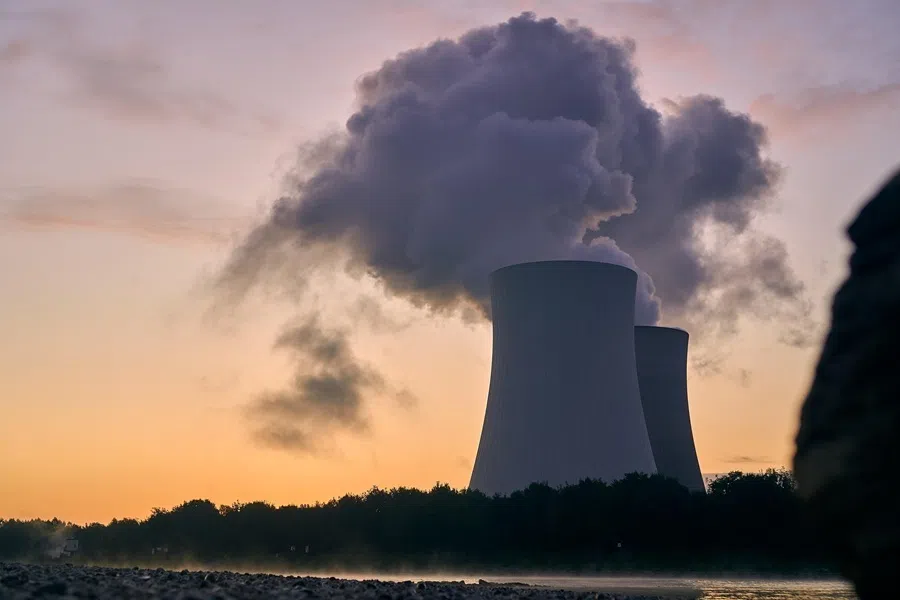
China is poised to break into Southeast Asia’s nuclear sector at a moment when the region’s hunger for reliable, low-carbon power is resurgent — yet territorial disputes and rival suppliers may keep Beijing’s reactor exports on the sidelines, ThinkChina reported.
The timing looks favorable. Disruptions around the Strait of Hormuz have revived regional interest in nuclear energy, and Southeast Asia is expected to account for nearly 20% of global energy demand growth through 2035. Prior to the recent conflict, the region obtained about 60% of its crude oil imports and one-third of its gas imports from the Middle East. Yet Southeast Asia has zero operating commercial nuclear plants, and decades of stalled ambitions mean enthusiasm may still outpace delivery.
Half the World’s Reactors, One Export Market
China represents approximately half of the world’s nuclear reactors now being built, yet its reactor exports abroad have succeeded only in Pakistan. Across Southeast Asia, where Chinese firms already hold a significant foothold in clean energy sectors, Beijing has not secured even one commercial reactor construction contract.
That gap is not for lack of trying. Thailand’s RATCH acquired a 10% stake in China’s Fangchenggang nuclear project back in 2015, and Chinese institutions have signed cooperation agreements with several regional partners, most recently Singapore in August 2026. Still, those relationships have not converted into construction deals.
Why Vietnam and the Philippines Hesitate
Part of the explanation is simply that most Southeast Asian countries are still evaluating their options. Vietnam’s revived Ninh Thuan projects build on longstanding relationships with Russia and other suppliers rather than Beijing. China also has less experience than Russia in delivering reactors across different overseas markets, and the low costs achieved through China’s domestic nuclear expansion may prove difficult to replicate in countries building their first plants.
Political considerations cut deeper. Although they maintain broad economic relations with China, Vietnam and the Philippines continue to face major territorial and maritime conflicts with Beijing in the South China Sea. Nuclear cooperation involves sensitive infrastructure, long-term technical assistance and considerable trust between governments — considerations that may make some neighbors cautious about Chinese participation even where its technology and financing look attractive.
The skepticism is measurable. According to ISEAS’s 2026 survey of regional elites, 55.4% of those who named China as the region’s most influential economic power voiced concern over its expanding influence, with particularly strong reservations in Vietnam and the Philippines.
Russia, South Korea Accelerate Overseas Reactor Deals
Russia has made the most progress toward actual projects. In March 2026, Vietnam concluded an agreement with Moscow to revive a nuclear project negotiated more than a decade ago, while Rosatom has offered Indonesia something new: floating reactors that would supply electricity to local customers under long-term contracts. Both projects still face implementation hurdles, and construction has yet to begin.
South Korea brings proven overseas delivery experience, including the UAE, and Vietnam is simultaneously discussing its second Ninh Thuan plant with Seoul — a sign Hanoi is willing to engage competing suppliers within the same program. South Korea’s May 2026 nuclear export strategy signals its intent to compete independently, and it has signed exploratory agreements in the Philippines involving Korean state financing.
The United States has signed civil nuclear cooperation agreements with five Southeast Asian countries, establishing legal frameworks for technology transfers under non-proliferation safeguards, though none bind buyers to American reactors. Washington is also working with Japan and South Korea on joint overseas small modular reactor projects, but that initiative has yet to secure a contract in the region. France and Canada are pursuing their own cooperation agreements with ASEAN economies.
What This Means for Global Fuel Markets
Russia controls around 40% of global uranium-enrichment capacity, and U.S. nuclear utilities purchased 20% of their enrichment services from Russia in 2024 — meaning a Southeast Asian pivot toward Moscow or Beijing could deepen dependencies that reverberate through global fuel markets.
The First Reactor Decides the Market
A country’s first reactor gives its supplier a lasting advantage: local engineers and regulators become familiar with its technology, and repeat orders draw on established training and supply chains. A successful first plant could encourage neighbors to follow. But pressuring customers through fuel or maintenance services could damage a supplier’s reputation for generations.
For Southeast Asian governments, competing offers provide room to negotiate — yet Japan’s withdrawal in 2025 over an ambitious construction timetable shows the limits of that leverage. Financially constrained countries still struggle to secure credible financing and delivery commitments, and operating different reactor designs adds costs.
Nuclear cooperation also carries proliferation concerns, requiring governments to uphold international safeguards and Southeast Asia’s nuclear-weapon-free commitments. With solar, batteries and geothermal offering faster relief and the economics of small modular reactors still uncertain, the region’s nuclear enthusiasm may yet outpace its ability to deliver — leaving the question of who powers Southeast Asia’s future genuinely open.
Keep reading

Democrats win both US chambers in 2024 midterms; Trump accepts defeat, warns of veto power
Democrats won control of both the US Senate and the House of Representatives on Tuesday in a midterm...
Trump claims midterms lost without him: ‘If I were on the ballot, we would have won’
Trump Delivers First Remarks Since Midterm Rout From White House Ballroom Construction Site President Donald Trump held his...

China and ASEAN to Deepen Cooperation in Earthquake Monitoring and Disaster Management
China and eight ASEAN member states convened in Nanning, capital of the Guangxi Zhuang autonomous region, to deepen...
Russia Strikes Ukrainian Aid Hub in Komyshuvakha, Killing at Least 40
People had arrived to collect humanitarian aid. Instead, nine aerial bombs fell on a former school in the...