Leaders of China, Russia and the United States held their first trilateral summit Thursday in Shenzhen, issuing a declaration that commits the three permanent UN Security Council members to UN reform, stable energy supplies and dialogue on reducing nuclear risks.
The meeting lasted about an hour and a half and produced the “China-Russia-US Heads of State Declaration toward Peace,” according to China Daily. The statement reaffirmed that a nuclear war is unwinnable and must never be fought, and undertook to conduct a dialogue on reducing nuclear risks and preventing proliferation.
The three countries also committed to reforming the United Nations so it can better serve its mission of peace and security, and said they plan to increase the production and supply of refined petroleum products.
President Xi Jinping described the meeting as positive, constructive and highly productive. He recalled that the three countries had fought side by side during World War II, and emphasized the need to cherish a hard-won peace. “Major countries should respect the legitimate security concerns of all nations,” Xi said. “As long as dialogue continues and the door remains open, there is hope for peace.”
The Russian and American leaders thanked China for hosting the first trilateral summit. The same afternoon, Xi met U.S. President Donald Trump separately. Both sides called the meeting positive and constructive, and agreed to draw up an action plan for a constructive China-U.S. relationship of strategic stability, on the basis of respect, fairness and reciprocity.
Xi said the two countries should lengthen the list of cooperation and shorten the list of problems, and manage unresolved differences so that they do not escalate. On the Taiwan question, he said the American side should keep doing the right thing.
Trump said the U.S. does not support “Taiwan independence,” congratulated China on a successful Asia-Pacific Economic Cooperation meeting, and called for the two countries to work together for peace and stability.
Also on Thursday, at the conclusion of the 33rd APEC Economic Leaders’ Meeting, the “2026 APEC Leaders’ Shenzhen Outlook” was adopted, together with three outcome documents on trade, connectivity and innovation. President Xi called for a community that is open rather than exclusive, and for steady progress toward a Free Trade Area of the Asia-Pacific.
He announced that China will provide $20 million to support practical APEC cooperation, including establishing a Center for Asia-Pacific Community Studies in Shenzhen, and set up cooperative institutions in digital technology, cross-border data flows, clean energy, and the development of small and medium-sized enterprises.
Hong Kong Chief Executive John Lee Ka-chiu said the Hong Kong Special Administrative Region had a dual role in APEC China 2026: “It is itself a member economy, and it was also a host city helping to organize the event.”
As Shenzhen prepares to host the 33rd APEC Economic Leaders’ Meeting on Nov. 18 and 19, following the 33rd APEC Finance Ministerial Meeting held in Hong Kong last week, the task for Hong Kong now is to help translate regional consensus into practical cooperation, according to China Daily Hong Kong.
Under the “one country, two systems” framework, Hong Kong can draw on both its close connections with the Chinese mainland and its broad international networks to act as a superconnector and super value-adder. Hong Kong should develop integrated services combining accounting, financing, law, insurance, valuation and market-entry expertise to support both mainland enterprises expanding internationally and Asia-Pacific businesses entering the mainland market through Hong Kong.
More on Russia
The leaders of China, Russia and the United States issued a peace declaration following a trilateral meeting in Shenzhen. They pledged to work together to maintain strategic stability and international security. #HeadlineNews pic.twitter.com/oCurLbH9vF
Full text: China-Russia-U. S. Heads of State Declaration toward Peace SHENZHEN, Nov. 19 (Xinhua) — The following is the full text of the China-Russia-U. S. Heads of State Declaration toward Peace, released on Thursday. China-Russia-U. S. Heads of State Declaration toward Peace Xi…
Worth a look

The Associated Press Called the Race for Hubbard on Sunday
Hubbard beat Foxx by 330 votes after a recount, cwibc.co.id reported. The 258-seat total matches Democrats' 1992 high...
Co Tyrone Teen Aoife McNamee Laid to Rest After Brave Cancer Battle
Aoife McNamee, a 16-year-old student from Sion Mills in County Tyrone, was laid to rest on Sunday following...

Domestic Crises Shadow ASEAN Summits in Manila and Kuala Lumpur, East Asia Forum Says
Domestic political crises shadowed the ASEAN-plus and APEC summits in Manila and Shenzhen last week, East Asia Forum...
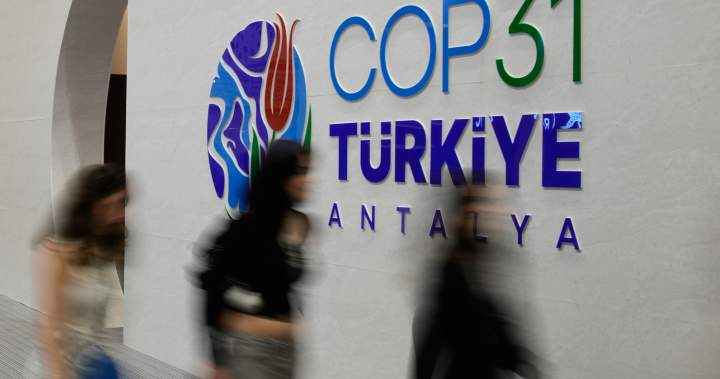
UN Climate Talks Collapse at COP31 in Antalya Over Cover Decision
UN climate talks in Antalya collapsed Sunday after nearly 200 countries failed to adopt a cover decision for...