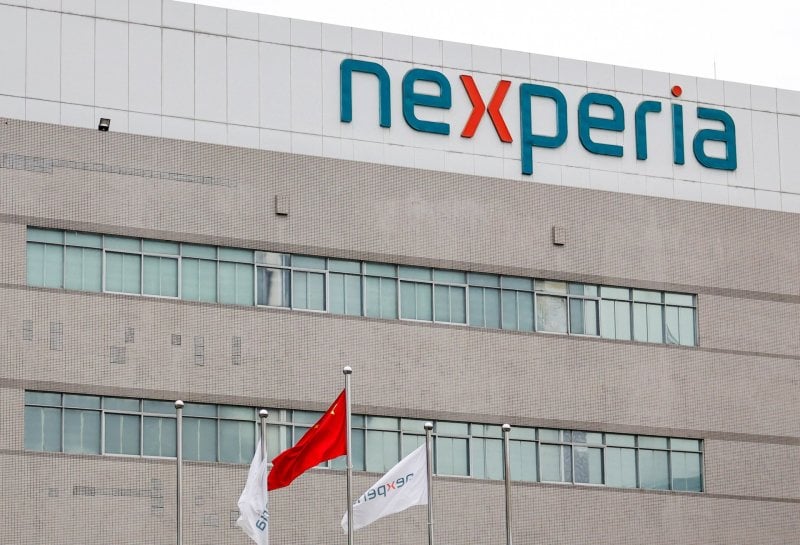
A Chinese court has frozen up to 2.14 billion yuan, equivalent to roughly $300 million, in assets belonging to Dutch chipmaker Nexperia and its equipment arm.
The Dongguan Intermediate People’s Court ordered the asset preservation measures following a request filed by Wingtech and its subsidiary, Yucheng Holding, according to court disclosures published in a stock exchange filing. The court order covers Nexperia’s stakes in four separate China-based business units, including semiconductor operations in Wuxi and Shanghai, alongside the wholly owned Wuxi subsidiary of Nexperia’s equipment division.
According to Anadolu Agency, the specific equity freezes cover Nexperia’s entire stakes in Nexperia Semiconductor China, Nexperia Semiconductor Wuxi, and Nexperia Semiconductor Shanghai, alongside a 99% holding in Nexperia Semiconductor Technology Shanghai. The restrictions took effect incrementally between August 20 and August 25 and are slated to remain in force until August 2029.
The Lawsuit Behind the Freeze and Wingtech’s 8 Billion Yuan Claim
The asset freeze acts as a high-stakes enforcement mechanism tied to a broader civil lawsuit initiated in May. In that filing, Wingtech and Yucheng Holding sued Nexperia, its holding and equipment companies, and three corporate executives, seeking a massive 8 billion yuan in damages under China’s Anti-Foreign Sanctions Law.
The Chinese parent company alleges that the defendants implemented or assisted in enforcing what the plaintiffs described as discriminatory restrictive measures imposed by Dutch authorities. While the case has not yet gone to trial and has yet to be heard on its merits, the Dongguan court’s seizure delivers fresh financial leverage to Wingtech as it attempts to claw back control.
Origins of the Dutch-Chinese Corporate Conflict
The cross-border corporate standoff began a year ago when the Dutch government intervened directly in Netherlands-headquartered Nexperia, pointing to national security concerns that sensitive technology, funds, and production assets could be transferred abroad. Following that intervention, a Dutch business court suspended chief executive Zhang Xuezheng and placed voting rights tied to Wingtech’s major shareholding under independent management.

Although subsequent diplomatic talks between Beijing and The Hague restored the flow of supply and led the Netherlands to suspend its initial intervention order, Wingtech never recovered its voting control.
Despite the immobilization of more than 2.14 billion yuan in regional equity stakes, company representatives emphasized that the legal measures do not alter corporate governance or executive leadership.
Supply Chain Shifts and Fractured Operations
The underlying ownership rift is already fundamentally reshaping how the chipmaker manufactures its components. Cut off from European wafer supplies during earlier export controls, Nexperia’s China unit pivoted its product lines toward a domestic 12-inch wafer foundry operated by an unnamed Chinese partner, moving away from the 8-inch and 6-inch lines it previously relied upon.
Essential components including diodes, MOSFETs, and logic ICs are part of that domestic migration. With China responsible for roughly 70 percent of Nexperia’s overall output, observers note that prolonged litigation could eventually force the company to fracture into two distinct operational entities.
With the equity freeze locked in place until August 2029 and the underlying lawsuit awaiting its day in court, neither side has shown an inclination to back down, leaving global supply chain partners caught in the middle of a multi-year regulatory war of attrition.

CREA revises down 2026 home sales forecast again as September transactions fall 7.7%
Canada's housing market faltered in September 2026 as national sales dropped 7.7 per cent year-over-year.

Jersey Businesses Squeezed by Rising Fuel Costs
Diesel prices in Jersey have surpassed £2 a litre, sparking concern among local construction and trade businesses over...

Sensex Closes 1,533 Points Higher at 74,315.61
Indian equity benchmarks Sensex and Nifty rallied sharply on October 15, 2026, defying weak global markets as investors...

Yass Valley Council to Consider 76pc Rate Hike
Yass Valley Council has voted to put three financial options before the public, warning that residents across Yass,...