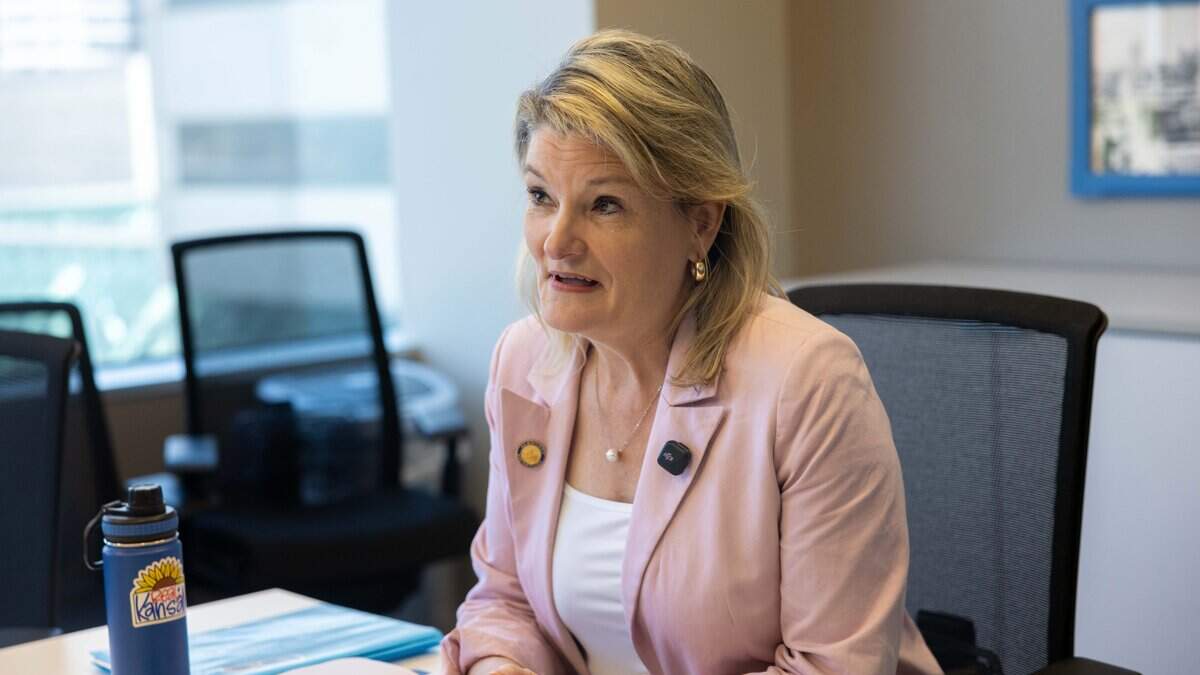
Cindy Holscher Outlines Platform to Counter Republican Supermajority
Kansas State Senator Cindy Holscher has laid out a comprehensive policy agenda aimed at lowering living costs and challenging the state’s Republican supermajority, according to reporting from The Kansas City Star. As the prospective governor-elect, the Democrat is centering her platform on a series of aggressive shifts in taxation, education funding, and healthcare access intended to reshape the state’s economic landscape.
The stakes for Kansas residents are high as the transition of power nears. Holscher’s promises touch on the most immediate pressures facing Kansas households, from the cost of maintaining a home to the stability of the local healthcare system. Her platform seeks to pivot the state away from current fiscal trajectories, specifically targeting property tax structures and the expansion of social safety nets.
Tax Relief and Public School Funding
One of Holscher’s primary economic pillars involves a restructuring of how Kansans pay for their homes. In a column written for The Kansas City Star, she pledged to cut the residential property tax assessment rate. To prevent long-term residents from being displaced, she proposed adding specific tax exemptions for seniors and disabled veterans, arguing that these groups should not be “taxed out of the homes they’ve spent a lifetime paying for.”
The people of Kansas made their voices heard, and I’m deeply honored by the trust Kansans placed in me to serve as your next governor. Whether I earned your vote or not, I will work for you. Throughout this campaign, I heard from people who want their leaders to put politics…
This shift in property tax policy is closely tied to her vision for the state’s education system. Holscher has committed to fully funding public schools and special education services. Her strategy is designed to ensure that property taxes are not used to bridge funding gaps, and she has explicitly called for an end to voucher programs, which she claims drain resources from neighborhood classrooms.
Cannabis Reform and Revenue Loss
Holscher is also positioning herself to capture revenue that currently flows across state lines. In July 2026, she announced her support for legalizing both medical and recreational marijuana. While speaking to journalists, she pointed to a crowded dispensary lot in Kansas City as evidence of the economic cost of prohibition, noting that Kansas license plates in those lots represent “a lot of Kansas tax dollars going straight into Missouri’s pockets.”
She cited Missouri’s $255 million in cannabis revenue as a benchmark for what Kansas is missing. Holscher noted that her decade-long effort toward reform has faced significant hurdles, including a Senate roadblock, but suggested that the federal rescheduling of medical cannabis to Schedule III under President Donald Trump could provide a bipartisan pathway forward.
Healthcare Expansion and the Medicaid Gap
The debate over healthcare in Kansas took on new urgency following an October 20 announcement from Children’s Mercy Hospital, which revealed it had been dropped from the Affordable Care Act Marketplace. Holscher used this development to double down on her demand for Medicaid expansion, calling it the “single biggest thing Kansas could do to strengthen health care in the state.”
“Kansas has paid that money,” Holscher said, regarding the funds available through expansion. “It went to Missouri, Oklahoma, and the other 40 states that have expanded instead of coming back here to Kansas hospitals and families.”
She directed criticism for the current lack of expansion toward her opponent, Ty Masterson, citing his previous votes against the measure as a primary reason for the state’s current healthcare vulnerabilities.
Data Centers and Agricultural Protections
As the technology sector eyes the Midwest, Holscher has signaled a cautious approach to industrial development. She pledged to withhold approval for large AI data centers until the state implements strict guardrails. Her stated goal is to protect Kansas water supplies, farmland, and resident power bills, insisting that “billionaires — not residents — should pay the costs” of such massive infrastructure projects.
For the state’s rural economy, Holscher has promised to shield farmers and ranchers from volatility in diesel prices and the impact of trade tariffs. This focus on the agricultural sector aims to provide a buffer for the state’s primary industry against global and domestic economic shifts.
Related reading

Logan Terness Saves 14 Shots as Kansas City Mavericks Shut Out Tahoe
The Kansas City Mavericks secured a decisive 3-0 shutout victory over the Tahoe Knight Monsters on Friday, Nov....

Two Dead in Fatal I-95 Crash in Howard County
Two lives lost in early morning I-95 collision A violent two-vehicle collision on Interstate 95 claimed the lives...

Louisiana Tech Pulls Away From Troy With 21 Unanswered Points
Second-half turnovers derail Troy in 41-17 loss to Louisiana Tech Troy entered the second half of their matchup...

Louisville Cardinals Crush Morehead State Eagles 107-57
Louisville Cardinals secure 107-57 victory over Morehead State The Louisville Cardinals demonstrated significant offensive dominance at the KFC...