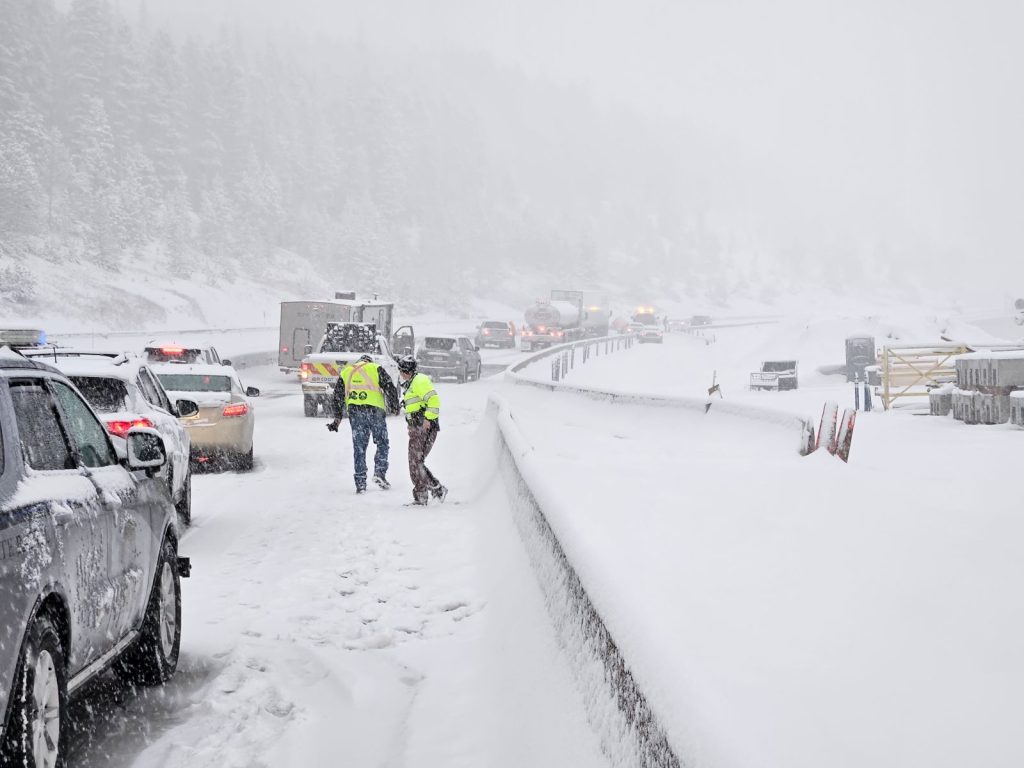
Interstate 70 serves as a vital economic engine and a frequent source of frustration for Colorado mountain communities, prompting local leaders to reevaluate how to manage the bustling corridor.
Traffic on parts of the I-70 increased by 20% over the past decade, Summit Daily reported, with a report from the Metro Denver Economic Development Commission estimating that congestion on the mountain corridor costs the state $2 billion annually.
“Locals have a lot of jokes — and one of them is you don’t book a flight out of (Denver International Airport) on a Sunday afternoon because you never know what getting down to Denver will look like,” Vail Mayor Barry Davis told Summit Daily.
Tourism is an almost $30 billion industry in Colorado, and the I-70 corridor facilitates much of that business. However, closures exact a heavy toll, with the Metro Denver Economic Development Commission estimating the state loses about $2.3 million in visitor spending for each hour the highway is shut down.

“We’re providing experiences for our visitors — and while they might have a great time skiing or tubing or cross-country skiing or getting out on their mountain bike, the three- to five-hour ride home doesn’t really top off that experience the way we would like,” Frisco Mayor Rick Inkhen told Summit Daily.
For Glenwood Springs, Mayor Marco Dehm described I-70 as a “lifeline,” noting that eastbound lanes supply goods from Denver to local shops and grocery stores. Dehm recalled how mudslides after the Grizzly Creek Fire in 2021 closed Glenwood Canyon for weeks.
When crashes or weather events close the interstate, thousands of motorists often exit into mountain towns, overwhelming local resources. “It can shut our town down,” Davis told Summit Daily. “If neighborhoods become packed with stranded motorists, and we don’t have enough hotels, and we don’t have enough parking space, and we definitely don’t have a place to put a bunch of tractor-trailers — it’s a compounding safety issue.”
Silverthorne Mayor Kevin McDonald recalled a major snowstorm over the Martin Luther King Jr. Day Weekend in 2024 that closed I-70 and rerouted thousands of cars into Summit County, creating gridlock that threatened emergency response times. Inkhen, who also serves as deputy chief of operations for Summit Fire & EMS, said that Summit County has roughly 30,000 year-round residents for funding allocations despite containing the highest-elevation section of interstate in the nation.
Mayors discussed a mix of legislative and local fixes, from new state laws restricting semi-trucks from the left lane to upgraded chain requirements and commercial vehicle permitting. While some officials view modern rail proposals as too expensive, others emphasize multi-pronged mitigation.
Infrastructure projects are underway across the corridor, including the ongoing $900-million Floyd Hill project and the recently completed West Vail Pass Project, which cost $340 million over six years. Meanwhile, Vail enacted its own local chain law in March 2025 to help keep Vail Pass open.
“Demand keeps going up, and there’s not a whole lot you can do about that,” McDonald told Summit Daily. “You can do little things about that, but you can’t put a new bore at the Eisenhower. Things like that. So it comes down to managing it at the margins and hoping people educate themselves.”
Related reading

Jaguars Rule Out Parker Washington vs. Titans; WR Week-to-Week With Shoulder Injury
Jacksonville Jaguars wide receiver Parker Washington will miss Sunday's game against the Tennessee Titans with a shoulder injury...
Rhode Island Artists Can Apply for $5,000 Make Art Grants Starting Feb. 1
Rhode Island artists can apply for Make Art Grants starting Feb. 1, offering award amounts of up to...

Tipperary Businessman Martin Healy Offers to Buy Dealz Ireland
A Tipperary businessman has made an offer to acquire the Dealz business in Ireland, a move that could...
Federal REAL ID Rules Take Effect at Military Bases With Escort Requirements
Federal rules on REAL ID enforcement at federal facilities, including Dover Air Force Base, took full effect May...