
The High Lane Gambit at Homestead
In the high-stakes world of NASCAR, where championships are often decided by fractions of a second and inches of track position, the art of “running the boards” is a skill that separates the good from the great. As the championship weekends loom at Homestead-Miami Speedway, two drivers with very different paths to the top are converging on a single, crucial strategy: hugging the wall. Corey Day, the 20-year-old phenom in his first full NOAPS season, sees it as his ticket to an upset title. Kyle Larson, the seasoned Cup Series veteran, treats it as the comfortable rhythm that has carried him to two wins at the track and a commanding 67-point lead this weekend.
For Corey Day, the pressure is immense. He enters Saturday’s race 23 markers back of the points lead, meaning he must not only win but also collect stage points to have any chance at the NOAPS title. Pushing to the edge isn’t just an option; it’s a necessity. His ability to master the high lane has been a defining feature of his breakout season, with wins at Dover, Las Vegas, and Charlotte all built on his comfort running inches from the fence. “All of us get used to feeling everything off the right rear of the car, not the right front,” Day explained. “You don’t want to be sideways on the fence, but I feel more of it with the right rear of the car than the right front and I think that’s part of my success at intermediates too.”
The best from championship media day. 📸 pic.twitter.com/HfPmsUtiCf
But Day, whose background is firmly rooted in dirt racing, understands that Homestead is a different beast. The grip levels at tracks like Dover and Las Vegas are far higher than at the Florida sun-baked surface. “It’s all different,” Day cautioned. “Dover, Charlotte and Vegas are all super-high-grip intermediates as well as Kansas – Kansas has a lot of [tire] fall off but it’s still a lot higher grip than this… you get late in the run and you’re sliding around a lot and you’re reliant on that wall effect to hold you there and make speed. So, it’s going to be tough learning that and making sure you’re not over doing it.”
A Wall of Air and Confidence
The “wall effect,” as Day calls it, is a key element of the high-line strategy. It’s not just about finding the most grip; it’s about creating a buffer of air between the car and the concrete that can actually help a driver carry more speed through the corners. “What fans might not know is when you get up to the wall, the car kind of makes a buffer with the air and the wall, and that’s kind of why we do it because there is that effect that helps you make speed,” he elaborated. This delicate balance is what makes Homestead so challenging. A driver must be close enough to harness that aerodynamic benefit but far enough away to avoid a costly mistake, especially with so much on the line.
“The most grip is against the wall, so usually where the most grip is, is a little bit easier. For me, I don’t view Next Gen racing like running next to the wall is that risky. The cars are tougher than they used to be.”
Kyle Larson
For Kyle Larson, the high lane is less a gamble and more a comfort zone. He doesn’t need to take the same risks as Day. With 645 laps led at Homestead—the most by any driver in the track’s history and a pair of victories already on his resume—Larson has earned the right to trust his instincts. His crew chief, Cliff Daniels, recognized back in 2022 that Larson needs to run at his own pace to find a rhythm, and that often means getting close to the wall. “The way I feel the bumps into [turn] three, if I don’t enter fast enough or hard enough, I don’t get that feeling and then I feel like I’m sliding. I’m going to make more mistakes that way,” Larson said, explaining his philosophy. “I feel like when I’m not running the wall I’m sliding more.”
This is where the two drivers’ approaches diverge most sharply. Day, the challenger, must find the limit and push it. Larson, the dominant leader, simply needs to stay out of trouble. Yet, Larson’s strategy is far from conservative. He believes the risk of sliding and spinning while trying to run a lower, safer line is actually greater than the controlled risk of running the high groove. “I foresee my race looking like any other Homestead race for me,” Larson stated confidently. “Try to get to the front and manage the race from there.”

The Experience Gap and the Learning Curve
The experience gap between the two drivers is stark. Larson could win the championship even if he has a disastrous race. For Day, an early mistake would end his title hopes before they truly begin. This makes practice and the opening laps of Saturday’s race critical for the young driver. “I’m very confident in my feel for the car right now. I feel like I’ve got that to a really good position and I’m hoping that’ll be on display,” Day said, acknowledging the challenge. “It depends on your car too, how your car progresses over a run. Feeling it out the best I can during the first run of the race and having an idea of where that line is because if you’re tight, the line is in a way different spot than if you’re loose.”
Ultimately, both drivers know their plan is fluid. It will be shaped by qualifying, car balance, and the first few green-flag runs. While Larson joked that he could “run around here with his eyes closed,” he remains grounded in the reality that the high line is where the speed is. The difference is in the margin for error. For Larson, it’s a comfortable buffer. For Day, it’s a razor-thin edge he must ride to the checkered flag if he hopes to pull off one of the most improbable title runs in recent memory.
Corey Day acknowledged that he and the 17 team are ahead of schedule contending for a championship in their first full-time season. His goals entering the year had just been to win a race and make the Chase. "This is probably where we wanted to be next year, not this year." I… pic.twitter.com/33CTLY435a
More on Corey Day
🚨 Kyle Larson reveals Homestead help for Corey Day as the rookie prepares to chase the O’Reilly Auto Parts Series championship. 👀 Read more here 🏁👉: https://t.co/RLgb5NnlIz pic.twitter.com/SyICsCrh9h
Corey Day rallies from an accident early in the race to finish third, the same spot he sits in the championship standings 23 points back of the lead. Now, he goes to Homestead – where his mentor Kyle Larson is excellent, where the 17 team was excellent with Larson behind the… https://t.co/Gg4p083Xok pic.twitter.com/Cns4CF4P0g
Here is how Kyle Larson clinches his 3rd career championship this weekend at Homestead: pic.twitter.com/Y463R61YWG
Keep reading

Melania Trump Brokers Oleshky Ceasefire Ahead of White House Meeting
First lady Melania Trump hosted Russian and Ukrainian officials at the White House on Thursday, calling for a...

Trump Calls for Alaska Votes to Go to Dan Sullivan
President Donald Trump is calling for votes cast for Republican Gerald Heikes and Daniel J. Sullivan Jr. in...

The Emergent List: 29 Seed-Stage AI Startups to Watch
Identifying the most interesting early-stage startups is as much an art as it is a science, demanding an...
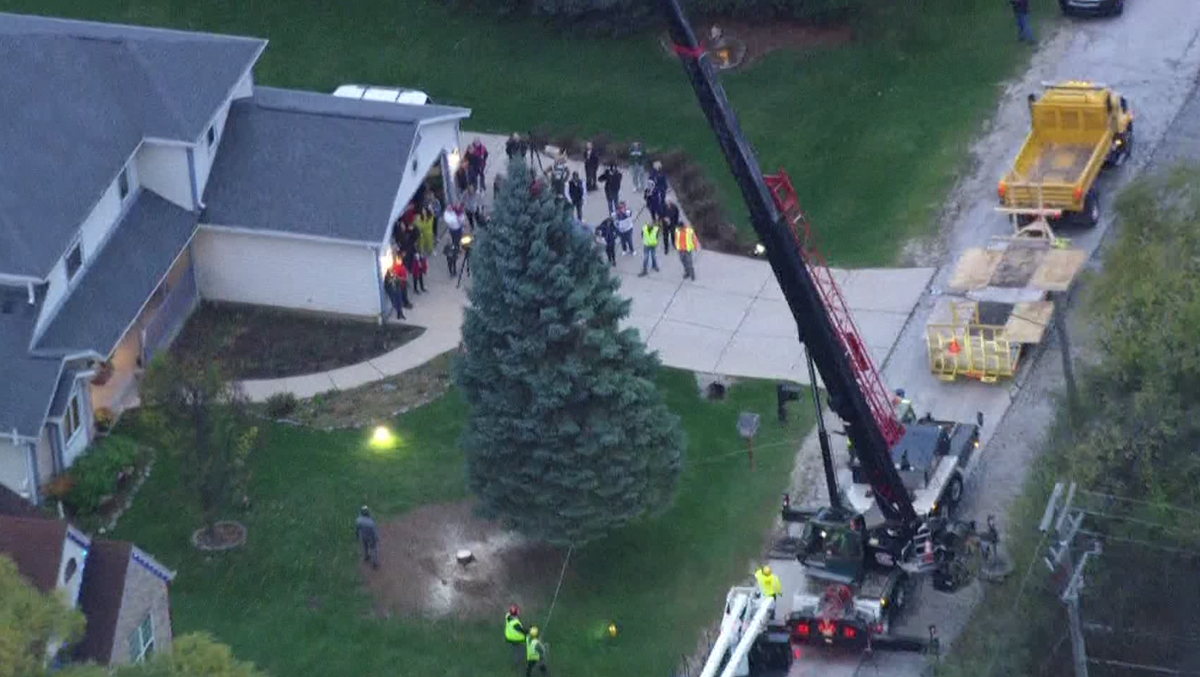
Milwaukee’s 40-foot tree cut, moved to Deer District
Milwaukee's official 40-foot Christmas tree, a Colorado blue spruce, has been harvested from a northwest side neighborhood and...