Six newborn pharaoh hounds arrived in Hungary on November 18, a litter bred from a matchmaker’s nudge at Crufts that bridged 3,500 miles and three continents of bloodlines.
The puppies — four males and two females — were whelped at the kennel of Anette Cerabino in Balatonberény, the culmination of months of genetic planning that began when broadcaster Clare Balding requested Cerabino’s bitch, Porsha, for a Discover Dogs segment at the Birmingham show in March, The Telegraph reported.
Porsha, a six-year-old Hungarian-born female, met Max, a seven-year-old American male, at the event; the pair were later reunited in Chester, Cheshire, for the breeding.
“We live in an era of convenience, yet dedicated preservation breeders still go to huge lengths for the health of a breed,” Cerabino told The Telegraph. “Crossing borders from the UK to Hungary – and bringing together UK, European, and American lines – was a real labour of love to get the best possible match, rather than just settling for whatever was close by.”
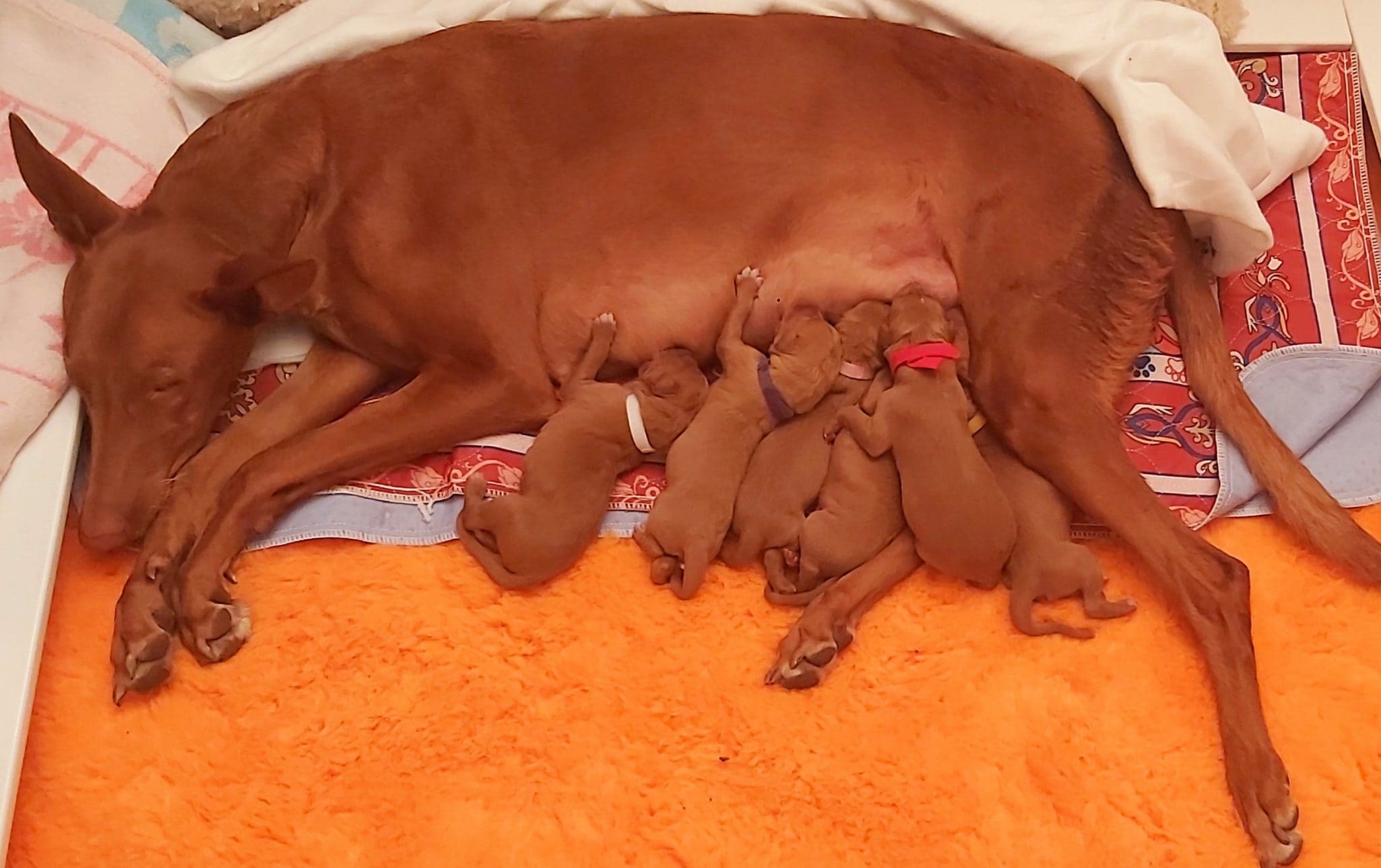
The breed’s scarcity in Britain frames the stakes: the Royal Kennel Club registered only six pharaoh hounds in all of 2025, against nearly 30,000 Labrador retrievers, according to figures cited by AOL. The litter doubles the annual registration tally in a single birth.
Cerabino calls them the “Royal Litter,” a nod to the breed’s depiction in Egyptian tombs and its status as Malta’s national dog. The puppies are expected to carry automotive-themed names — Austin, Aston, Alfa, Armstrong, Auburn and Amber-Mercedes — and inherit the breed’s signature trait: ears and noses that flush pink when the dogs are excited, a visible “blush” that owners describe as disarming.
“Plus, the fact that they actually smile and blush when they’re happy just completely melts your heart — once you’ve lived with one, you’re hooked,” Cerabino said. She described the puppies as “like chirpy little parrots,” equally at home lure-coursing, showing, or “curled up upside down on the sofa at home.”
The breeding followed the Royal Kennel Club’s Guide to Good Breeding Practice, Genetic Diversity Guide and Health Standard, Cerabino said, part of a deliberate effort to widen a dangerously narrow gene pool.
Jannine Edgar, chief executive of the Royal Kennel Club, called the litter “a wonderful example of how Crufts brings together dog lovers, breeders and enthusiasts from across the world, creating lasting connections that continue long after the event itself.”
Cerabino, who moved from Rottingdean, East Sussex, to Hungary, hopes at least one puppy returns to England to restart domestic breeding lines. “Porsha had waited six patient years for the right match, and Crufts unexpectedly became the setting for this great love story,” she said. “I would love to see the story come full circle one day and watch one of these puppies return to Crufts to compete.”
Worth a look
Dr Steve Allder Says Gaming Engages Multiple Brain Networks
Millions of players are clearing schedules for Thursday's launch of Grand Theft Auto VI on PlayStation 5 and...
Central Florida Flood Crisis: 28 Inches of Rain, Record River Levels, Dozens Rescued
Central Florida’s Atlantic coast is waking up to a flood crisis that has already rewritten November rainfall records...

Study: Fetal Echocardiogram Finds Heart Defects Missed by Anatomy Scan in Low-Risk IVF Pregnancies
Guidelines say IVF pregnancies merit a closer look at the fetal heart. A new study suggests the standard...

LA Council Tables Charter Amendments on Mayor’s Power After Timing Dispute
The Los Angeles City Council tabled two charter amendments Friday that would have weakened the mayor’s control over...