A string of coordinated cyberattacks targeting commercial refrigeration systems across Europe has prompted the Cyber Security Agency of Singapore (CSA) to issue an urgent advisory, warning that poorly secured operational technology (OT) poses a systemic risk to supply chains. The attacks, which began in mid-October in France and spread to at least 10 other countries by early November, have forced retailers to discard massive quantities of spoiled food and triggered security alerts within the healthcare sector.
The Bottom Line:
- Ahold Delhaize, a major retail operator hit by the outages, projected that the incidents could reduce its fourth-quarter operating income by more than $112 million, according to reports cited by China Daily.
- The vulnerabilities involve internet-connected OT devices—ranging from supermarket freezers to blood bank cooling units—often left exposed with factory-set passwords or outdated firmware.
- While Singaporean authorities report no local incidents, the CSA is currently conducting an audit of cold-chain warehouses and supermarket networks to prevent potential disruptions to a nation that imports over 90% of its food supply.
Retailers and Healthcare Facilities Face Operational Disruption
The breach of refrigeration management systems is not merely a technical glitch but a physical-layer attack. In early November, France’s Health Ministry confirmed that three regional blood banks had their cold-room controls compromised. Hackers reportedly attempted to manipulate temperature settings, though staff successfully relocated blood supplies before any products were lost, as reported by The Straits Times. This event followed a broader wave of attacks on supermarkets including Carrefour, Monoprix, and Intermarche, where hackers remotely altered cooling parameters, leading to localized food spoilage and, in some instances, small fires.
We don't yet know who was behind the cyberattacks on European supermarket refrigeration systems. That matters. But attribution and protection are different decisions. My latest for @cepa on operational technology, Russia's shadow war, and the vulnerabilities of everyday life.…
The financial impact is substantial. Retail giant Ahold Delhaize warned investors that the disruption could shave up to $281 million off its top-line revenue for the fourth quarter, highlighting the severe margin compression that occurs when automated systems are weaponized. According to Fortune, the Pentagon is also investigating similar outages that affected U.S. military commissaries in August, suggesting the threat actor may be targeting standardized industrial controllers utilized by large-scale logistics operations globally.
The Security Gap in Internet-Connected Industrial Assets
The core of the issue lies in the convergence of legacy hardware with modern internet connectivity. Many of these refrigeration controllers were never designed for a zero-trust network environment. Aaron Ang, chief information security officer at Wissen International, noted that attackers are exploiting “ordinary, connected and unprotected” devices to generate public anxiety. The lack of robust authentication—specifically the continued use of default factory credentials—allows unauthorized parties to gain persistent access to critical infrastructure.
Sabotage attacks on blood banks and supermarkets prove, again, that we must protect critical infrastructure. It’s time to enhance EU deterrence, prevention and response capacity. We must invest in preparedness, strengthen cross-border cooperation & implement the Directive on…
“A lot of these devices have a lot of really cool features, but the security is not the first priority for them,” said Nadiya Kostyuk, an assistant professor at the Carnegie Mellon Institute for Strategy and Technology, as reported by Fortune.
The threat extends beyond simple temperature manipulation. Steven Wong of the Singapore Institute of Technology warned that once an attacker gains a foothold in an OT network, they can interfere with automated warehouse conveyor belts, robotic sorters, and packaging machinery. This creates a cascading risk where a single compromised maintenance contractor or software vulnerability can affect multiple distribution centers simultaneously.
Institutional Response and Market Sentiment
While the Kremlin has publicly dismissed allegations of state-sponsored involvement as “absurd,” European regulators are treating the pattern of attacks as a deliberate attempt to undermine food security and essential services. The European Commission has signaled that these breaches demonstrate the fragility of the “Internet of Things” in critical infrastructure. For investors, this represents a new form of systemic risk that requires immediate capital allocation toward cybersecurity upgrades and network segmentation.
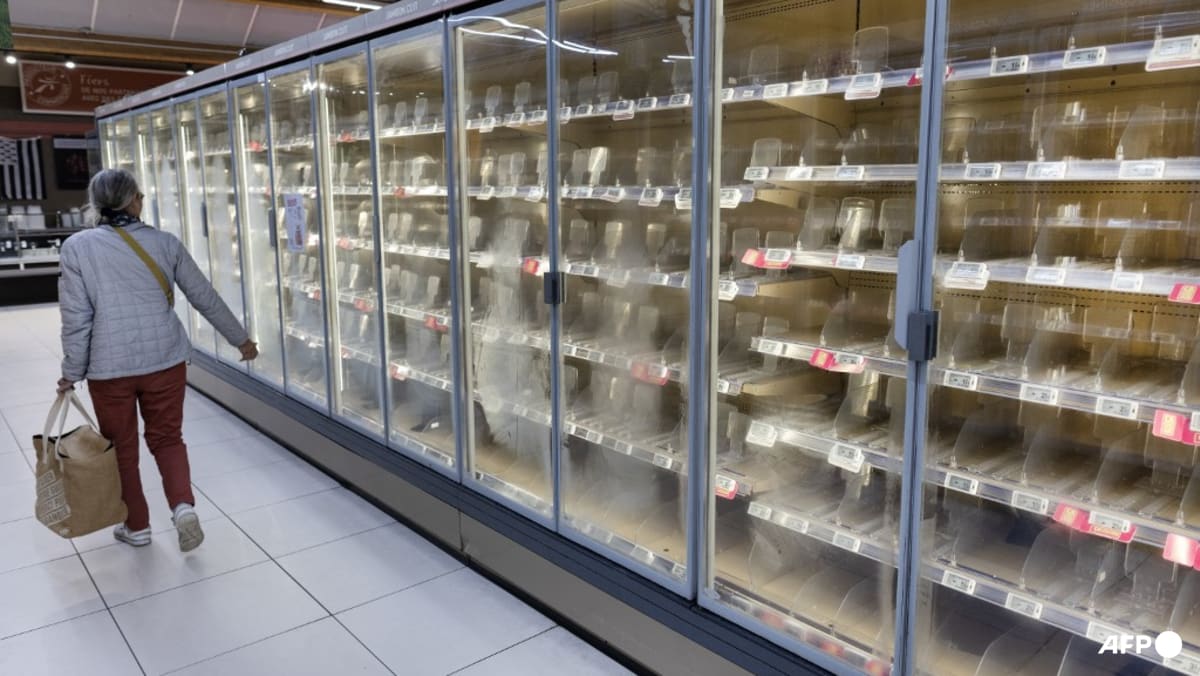
In Singapore, the government is taking a proactive stance to prevent similar volatility. The CSA has urged businesses to conduct a full inventory of all remote-access controllers and to isolate OT systems from the public internet. By mandating security patches and enforcing strict authentication, regulators hope to avoid the “tropical heat” scenario described by industry analysts, where the lack of an immediate, local response to cooling failure could lead to rapid, large-scale food spoilage in high-humidity environments.
As corporations prepare for the inevitable fiscal impact of these security investments, the market is beginning to price in the cost of hardening these legacy systems. The era of “connect first, secure later” for industrial equipment is rapidly closing, and firms that fail to address these vulnerabilities face not only regulatory scrutiny but the potential for devastating, unrecoverable losses in their physical supply chains.
Censys researcher Silas Cutler shared findings with The Wall Street Journal, identifying 800+ vulnerable Danfoss systems still exposed to the Internet, including 41 in the U. S. https://t.co/lUOfEk04OP
Whether these attacks are the work of state-aligned actors or opportunistic cyber-criminals remains a point of investigation, but the underlying vulnerability—a reliance on unpatched, internet-exposed hardware—is now a permanent fixture in the risk profiles of global retailers and healthcare providers alike.
Disclaimer: The information provided in this article is for educational and market analysis purposes only and does not constitute financial, investment, or legal advice. Always consult with a certified financial professional before making investment decisions.
Threat actors are turning up the heat on Europe's supermarkets. Literally. Refrigeration systems across Europe have been disrupted, with attackers suspected of manipulating temperature controls through exposed management interfaces. Read the analysis: https://t.co/RLmQzVwJqF
More on Ahold Delhaize
Worth a look

PBC Runners of the Year Named: Nasrudin Mohamed and Gabrielle Jourdain
Augusta University Dominates Peach Belt Conference Cross Country Honors As the Peach Belt Conference (PBC) prepares for its...

Black Panther In Concert Live at Des Moines Civic Center
Marvel Studios’ Black Panther in Concert is coming to the Des Moines Civic Center, offering a live orchestral...

Bellarmine vs. Indiana Men’s Basketball Play-by-Play Highlights
Bellarmine Men's Basketball Faces Indiana in November 5th Matchup According to the official box score provided by Bellarmine...

Donna Lasinski Named President of Chicago Cultural Stadium Project
Chicago’s Cultural Stadium Initiative Appoints New Leadership The long-discussed vision to reshape Downtown Chicago into a "Cultural Stadium"—a...