
The Auditory Shift: Why Fall Demands a New Playlist
The Pacific Northwest has officially traded its sun-drenched patios for the damp, low-hanging clouds of November. For those of us who track the local cultural pulse, this seasonal pivot is more than just a reason to swap slides for boots—it is an invitation to recalibrate our listening habits. The Portland Mercury recently highlighted this shift, suggesting that the cooling temperatures create a distinct, almost gravitational pull toward music that demands more of our attention than the breezy anthems of July. Whether it is the result of spending more time indoors with a bubbling pot of soup or simply an unspoken rhythm to the year, the local release calendar is responding with a surge of ambitious, introspective, and occasionally sprawling records.
Darci Phenix and the Echoes of Strathdon
For Portland multi-disciplinary artist Darci Phenix, the journey toward her latest release began thousands of miles away in 2025. During a creative residency at the Clashnettie Arts Centre in the Scottish village of Strathdon, Phenix found herself immersed in a landscape that would eventually define the texture of her new album, Abalone. Working alongside Scottish fiddler Johnny Hardie—whose home studio is tucked into the carriage house of his clan’s old castle—Phenix crafted a record that feels rooted in both the rustic hills of Scotland and the quiet corners of the Pacific Northwest.
The album, which will be self-released on November 20, is a study in delicate restraint. Tracks like “Fire and Fawn” utilize ominous harmonium progressions to create a sense of looming dread, only to have it softened by Phenix’s lullaby-like vocal delivery. It is a record built for the meditative introspection that autumn enforces, serving as a sonic palate cleanser for those weary of the high-tempo noise of the modern news cycle. Fans can catch a live performance of the material at Laurelthirst on November 19.
Olēka’s Epic Scale and the Weight of Human Error
While Phenix looks toward the pastoral, songwriter and producer Olēka is busy turning the microscope inward. Her debut album, Human Error, released October 21 via X8 Music, is a sprawling, hyper-personal exploration of trauma and memory. Having spent significant time working behind the soundboard as an audio engineer and producer, Olēka brings a structural density to her songs that is rare for a debut.
The album operates on a massive scale, folding ’90s alt-rock, chamber-pop, and folk into a single, cohesive narrative. In tracks like “Somewhere Out of Reach,” the arrangement shifts from a plaintive piano ballad into a complex web of choral harmonies and woodwinds, mirroring the volatility of the lyrics. It is a record that doesn’t shy away from the darker corners of the human experience—childhood memories, the loss of loved ones, and the search for purpose are all laid bare. For those looking to experience this intensity live, Olēka is scheduled to perform at Revolution Hall on November 7.
The Rebellion Against the Attention Economy
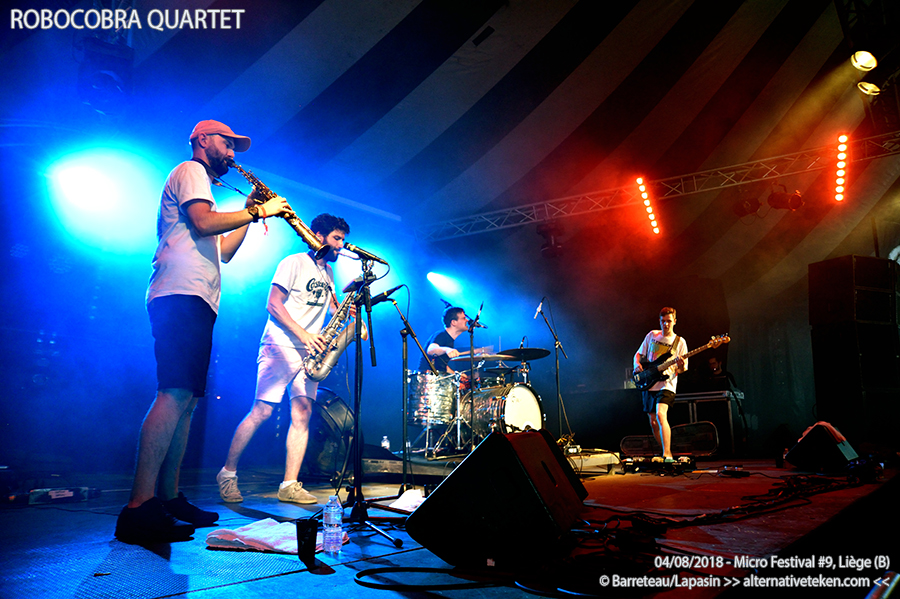
Perhaps the most radical entry in this season’s lineup comes from the Irish post-punk jazz collective, Robocobra Quartet. Their upcoming release, Hundred Pieces, is exactly what the title suggests: 100 songs. Clocking in at a staggering five hours, the project functions as a direct, defiant middle finger to the attention economy that currently dictates so much of our digital existence.
In an era where algorithms prioritize the quick, the shiny, and the easily digestible, a five-hour jazz/post-punk hybrid feels like a deliberate act of civil disobedience. The collective, featuring vocalist/drummer Chris W. Ryan, uses these athletic arrangements to argue that the modern trend toward de-prioritizing deep, in-depth tasks is a cultural plague. The album, which will be self-released on November 13, isn’t necessarily designed to be consumed in a single sitting. Instead, it invites the listener to treat music as an endurance sport—a way to reclaim time from the scrolling wheel of progress.
The question left hanging in the air as we head into the winter months is whether the audience is still capable of such sustained attention. While the convenience of the digital age has made discovery easier, it has arguably made the act of deep listening a lost art. As these artists release their work into a world that is increasingly fragmented, the real test of this season will be whether we choose to engage with the complex or simply settle for the quick.

How to Access New York Unemployment Insurance Records Online
New York Unemployment System Offline for Extended Upgrade The New York State Department of Labor has officially shuttered...
NM State Edges Southern Utah 64-63 After Wrong-Basket Blunder
Two Players Score for the Wrong Team in Friday Basketball Blunders In basketball, the geometry of the court...

Verlina Reynolds-Jackson withdraws from NJ lieutenant governor search
Governor Sherrill’s Search for a Lieutenant Governor Narrows Following Withdrawal The path to filling New Jersey’s vacant lieutenant...

NH Dads Win Court Victory Over Transgender Athlete Protest Wristbands
Federal Judge Rules in Favor of New Hampshire Fathers in Wristband Protest Case Two fathers in New Hampshire...