Agents expected a fentanyl lab. They found something far deadlier.
Federal and local authorities dismantled the first known nitazene synthesis laboratory in the United States earlier this month in Baton Rouge, Louisiana, the Drug Enforcement Administration confirmed Wednesday. Forensic testing identified the product as etonitazene, a synthetic opioid that can be 80 times more potent than fentanyl, according to the DEA.
The discovery rewrites the map of the American opioid crisis. For years, fentanyl has been the benchmark for lethality; nitazenes, which began appearing in the U.S. supply around 2019, push that boundary further. The clandestine facility, hidden in the basement of a residential home, was part of a distribution network targeted during a three-month investigation led by the East Baton Rouge Sheriff’s Office and the DEA.

“This drug facility bust represents a first-of-its-kind discovery for DEA in the United States,” said Sid J. Gautreaux III, sheriff of East Baton Rouge Parish. “Every day, families across our communities are suffering the devastating consequences of illegal drugs. The emergence of substances like nitazenes makes our mission even more urgent.”
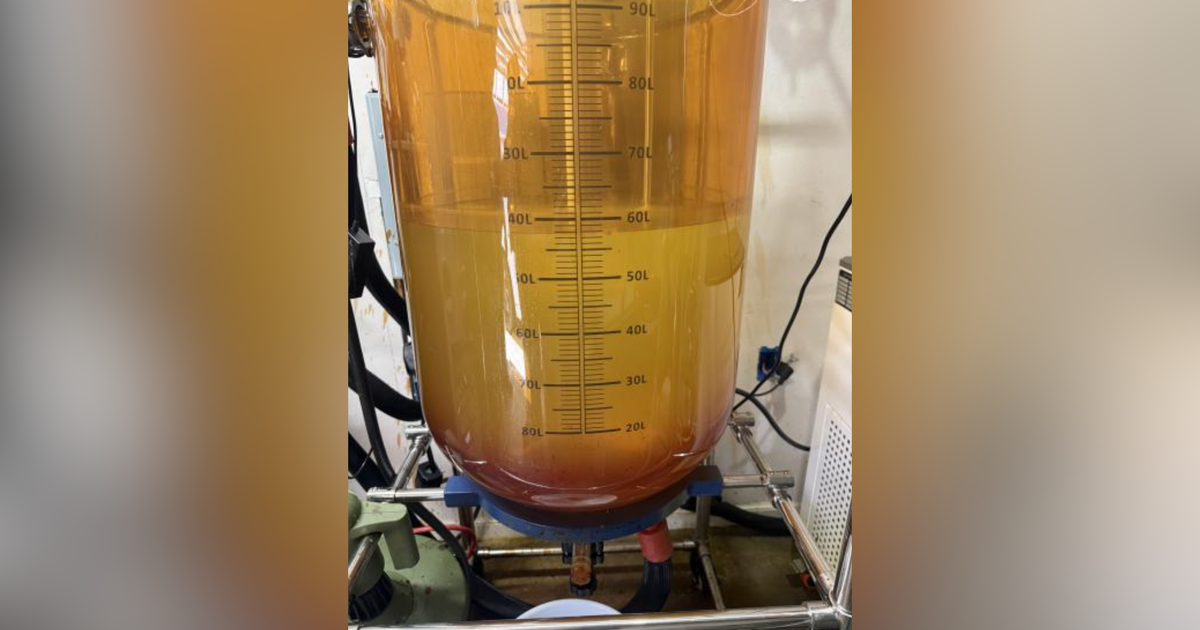
Investigators described the operation as large-scale and sophisticated. The lab contained approximately $250,000 in professional-grade equipment, including specialized temperature-control systems and an industrial evaporator. Agents found 58 liters of liquid in the main reactor vessel, later confirmed to be etonitazene, the DEA said.
Louisiana has become the epicenter of this emerging threat. More than 80% of all etonitazene exhibits seized by the DEA nationwide this year originated in the state, according to the Louisiana State Police Crime Laboratory. The concentration suggests a localized production hub rather than simple transshipment.
The shift toward nitazenes mirrors a broader evolution in the illicit drug market. Earlier this year, the DEA warned it was seeing fentanyl mixed with “a dangerous array of synthetic substances,” including nitazenes, in a public safety advisory. Because nitazenes are often mixed into the supply without users’ knowledge, the margin for error — already razor-thin with fentanyl — effectively vanishes.
Chemists classify nitazenes as benzimidazole opioids, a distinct structural class from fentanyl’s piperidine backbone. That difference matters clinically: standard opioid reversal protocols built around naloxone dosing for fentanyl may prove insufficient for nitazene overdoses, emergency physicians have noted. The DEA’s Special Testing and Research Laboratory is currently mapping the global pipeline of precursor chemicals feeding this new synthesis.
Worth a look

Kennesaw State’s 11-Straight Semifinal Streak Ends in Five-Set Loss to Missouri State at CUSA Championship
Kennesaw State's streak of eleven straight conference tournament semifinals ended Friday night in Bowling Green, Kentucky, when the...

Waste Scenes Speculation Labor and Artistic Production at ICA Philadelphia
The Institute of Contemporary Art (ICA) at the University of Pennsylvania is currently hosting Waste Scenes: Speculation, Labor,...

St. Paul Fires Football Coach Austin Montoya, Wisevoter Reports
St. Paul High School fired football coach Austin Montoya on Friday after one season and a 2-8 record,...

Kentucky Finishes 5th in Women’s, 6th in Men’s at Ohio State Invite
No. 16/25 Kentucky swimming and diving closed the Ohio State Fall Invitational on Friday with two program top-10...