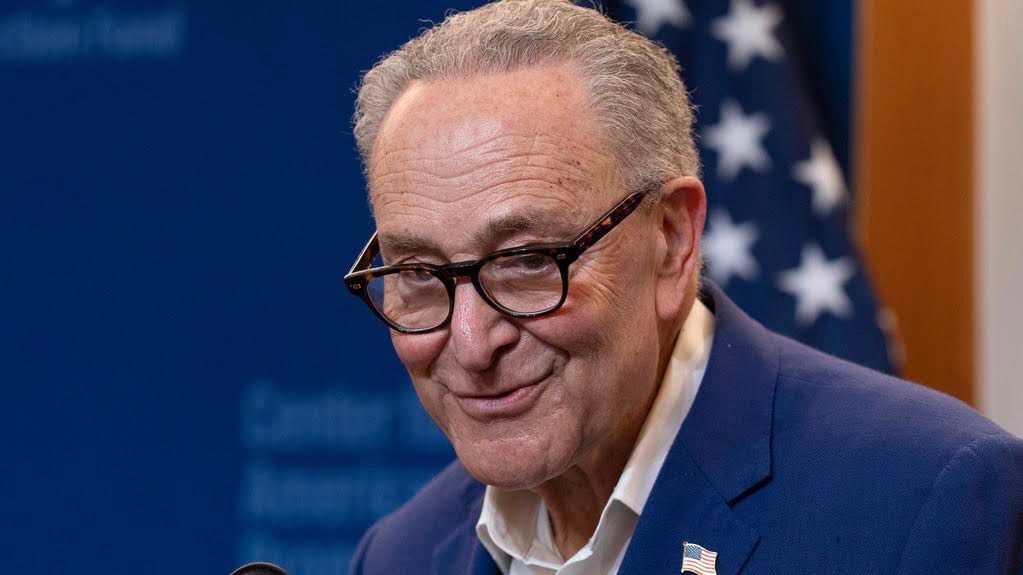
Democrats secured majorities in both the House and Senate this week, positioning them to challenge President Donald Trump on economic policy. While party leaders have pledged to lower consumer costs, the president maintains veto power over legislation, creating a significant hurdle for the new congressional majority’s agenda.
Congressional Control and the Veto Stand-off
The electoral shift ensures that Democrats will hold significant sway in Washington when the new session begins in January. Despite this legislative advantage, the path to lowering prices—a core promise of their recent campaign—remains obstructed by the White House. President Trump has signaled his intent to use his executive authority to block measures he views as contrary to his administration’s goals.
“I’ll get along probably with the Democrats, unless they want to be destructive, but I have the power of the veto,” President Trump remarked on Wednesday. The White House underscored this stance on Thursday by displaying a hat on the president’s desk featuring the word “veto,” a clear signal to the incoming legislative leaders.
Senate Minority Leader Chuck Schumer, D-N.Y., has remained firm in the face of these warnings. According to Spectrum News, Schumer stated, “We are going to work hard to drive costs down with the president or without him, period.”

Economic Realities and the Cost of Living
While political maneuvering dominates the headlines, the underlying economic data presents a complex picture. The Labor Department reported on Friday that the economy added 165,000 jobs in October and saw a slight decrease in the unemployment rate. However, this growth has yet to translate into relief for the average household struggling with high prices.
Caleb Silver, editor in chief of Investopedia, noted that while the jobs market appears stable, the inflationary pressure remains significant. “We’re dealing with the fact that the jobs market looks okay, but inflation is still burning pretty hot,” Silver said. He pointed out that the president’s previous policy decisions—including the imposition of tariffs, actions regarding Iran, and cuts to healthcare and SNAP benefits—continue to influence consumer costs directly.

Policy Hurdles and Potential Common Ground
Democrats face a narrow window for legislative action. While they could theoretically pursue bills to cut war spending, repeal tariffs, or reinstate Obamacare subsidies, these efforts are likely to face presidential vetoes. Furthermore, the party lacks a filibuster-proof majority in the Senate, meaning they would need to secure Republican support to move most major legislation past procedural blocks.
Heidi Shierholz, president of the Economic Policy Institute and former chief economist for the Labor Department during the Obama administration, emphasized the difficulty of this path. “There are still real obstacles, both because Trump has veto power and he has made it clear that he is going to exercise that power, and also the fact that Democrats do not have a filibuster-proof majority in the Senate,” Shierholz explained.
Despite the friction between the two branches of government, some analysts see a potential for cooperation on specific labor issues. Shierholz suggested that raising the federal minimum wage, which has remained at $7.25 since 2009, is one area where both parties might find common ground. Such a move would represent the first federal adjustment to the wage floor in over a decade and a half, a change that would impact millions of low-wage workers across the country.
The question of whether the new congressional majority can deliver on its affordability promises—and whether the White House will choose to engage or obstruct—remains the central uncertainty for the coming year.
Related reading

Sport Pilot Training in Topeka, KS | Top Aviation Services
Sport Pilot Training at Philip Billard Airport For aspiring pilots in Kansas, the fastest path to the cockpit...

US Road Running Races: Local Events for Runners and Walkers
The Bunny 5K, 10K, and 13.1M race is scheduled for 2027 in Des Moines, Iowa. Managed by US...

Javonte Williams and Quinnen Williams to Lead Cowboys Against Colts
Javonte Williams and Quinnen Williams Anchor Cowboys’ Week 9 Game Plan The Dallas Cowboys head into their Week...

Boise State Anthropology Students Win Awards at Idaho Meeting
Boise State Anthropology Students Take Top Honors at Idaho Archaeological Society Meeting The academic rigor of the Boise...