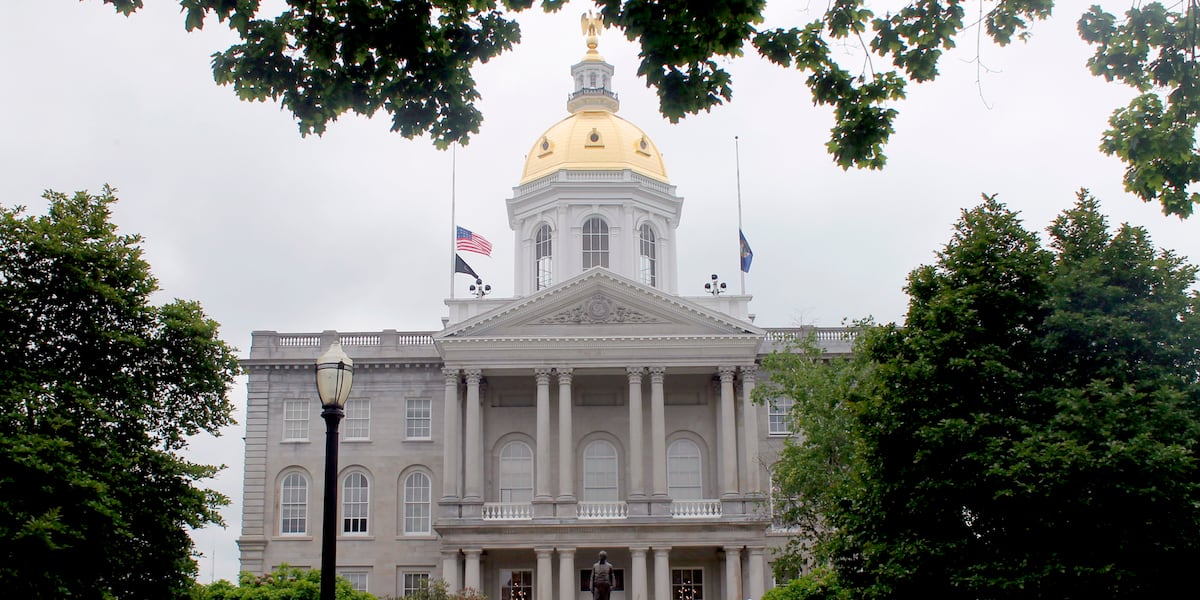
Republican Gov. Kelly Ayotte will spend her second term negotiating with a Democratic-controlled Statehouse and an all-blue Executive Council, a setup that leaves her with veto power but little leverage in a state where voters handed Democrats supermajorities and every statewide office on Tuesday night, WCAX reported.
The results mark a sharp turn for the Granite State. Ayotte narrowly secured reelection, but Democrats captured control of the state Legislature, including a supermajority in the House of Representatives for the first time in state history, and swept all five seats on the Executive Council. The body that approves gubernatorial contracts and nominations to positions including the state Supreme Court will be entirely Democratic next year.
A Purple State Turns Bluer at the Statehouse
Chris Pappas declared victory in the U.S. Senate race, becoming the first openly gay man elected to the United States Senate, while fellow Democrats Maggie Goodlander and Stefany Shaheen won New Hampshire’s two congressional seats. “And as we celebrate, let’s think about the brighter future we can all build together,” Pappas said early Tuesday night.
John Lappie, a political science professor at Plymouth State University, described the shift in electoral terms. “It is a purple state, but it has got a bit more of a purple tinge to it than a red,” he said.
With a Democratic supermajority in the House, Republicans cannot override her vetoes without Democratic votes, effectively handing the Legislature the final say on legislation. Lappie noted that Ayotte will need to work across party lines, much as former Gov. Chris Sununu did during the brief period Democrats controlled the Legislature during his tenure.
Looks like New Hampshire Democrats are going to flip the New Hampshire Executive Council, State Senate have to wait a bit more for on House of Representatives and are currently tied for Governor along with maintaining hold seats at the Federal level. It is possible to see New…
“I think in the governor’s ideal world, it would be working with the Democrats, much like Chris Sununu did during the brief period Democrats (had) the Legislature during his governorship because she has to look ahead to 2028,” Lappie said.
Cost of Living Drives the Democratic Mandate
State Sen. Sue Prentiss, D-Lebanon, who won reelection to a fourth term and will now serve in the majority, said the message from voters was unmistakable. “Residents are finally saying, ‘I don’t think this is going in the right direction; it is time for a change,’” Prentiss said.
Karen Liot Hill, who before Tuesday was the lone Democrat on the Executive Council, echoed the economic anxiety driving the results. “Life has gotten way too expensive. That is what we have been hearing for the last several months on the campaign trail; now we have to actually deliver results,” she said.
New Hampshire State Senate literally doing 100% flip from Republicans holding 16 seats to Democrats holding 17 seats https://t.co/fxgeAQ58ed
Ayotte acknowledged the pressure in a statement Tuesday night, pledging to focus on housing, childcare, and energy prices. “I believe in our state and our people, and together we will work to make life more affordable for everyone,” she said.
What Happens Next in Concord
Senate Democrats will meet Friday to select party leadership, who will set the agenda for the upcoming session. Prentiss warned that the governor must engage practically if she hopes to advance her agenda. “If the governor is practical and wants to get work done for the Granite State and wants to deliver on the promises she’s made, she’s seen how the table’s been set,” she said.
With the Executive Council now entirely Democratic, Ayotte’s nominees to key positions will face a panel with no Republican voices, and contract approvals will require bipartisan negotiation in a chamber where Democrats hold the numbers. The governor’s office did not immediately detail specific legislative priorities beyond the affordability agenda she outlined Tuesday night.
For New Hampshire residents, the divided government means the next two years of state policy will be shaped by negotiation rather than single-party control, with housing costs, childcare access, and energy prices serving as the early tests of whether Concord can function under split power.

Infrastructure and Demand Constraints Limit Regional Through-Running
A train passes through New York Penn Station roughly every two and a quarter minutes, the Regional Plan...

Alan Mikhail’s book reframes the founding of New York via Anthony and Grietje
Before New York, There Was Anthony the Turk — and a New Book Asks What That Really Meant...

Democrats sweep NH Executive Council and Grab legislative majorities
Republicans drew New Hampshire's Executive Council districts in 2022 to lock in their advantage, and they have held...

Former Edmond Resident Among 9 Killed in Florida Jet Crash
Rachael Reed, a 2007 graduate of Edmond Santa Fe High School and a 2013 nursing graduate of the...