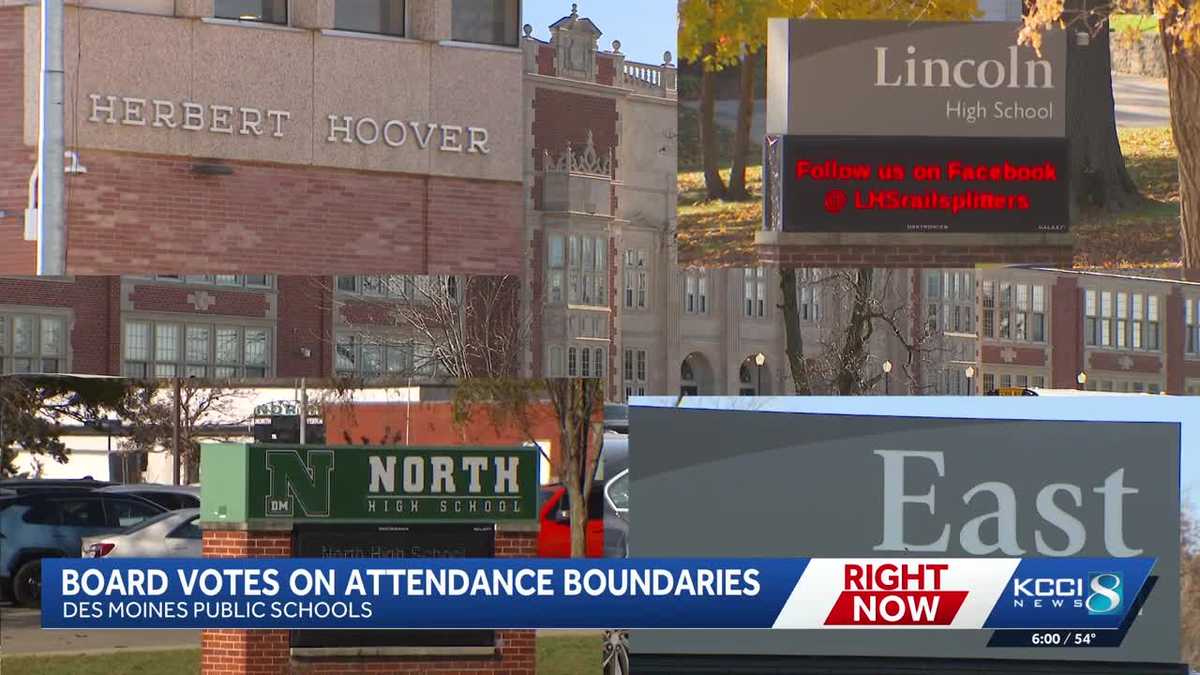
Des Moines high school boundaries will shift from address-based assignments to three river-defined regions under a plan approved on Tuesday by the Des Moines school board, ending a decades-long system across the district, KCCI reported.
The vote backs a major structural shift within the district’s five-year, $265 million Reimagining Education initiative, according to Des Moines Public Schools. The changes replace the traditional neighborhood model by dividing the city into three regions while introducing nine opt-in signature schools.
“The most important thing to know is that the boundaries are really deeply tied to (Reimagining Education). They are the vehicle for how we move the promises forward that we made the community,” Bekah Harris of the DMPS Reimagining Education project told KCCI.
Under the approved framework, students will be assigned to specific high schools based on which side of the local rivers their neighborhoods fall. Students living in the northeast region are assigned to East High School, southern residents go to Lincoln High School, and northwest families feed into Roosevelt High School, as Wisevoter reported.
Meanwhile, Hoover High School and North High School will transition into specialized facilities. Families must apply for admission to these and other opt-in signature schools focusing on STEM, the arts, Montessori, or dual language instruction.
“Approving these boundaries gives families a clearer picture of what to expect and is a key milestone in fulfilling the promises we made through Reimagining Education,” said Superintendent Matt Smith, according to Des Moines Public Schools.
The district plans to phase in the new attendance boundaries starting in the 2028-29 school year, with a legacy provision allowing currently enrolled students to remain at their current schools through the grades those schools serve. The entire transition process is scheduled to conclude by the 2031-32 school year.
“I think that anytime you have change this big, it’s scary. Which is part of why we’re doing this now. So we passed this plan tonight, and we have 18 months before boundary changes take effect, which means that we have 18 months to provide individual supports for communities to make sure that parents know what their options are, where their kids are going to school,” Harris told KCCI.
The boundary recommendation itself was shaped by a 25-member boundary committee that included community members, district staff, city representatives, and school leaders from all three regions, working alongside boundary consultant RSP.
“Community input has been part of this work from the beginning, and it remains important as we move forward,” said School Board Chair Kim Martorano, as reported by Des Moines Public Schools.
Keep reading

Bagley Pecans Opens Year-Round Gift Shop, Expands Seasonal Business
In Richmond, Texas, the arrival of pecan season is marked by a distinct local ritual: the opening of...

Vermont Now Has 12 Cohousing Communities, up From One in 1995
Cohousing communities are quietly reshaping housing across Vermont, with the state now home to 12 such developments. This...
Anger Index: Why Texas Tech, Tennessee and non-Power 4 Schools Should Be Mad
The College Football Playoff committee effectively requires a win against a top-tier Power 4 opponent, setting a bar...

Former Utah Lawmaker, Businessman Dixie Leavitt Dies at 97
Former Utah state legislator and prominent business figure Dixie L. Leavitt died on Tuesday at the age of...