
According to the college's current catalog, the Diesel Technology program emphasizes practical, real-world training using both live customer equipment and mock-up units and assemblies designed to mirror exactly what students will encounter once they enter professional service shops.
The scope of technical instruction spans the full mechanical anatomy of heavy machinery. Students study the theory and troubleshooting of problems involved in the repair and maintenance of engines, transmissions, and differentials. They also work extensively on brakes, steering, suspension, and undercarriages. The curriculum further covers cooling systems, fuel and air systems, and hydraulics, alongside an introduction to vehicle and equipment operation. This comprehensive coverage ensures that graduates understand not just how to replace individual worn parts, but how these interconnected systems behave and interact when heavy trucks and construction equipment fail under real working conditions in the field.
Balancing the hands-on shop work is a deliberate emphasis on theory and troubleshooting methodology. Rather than simply training students to swap components, the program teaches them to diagnose root causes—understanding why a transmission slips or how a hydraulic leak affects overall system pressure. This analytical approach prepares technicians to handle novel problems that don’t appear in standard repair manuals.
Learning on Live Customer Equipment
The program’s reliance on actual customer projects creates a training environment that closely mirrors professional employment from the first semester. Rather than working exclusively on donated or obsolete machinery, students diagnose and repair equipment brought in by real clients, developing the practical diagnostic skills and professional work ethic that employers expect. Alongside these live projects, the college maintains mock-up units and assemblies similar to those found in industry, providing controlled settings for practicing complex procedures repeatedly before applying them to customer machinery.
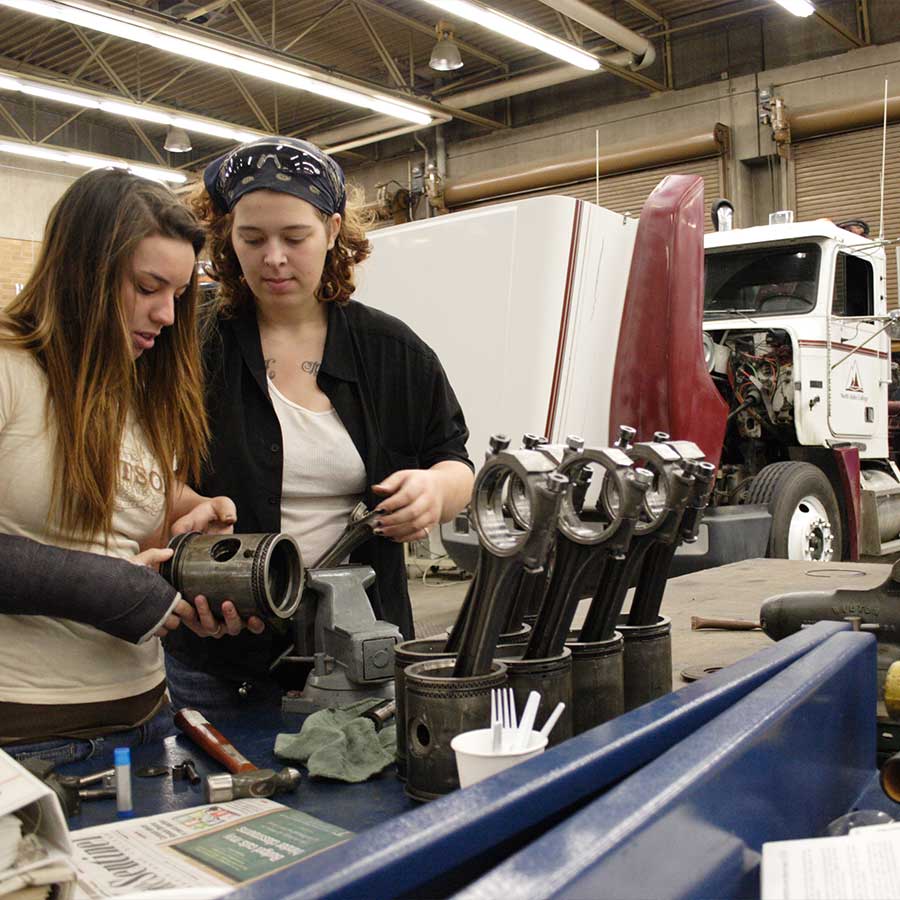
This dual approach ensures students encounter both the unpredictability of real-world breakdowns and the repetitive practice needed to master intricate repairs. The shop floor becomes a working bridge between classroom theory and the immediate demands of an entry-level technician position, where the quality of work directly affects customer satisfaction and business reputation.
Safety and Welding Woven Into Technical Training
Integrated directly into the program is a dedicated course covering safety protocols and basic welding procedures. This inclusion addresses two fundamental requirements of the trade: protecting workers in environments where heavy equipment, high-pressure hydraulic systems, and hot work create genuine physical hazards, and providing the fabrication skills necessary for custom repairs, bracket modifications, and structural fixes that technicians frequently perform on undercarriages and equipment frames when standard replacement parts are unavailable or insufficient.
Students Advance Through Mandatory Stages
Advancement through the program follows a strict semester-by-semester structure designed to build competency layer by layer. Successful completion of each semester, or explicit permission from the instructor, is required before a student can continue into the next. This progression system ensures that learners master foundational mechanical concepts and shop safety practices before tackling advanced diagnostics, complex powertrain overhauls, or sophisticated system repairs.
Academic placement runs parallel to the technical training. The college assessment test determines placement in specific English and math courses, ensuring students develop the written communication skills needed for service reports and the mathematical precision required for measurements and calculations alongside their growing mechanical expertise.
Flexible Access for Working Professionals
The program also serves current industry professionals through targeted enrollment options that recognize existing experience. These individuals may enroll in individual courses on a space-available basis, provided they secure the instructor’s permission. This pathway allows experienced workers to fill specific knowledge gaps—whether in advanced hydraulic systems, updated fuel and air system technologies, or new equipment operation procedures—without committing to a full multi-semester program.
Graduates leave with documented experience, comprehensive knowledge of heavy machinery systems, and the safety and welding credentials that employers seek when hiring entry-level truck and heavy equipment technicians ready to contribute immediately.
Keep reading
2026 Capitol Christmas Tree Travels 3,000 Miles with Boise Cascade
Boise Cascade Will Haul the 2026 U.S. Capitol Christmas Tree Nearly 3,000 Miles from Idaho to Washington, D.C....

Hawaii legislative races remain too close to call; five GOP incumbents trailing in early results
Several Hawaii legislative races remained too close to call early Wednesday morning, with five Republican incumbents facing defeat...

Anna Eskamani leaves Florida House after eight years in office
Election Day in Florida marks the end of an eight-year run in the state House for Dr. Anna...

Stefany Shaheen Wins NH-1 Open Seat Over DiLorenzo
MANCHESTER, N.H. — The Associated Press called the race at 9:20 p.m. Tuesday, and by then the outcome...