The Associated Press called the Illinois governor’s race the moment polls closed at 7 p.m. on Election Day, declaring JB Pritzker the winner in his bid for a rare third term. WTTW News reported that Pritzker defeated Republican Darren Bailey in a rematch, with the Democratic incumbent leading 59.6% to Bailey’s 37% and independent Collin Corbett at 3.3% when roughly 85% of votes were counted. CBS News projected the same outcome shortly after the polls closed, noting that Pritzker had been heavily favored to win.
This victory makes Pritzker the first Democrat ever elected to a third term as Illinois governor, according to CBS News. The win secures his third term in the governor’s mansion and keeps alive speculation about a possible 2028 presidential run, even as his focus Tuesday night remained on the state. “I’m running for reelection as governor for the state of Illinois,” he told voters during the campaign, deflecting questions about the White House.
A Mandate Built on Contrast
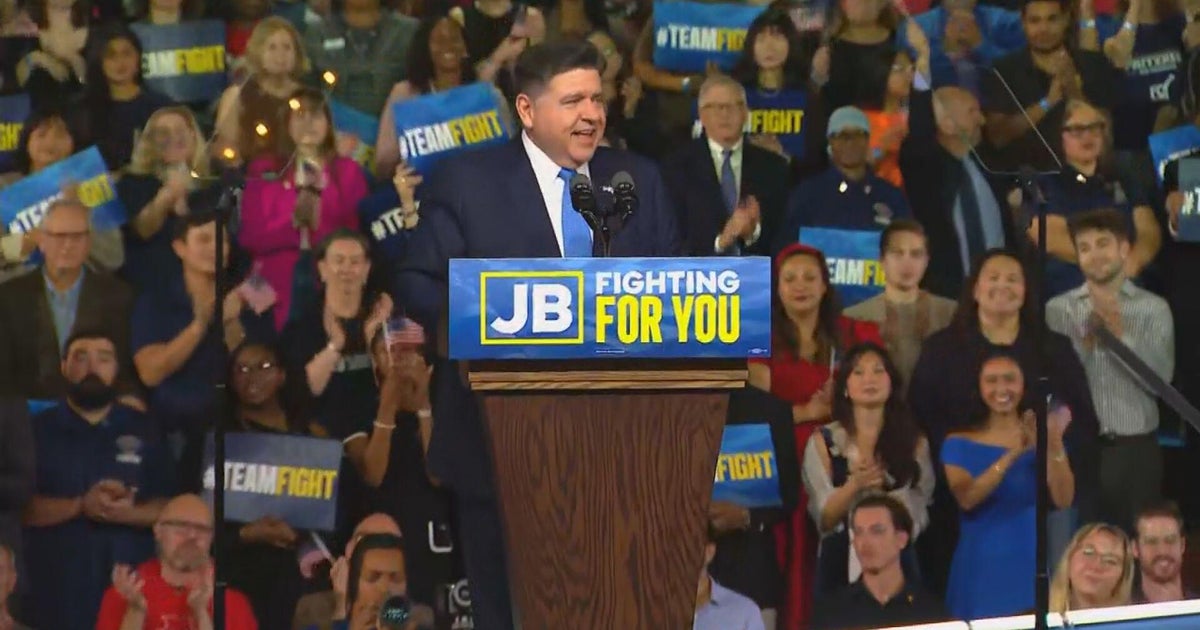
In his victory speech, Pritzker framed the election as a choice between “the politics of hope and fear.” Standing before supporters, he declared, “There’s one question I’ve gotten a lot over the last few months: what’s next? The answer is simple. I’m going to ask you to continue to hope, to wrap yourself in hope, in courage. We climbed one mountain tonight, but we are sitting at the base of another.”
He listed healthcare system fixes, campaign finance reform, and curbing “tech robber barons” as the challenges ahead for Illinois and the nation. CBS News noted that Pritzker also highlighted his eight years of balanced budgets, credit upgrades, equal pay advances, reproductive rights protections, and bans on assault weapons and ghost guns.
Bailey, a farmer from Xenia in southern Illinois who previously lost to Pritzker in 2022, campaigned on affordability and public safety. “My opponent had eight years to lower property taxes, lower energy costs, and make our communities safer,” Bailey told WTTW News. “Instead, his policies increased costs and made our communities less safe.”
The Fiscal Ledger: Competing Claims
The two candidates offered sharply different assessments of the state’s financial health. Pritzker told WTTW News that his administration “eliminated our bill backlog and delivered eight balanced budgets and 12 credit upgrades,” adding that by “restoring our fiscal foundation, we have funded government services sustainably and saved taxpayers money.” He blamed the state’s previous financial troubles largely on his Republican predecessor, Gov. Bruce Rauner.
Bailey countered that property taxes and the cost of living were driving residents away. “We can’t continue doing the same things over and over again and expect a different result,” he said. The contrast extended to the campaign trail, where Pritzker crisscrossed the state with his new running mate, Christian Mitchell, while Bailey spent significant time in the Chicago area attempting to peel away northeastern Illinois voters.
Pritzker Contrasts Trump’s Policies
President Donald Trump’s influence loomed over the rematch. Pritzker has made his opposition to Trump a key feature of his governorship, with his chief of staff Anne Caprara telling WTTW News that “what’s good for the country right now is to get Democrats elected to the Senate, the House … and to start to roll back some of the worst parts of the Trump agenda.” Pritzker himself told CBS News, “I’m happy to be something they jeer because I have seen what they choose to cheer.”
Bailey, who eagerly accepted Trump’s endorsement in 2022, walked a tightrope this cycle—distancing himself from the unpopular president in Democratic-leaning northeastern Illinois while maintaining his Republican credentials. “I’m not running for president,” Bailey told WTTW News. “I’m running for what I can do as governor here in the state of Illinois.”
CBS News reported that Pritzker spent nearly $24 million from July through September, compared to less than $1 million spent by Bailey during the same period.
The Third Voice
Independent candidate Collin Corbett, a Palatine resident who left the Republican Party this year, captured 3.3% of the vote. Describing himself as fiscally conservative and socially moderate, Corbett told WTTW News that “our political process has become one where the candidates snipe at each other, the parties snipe at each other and nothing actually gets done and working families right now are really, really struggling.”
With Christian Mitchell replacing Lt. Gov. Juliana Stratton—who won the primary for U.S. Senate—on the ticket, Pritzker now faces the task of governing a state he says sits “at the base of another” mountain, with healthcare, campaign finance, and the influence of technology companies among the terrain ahead.
More on Pritzker
Related reading

Hawaii legislative races remain too close to call; five GOP incumbents trailing in early results
Several Hawaii legislative races remained too close to call early Wednesday morning, with five Republican incumbents facing defeat...

Anna Eskamani leaves Florida House after eight years in office
Election Day in Florida marks the end of an eight-year run in the state House for Dr. Anna...

Stefany Shaheen Wins NH-1 Open Seat Over DiLorenzo
MANCHESTER, N.H. — The Associated Press called the race at 9:20 p.m. Tuesday, and by then the outcome...

Ned Lamont Wins third term as Democrats Expand control of CT legislature
The Associated Press called the Connecticut governor's race for Ned Lamont at 9:15 p.m. Tuesday, a result so...