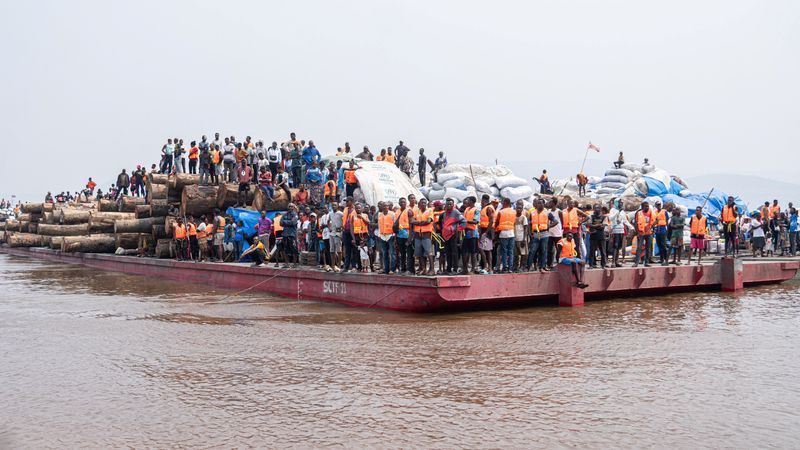
Health authorities in the Democratic Republic of the Congo have quarantined a river boat carrying nearly 200 passengers near Kinshasa after a passenger died with suspected Ebola symptoms. The development compounds the nation’s 17th outbreak, which officials describe as the fastest-transmitting in recorded history.
The Interception of the River Boat Near Kinshasa
Congolese health authorities deployed a mobile laboratory to a vessel stopped and held in Maluku, roughly 40 miles upstream from the capital, following concerns that the virus had travelled down the Congo River. Security services quarantined the vessel under World Health Organization standards after it completed a journey of more than 1,700 kilometres downstream.
The operation began after health workers in Mongala province reported the July 25 death of a 32-year-old man suspected of contracting the virus. Officials offered conflicting accounts regarding his movements. Africa CDC Director-General Jean Kaseya stated that the boat originated in Mongala province and that the passenger fell ill on board. However, Congolese Health Minister Samuel Roger Kamba maintained that the man developed symptoms only after disembarking in Pimu, while provincial health chief Eustache Bibala Faray noted that documents found on the man initially linked him to Kisangani.
Body Ilonga Bompoko, secretary-general of Congo’s health ministry, reported that all passengers underwent temperature checks and clinical screening. Medical teams collected samples from four individuals presenting with fever and other symptoms, with test results pending.
“We decided to do that even if some of them didn’t have symptoms because we want to make sure that we don’t miss anything.”
Dr Jean Kaseya, director-general of Africa CDC
Escalating Transmission and Strain on the Front Lines
The DRC is battling its 17th Ebola outbreak, driven by the rare Bundibugyo species, which had not been documented for more than a decade. Official figures indicate that confirmed cases have reached 3,973 with 1,801 deaths, making it the second-deadliest Ebola outbreak on record. The historical benchmark remains the 2014–2016 West Africa outbreak, which recorded more than 28,000 cases and over 11,000 deaths.
Public health officials warn that the current transmission rate is outstripping tracking efforts. Authorities say that a majority of new cases are identified outside of monitored contact lists. While authorities are tracing at least 75% of known contacts, rebel conflict and mining-related population movements continue to restrict access in remote areas.

Meanwhile, the operational response faces severe internal disruption. Dozens of health workers at the epicentre in Ituri province—which accounts for nearly 90% of the nation’s cases—staged protests at the governor’s office in Bunia over unpaid wages and bonuses. Protesters abandoned several health facilities, halting critical patient care.
“With this way of managing things, Ebola will not end in this province. We ask the authorities to get involved at all levels so that a solution is found quickly.”
Edouige Makosi, protesting health worker
The medical charity Doctors Without Borders warned that the response is still not reaching communities quickly enough to break transmission chains. During a visit to the country, World Health Organization Director-General Tedros Adhanom Ghebreyesus urged authorities to prioritize welfare and protection for front-line responders, who also face hostility and attacks from communities influenced by misinformation.
Expanding Interventions as Kinshasa Prepares
Authorities have reinforced surveillance and rapid-response capabilities at Maluku, the city’s primary entry point.
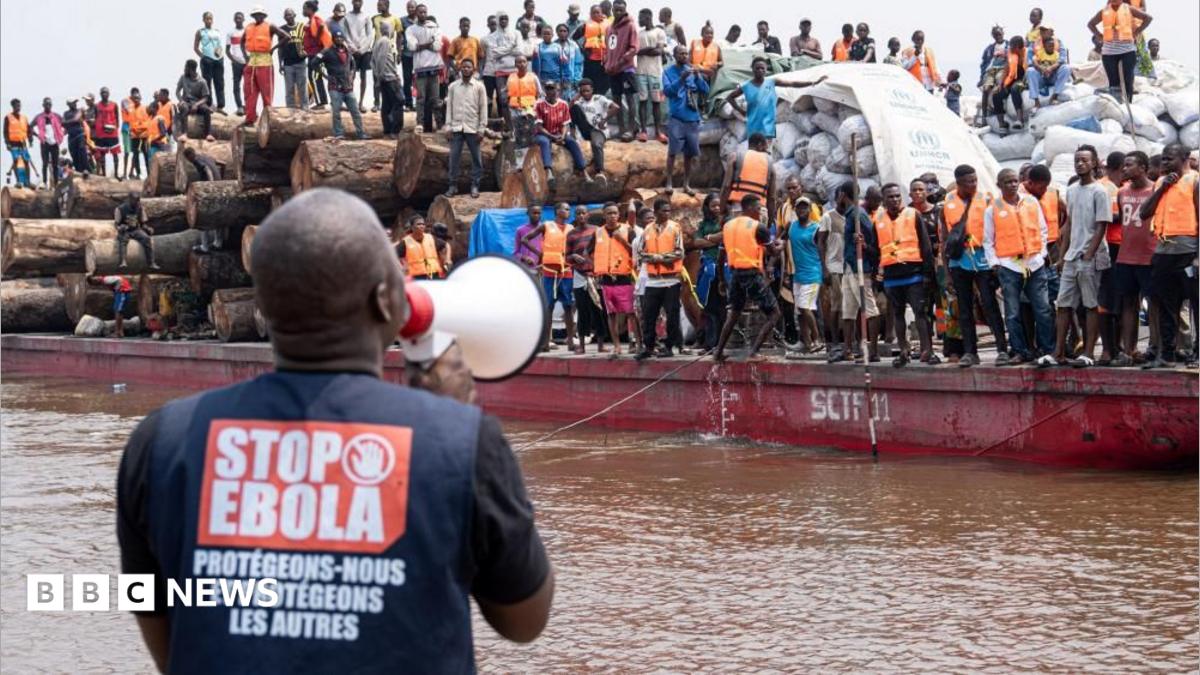
To combat the spread, health officials are broadening medical interventions. Dr Kaseya announced plans to expand the use of a vaccine developed against the Zaire ebolavirus species, citing data suggesting it confers cross-protection against the Bundibugyo strain. Authorities also intend to distribute the antiviral drug remdesivir more widely across affected provinces.
With 674 patients currently in isolation across five provinces and more than 17,000 individuals under active monitoring, the containment effort relies heavily on whether diagnostic results from the quarantined vessel confirm local transmission risks in the capital.
Related reading

UC San Diego Researchers Use AI and Cell Movies to Predict Drug Responses
Researchers at the University of California San Diego have built virtual cell models using artificial intelligence and 40,000...
Australia Confirms First Mainland Mammal Death From H5N1 Bird Flu
Australia confirmed its first mainland mammal death from H5N1 bird flu after a long-nosed fur seal tested positive...

Deep Vein Thrombosis: Symptoms, Risks and Prevention Management
Deep vein thrombosis forms blood clots in deep veins, most often in the legs or pelvis, carrying risks...
Alzheimer Trials Face Global Participant Shortage Threatening New Therapies
Research into Alzheimer's disease and other dementias is on the cusp of a potential revolution, yet progress risks...