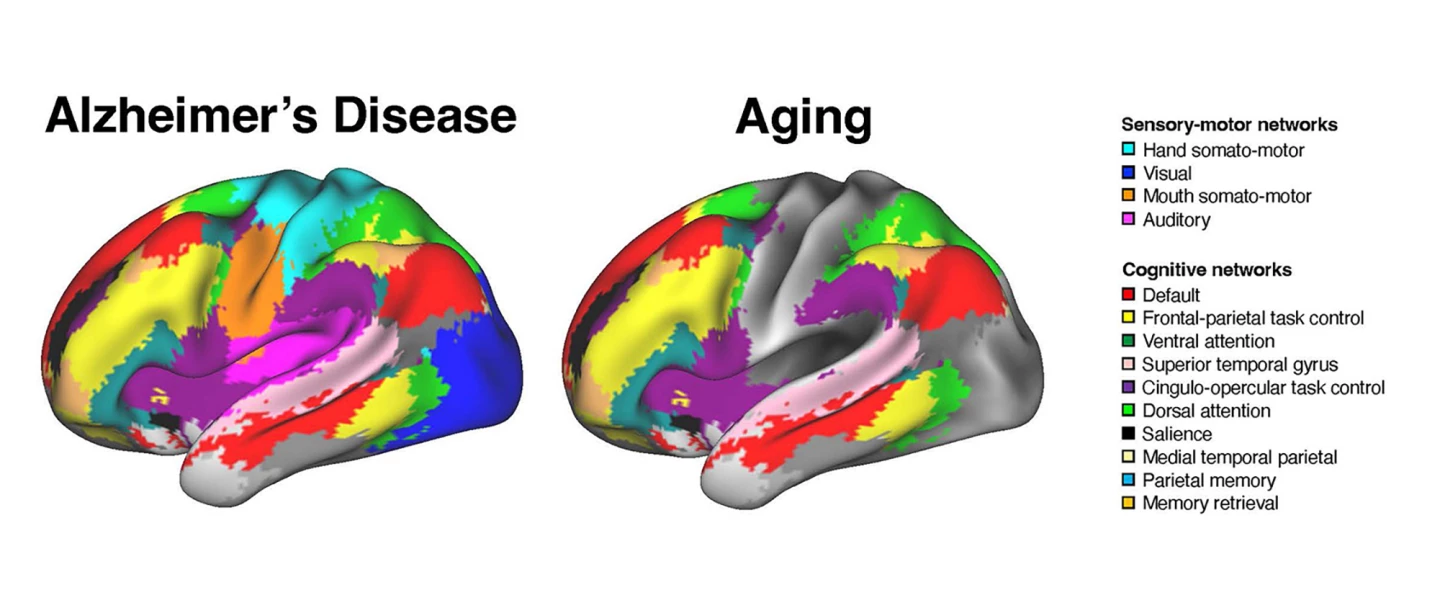
Stanford Medicine researchers have identified brain activity patterns that can predict Alzheimer’s disease years before memory loss or the buildup of amyloid-beta plaques occurs. The study, published Nov. 4 in Science Advances, suggests that specific ways different parts of the brain communicate can serve as an early biomarker for cognitive decline.
By analyzing resting brain activity, the research team found that certain firing patterns in cognitively normal adults can foretell the onset of the disease. Conversely, other patterns indicate a high level of brain resilience, characteristic of so-called super agers, who maintain memory capacities typical of people decades younger.
ARC Score Distinguishes Super Agers from Alzheimer’s Patients
To quantify these differences, investigators compared resting-state functional MRI scans from 180 super agers and 110 individuals diagnosed with Alzheimer’s disease. They identified distinct patterns of overactivity and underactivity in various brain regions, known as the functional connectome.
From these findings, the team developed the Alzheimer’s resilience-vulnerability connectome score, or ARC score. This measurement can distinguish super agers from those with Alzheimer’s with approximately 85% accuracy.
The researchers then tested the model on more than 1,300 adults aged 55 to 70 who showed no signs of cognitive impairment. Although these participants performed normally on standard memory tests, their brain activity fell along a spectrum:
- Individuals with more Alzheimer’s-like scores experienced faster declines in memory, attention, and executive function.
- Those with the most super-ager-like scores exhibited the slowest rates of decline.
Predicting Decline Before Physical Symptoms Appear
A significant finding of the study is that the ARC score can identify risk earlier than traditional methods. In longitudinal tracking that lasted up to 12 years—with most participants monitored for five to six years—the score successfully predicted who would develop amyloid-beta plaques or receive an Alzheimer’s diagnosis.
Our model shows comparable or better prediction ability, and it can do so at an earlier time point. And if we combine our score with the existing biomarkers, the prediction performance improves.
According to the research, the ARC score matched or outperformed standard risk measures, including genetic testing and existing amyloid and tau biomarkers. This capability provides a potential window for intervention before significant neurobiological damage occurs.
Yu Zhang on Targeting Brain Resilience
The research team noted that current studies often focus on well-known biomarkers like tau or amyloid-beta, which are typically observable only at relatively late stages of the disease. The focus on functional connectivity offers a different approach to understanding cognitive health.
There are two main components: One is to know which part of the brain to target, the other is how we should change it. That’s why identifying the super-ager brain resilience pattern is a critical component — so we know what a good pattern should be.
By understanding these patterns, researchers can better determine the specific mechanisms required to foster similar resilience within the brains of older individuals.
Keep reading

Pet budgie Luna found in drain a mile from home After Storm escape
Luna the Budgie's Dramatic Escape and Rescue In a bizarre incident, a pet budgie named Luna escaped from...

Blue Jays Evaluate Future after Anthony Santander social media posts
Blue Jays Evaluate Future After Anthony Santander Social Media Controversy The Toronto Blue Jays are navigating the fallout...

Xabi Alonso faces injury concerns ahead of Chelsea vs Sunderland
Chelsea manager Xabi Alonso faces critical personnel decisions ahead of Sunday’s Premier League fixture against Sunderland at the...

NBA Fantasy Waiver Wire: Top Players to Add for Week 4
Waiver Wire Dynamics: Strategic Adds for Week 4 The NBA injury report has become the primary driver of...