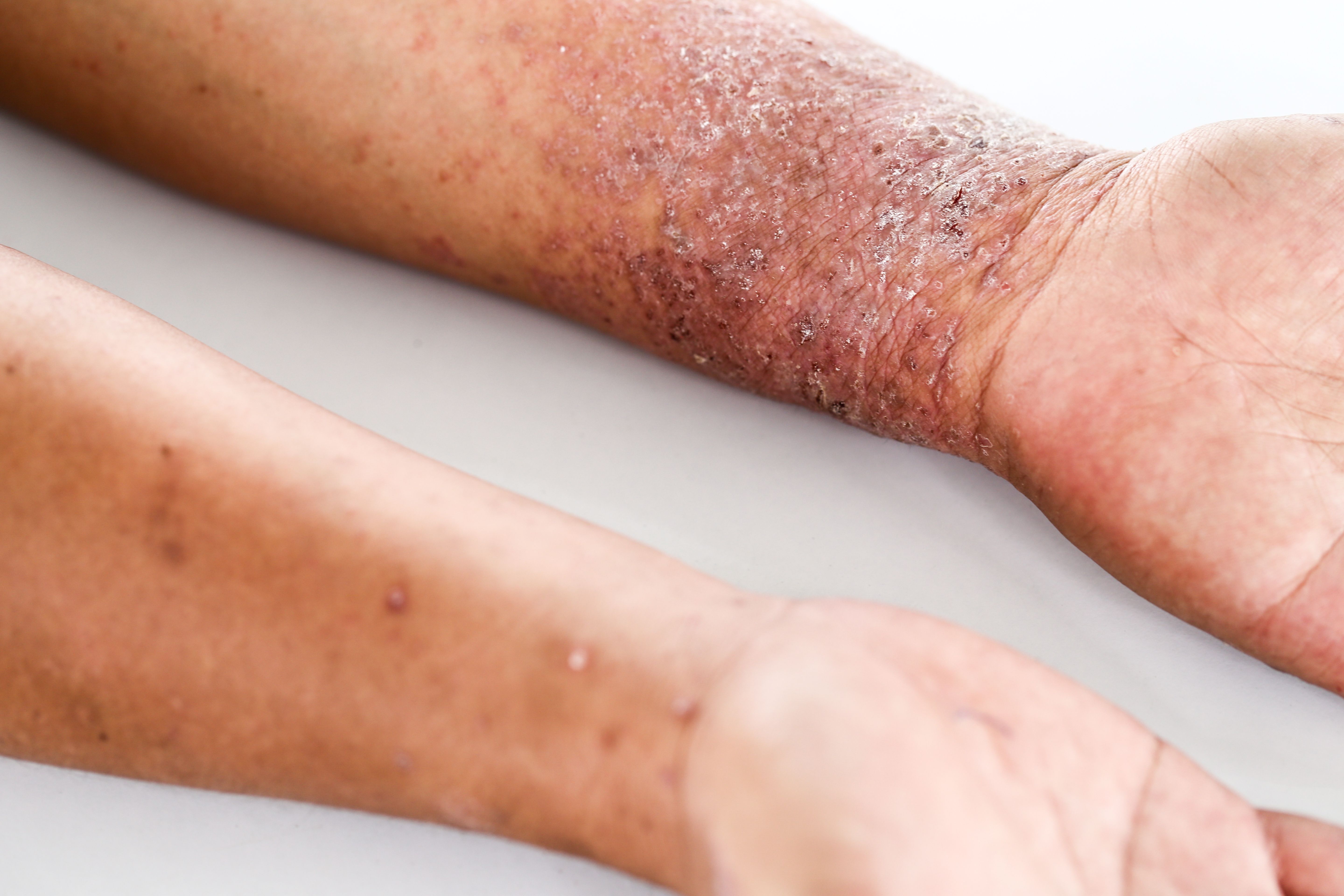
“Infantile skin inflammation establishes long-lasting innate immune imprinting that predisposes skin to exaggerated type 2 inflammation later in life. Under the condition tested, topical corticosteroid treatment did not attenuate this enhanced responsiveness.” Systematic reviews and recent animal models highlight the strong link between early-onset atopic dermatitis during infancy and the risk of developing asthma later in childhood. Researchers point to persistent immune imprinting and family history as key drivers, though preventive interventions remain uncertain.
Recent investigations show that early-onset atopic dermatitis—particularly when moderate to severe or persistent—serves as a primary predictor for subsequent respiratory allergic diseases.
Tracing Family History and Genetic Risks
The convergence of genetic susceptibility and environmental factors shapes how early-stage skin conditions progress into allergic disorders. The double-hit theory suggests that genetic mutations causing skin barrier dysfunction, such as filaggrin gene mutations, create a first hit. When combined with environmental allergen exposure as a second hit, the process promotes allergic sensitization and subsequent asthma development.
Data compiled from various prospective and retrospective cohorts demonstrate that children experiencing early-onset atopic dermatitis alongside a family history of atopy face a pronounced risk of progression. The review notes that the risk of subsequent asthma climbs higher in children with early-onset, persistent, and severe manifestations, recording a relative risk of 2.16 in prior pooled estimates. These findings align with the established concept of the atopic march, where skin symptoms emerge early in life before other allergic diseases develop.

Infantile Skin Inflammation Programs Future Immune Responses
Recent experimental models investigated how infantile skin inflammation programs future immune responses. Researchers treated two-week-old mice with a vitamin D analogue for two weeks. This treatment induced atopic dermatitis-like symptoms characterized by epidermal hyperplasia, elevated type 2 cytokines, and infiltrating basophils, eosinophils, and innate lymphoid cells.
When allowed to mature and rechallenged in adulthood, these mice exhibited markedly exaggerated skin inflammation compared with control groups.
Cellular analysis identified that basophils served as the major source of interleukin-4, while CCR6-negative group 2 innate lymphoid cells produced interleukin-5. Infantile dermatitis resulted in the persistent expansion of Sca-1-positive, CCR6-negative innate lymphoid cell populations. Thymic stromal lymphopoietin expression upon adult rechallenge showed no increase relative to controls, indicating that other persistent cellular shifts drive the increased reactivity.
Infantile skin inflammation establishes long-lasting innate immune imprinting that predisposes skin to exaggerated type 2 inflammation later in life. Under the condition tested, topical corticosteroid treatment did not attenuate this enhanced responsiveness.
Hiroki Sugiyama et al., via Sciencedirect
Corticosteroids Reduce Acute Inflammation but Fail Long-Term
Translating these mechanistic insights into clinical prevention remains difficult. Researchers treated two-week-old mice with a vitamin D analogue for two weeks. In the murine models, administering topical corticosteroids during the initial phase of infantile dermatitis successfully reduced acute inflammation. Administering topical corticosteroids during the initial phase failed to prevent the exaggerated inflammatory response when mice were rechallenged in adulthood.
For human patients, clinical guidance emphasizes that early identification of high-risk children facilitates early detection. Guidance emphasizes appropriate management of skin symptoms, regular monitoring for respiratory issues, and parental education. Effective strategies to halt the progression from atopic dermatitis to asthma are not yet established. Researchers cite the necessity for future prospective studies to dissect the underlying genetic, environmental, and immunological drivers.

Semyon Varlamov gets win as Islanders edge Predators in shootout
Semyon Varlamov secured a victory stopping shots as the New York Islanders edged the Nashville Predators in a...

Junior Caminero: Foot Injury vs. Game 5 Determination
Caminero Vows to Play Game 5 Despite Foot Injury in Game 4 Rally Tampa Bay Rays third baseman...

Researchers Link Cerebral Visual Impairment to Brain Network Disruptions
Researchers exploring cerebral visual impairment and schizophrenia are uncovering how everyday perceptual breakdowns stem from widespread brain network...

Knicks Secure First Win of Season by Defeating Pistons 111-97
Knicks Erase Early Deficit to Beat Pistons and Secure First Win Down by 13 points after the opening...