
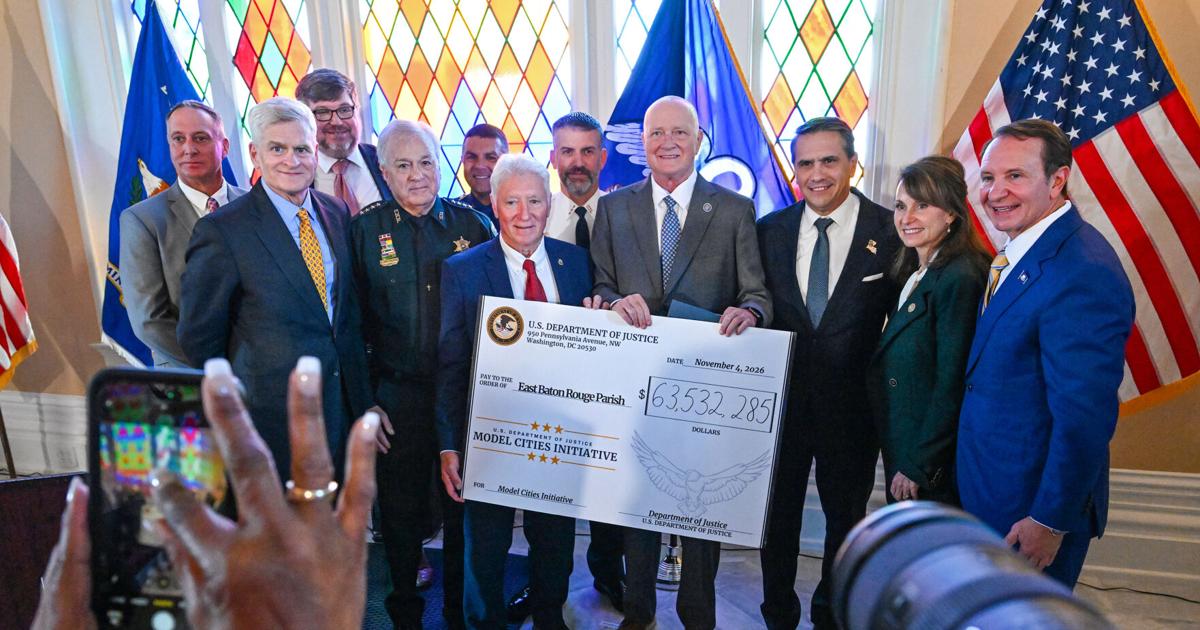
East Baton Rouge Parish walked away with $63,532,285 in federal crime-fighting money on Wednesday, a sum that sounds massive until you stack it against the $125 million local leaders actually requested just three months ago. WAFB reported that U.S. Attorney General Todd Blanche announced the award during a press conference at the Louisiana Old State Capitol, making Baton Rouge one of only four cities nationwide selected for the Department of Justice’s FY 2026 Model Cities Initiative.
The $63.5 million represents slightly more than half of what the East Baton Rouge Metropolitan Council authorized in an August emergency meeting, when officials pitched a nine-figure plan built on a coalition of more than 15 agencies. That proposal promised everything from expanded police patrols to juvenile diversion programs and reentry services. Now, with roughly $61.5 million less than requested, parish leaders face the task of deciding which pieces of that vision survive the cut.
A $300 Million Pool Split Four Ways
The Model Cities Initiative drew 47 municipalities into its orbit when announced in June, narrowing to 21 semifinalists and 11 interviewed cities before Blanche’s team settled on Baton Rouge alongside Jacksonville, Florida; Jackson, Mississippi; and St. Louis, Missouri. Each winner receives a comparable slice of the nearly $300 million pot, distributed over 36 months.
Mayor-Sid Edwards called the award “one of the most historic and significant public safety investments in Baton Rouge’s history,” according to The Advocate. Blanche framed the selection as recognition of a parish willing to partner directly with federal law enforcement to confront violent crime rates that run roughly three times the national average. The funding targets 10 specific hot spots where 46% of violent and drug-related crime occurs, with plans to expand officer patrols, hire more prosecutors, and upgrade police technology beginning in early 2027 after a two-month planning window.
𝐃𝐎𝐉 𝐏𝐈𝐂𝐊𝐒 𝐁𝐀𝐓𝐎𝐍 𝐑𝐎𝐔𝐆𝐄 𝐅𝐎𝐑 $𝟑𝟎𝟎𝐌 𝐂𝐑𝐈𝐌𝐄 𝐂𝐑𝐀𝐂𝐊𝐃𝐎𝐖𝐍 𝐀𝐅𝐓𝐄𝐑 𝐀 𝟑𝟐𝟎% 𝐒𝐏𝐈𝐊𝐄 𝐈𝐍 𝐀𝐆𝐆𝐑𝐀𝐕𝐀𝐓𝐄𝐃 𝐀𝐒𝐒𝐀𝐔𝐋𝐓𝐒 Acting Attorney General 𝐓𝐨𝐝𝐝 𝐁𝐥𝐚𝐧𝐜𝐡𝐞 stood in Baton Rouge today, flanked by Louisiana Gov. Jeff Landry,… pic.twitter.com/IhPlm5TFXZ
Landry Draws a Line in the Sand Against New Orleans
Standing at the podium with Louisiana Governor Jeff Landry, Attorney General Liz Murrill, and Edwards, Blanche wasn’t the only one making political points. Landry took direct aim at New Orleans, which refused to apply for the grant earlier this fall over concerns about mandatory immigration enforcement compliance.
Landry accused New Orleans leadership of “playing politics” by walking away from federal crime dollars, contrasting their refusal with Baton Rouge’s willingness to partner with the Department of Justice. “They played politics with public safety,” Landry said of New Orleans’ decision to walk away from the federal dollars.
The vaccine rollout highlights deep divisions in Louisiana. While Baton Rouge embraced the grant’s requirements, New Orleans and Houston both backed out when faced with certified assurances that they would comply with 8 U.S.C. § 1373—the federal statute requiring local agencies to share immigration status information with ICE and DHS and grant facility access to federal agents. Blanche pushed back on concerns that the grant represents a policy shift, noting that people in the country illegally would face arrest regardless of the program.
The Fine Print Activists Are Reading
Rev. Alexis Anderson, executive director of PREACH and an organizer with the Coalition for Transparency and Accountability, told WAFB that the application’s first fundamental requirement is agreeing to let ICE into the community.
“You’re going to have a signing ceremony. Ohhh woopty-doo, and none of us knows, literally, what we have signed up to,” Anderson said.
The grant guidelines also encourage aggressive surveillance expansion—artificial intelligence tracking, automated license plate readers, and drones—while including a clause that could require Baton Rouge to reimburse the federal government if federal agents are called in to assist during future crime spikes. Civil rights groups warn that these conditions could erode trust in communities already wary of law enforcement.
Who Gets Left Out of the Room
Notably absent from Wednesday’s speaking lineup were the local officials who will actually implement the plan: Baton Rouge Police Chief TJ Morse, East Baton Rouge Sheriff Sid Gautreaux, and Chris Csonka, the executive director of the Criminal Justice Coordinating Council who authored the original $125 million application. Their absence from the podium leaves open the question of how the scaled-down budget will reshape the community-based services and juvenile programs Csonka pitched to the council in August.
WAFB has filed a public records request under the Louisiana Public Records Act seeking the complete, unredacted grant application, line-item budget narrative, and Cooperative Endeavor Agreement. Under state law, the City-Parish has three business days to respond, meaning the full scope of what Baton Rouge committed to—and what it sacrificed to get the check—remains partially obscured.
With implementation not slated to begin until early 2027, the next two months will determine whether this $63.5 million becomes a targeted strike against violent crime or a diluted version of the transformative public safety overhaul parish leaders originally envisioned.
Keep reading

Jill Bednar Decorates Her Renovated Home With Timeless Christmas Traditions
Jill Bednar decorates roughly seven Christmas trees every year, and not one of them looks like the others....

St. Helena Parish Church Hosts 47th Annual Community Thanksgiving Dinner
More than 60 turkeys will be carved up on Thanksgiving Day when the Parish Church of St. Helena...

Keep Your Hand on the Plow: A Call to Justice and Faith
In a column published November 4 for the Michigan Conference of the United Methodist Church, Bishop David Bard...
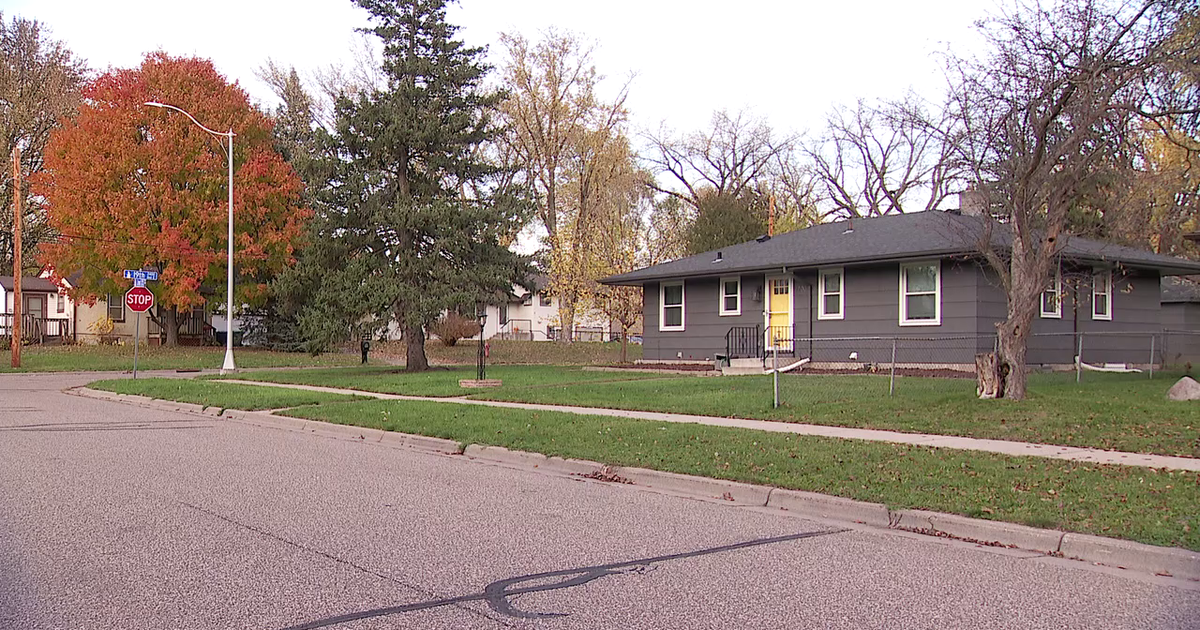
Married Couple Found Dead in North St. Paul Home Investigation
The quiet residential block of 2nd Street North in North St. Paul became the scene of a devastating...