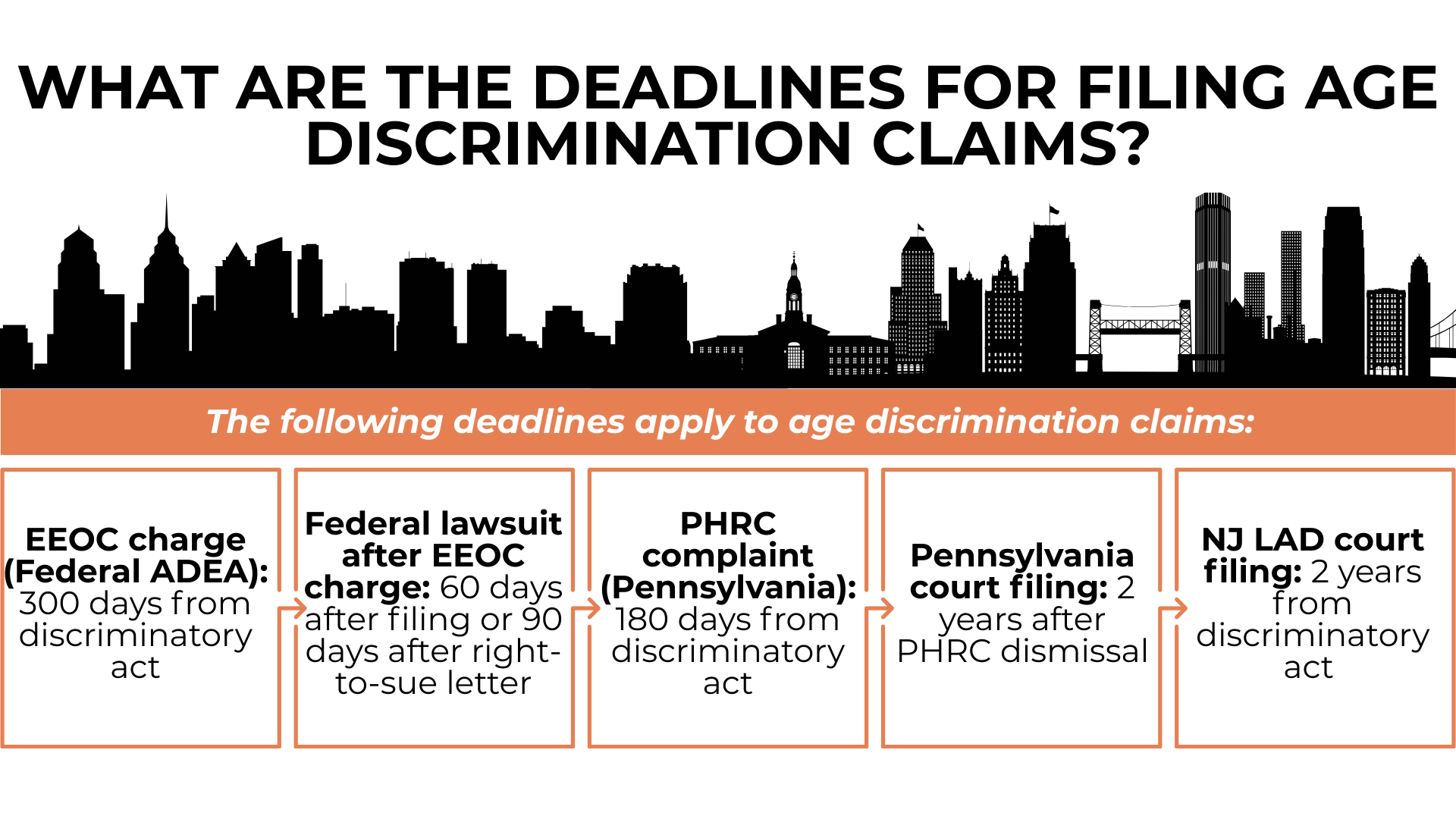
Workers navigating discrimination claims in New Jersey and Pennsylvania face a 300-day filing deadline under federal rules when state or local agencies enforce similar protections, according to guidance detailed by Swartz Swidler. Filing an EEOC complaint, formally known as a charge of discrimination, begins through the EEOC Public Portal or by calling 1-800-669-4000 to start an inquiry.
The timeline requires careful attention because each firing, demotion, or denied promotion starts its own clock. While the standard federal deadline is 180 days, it extends to 300 days in jurisdictions with an enforcing agency, which both New Jersey and Pennsylvania maintain.
Jurisdiction rules across state lines
The EEOC’s Philadelphia District Office handles claims for both states. Federal rules apply the 300-day window to employers with 15 or more workers for race, color, national origin, sex, religion, and disability claims, while age discrimination claims require employers to have 20 or more workers.

| Agency or Forum | Jurisdiction Coverage | Filing Deadline |
|---|---|---|
| EEOC Philadelphia District Office | Employers with 15+ employees (20+ for age) | 300 days |
| New Jersey Division on Civil Rights | Employers of any size | 180 days |
| Pennsylvania Human Relations Commission | Employers with four or more employees | 180 days |
| Philadelphia Commission on Human Relations | Employers in Philadelphia | 300 days |
State deadlines differ from federal parameters. Under the Pennsylvania Human Relations Act, workers generally must file with the Pennsylvania Human Relations Commission within 180 days. In New Jersey, the Division on Civil Rights enforces a 180-day limit, though workers may alternatively file a lawsuit in New Jersey Superior Court within two years without using an agency route.
Claimants gather records EEOC notifies employer
Initiating a charge requires gathering personal information, employer details, dates of the incidents, and supporting records such as emails, texts, or pay documents. Following an online inquiry or phone contact via the EEOC, claimants complete an interview and review the charge for accuracy before signing.
The EEOC notifies the employer within 10 days of receiving a signed charge. The agency often offers voluntary mediation before initiating a formal investigation, which takes approximately 10 months on average according to agency data.
Federal law prohibits employers from retaliating against workers who file charges or participate in investigations. Claimants who receive a Notice of Right to Sue from the EEOC have 90 days to file a lawsuit in court.
Worth a look

Wade Ties Career-High 23 as Slippery Rock Women Beat West Virginia State 80-65
The Slippery Rock University women's basketball team secured an 80-65 victory over West Virginia State University on Wednesday...

West Virginia Bronze Plaque Guide: Cemetery Rules, State Laws, and Pricing
Navigating cemetery regulations for bronze plaques in West Virginia often requires families to piece together disparate local rulebooks,...

UVM Extension Geographer Helps Windham Aging Housing Strategy Through Collaboration
"We're trying to come up with new ways of doing things that are not the same ways we've...

Storm Drops 18-19 Inches in Utah Mountains, First Measurable Snow in Salt Lake City
A fast-moving storm dropped 18 to 19 inches of snow at Alta Ski Area and Snowbird Resort and...