Eight Wins Before Sunrise
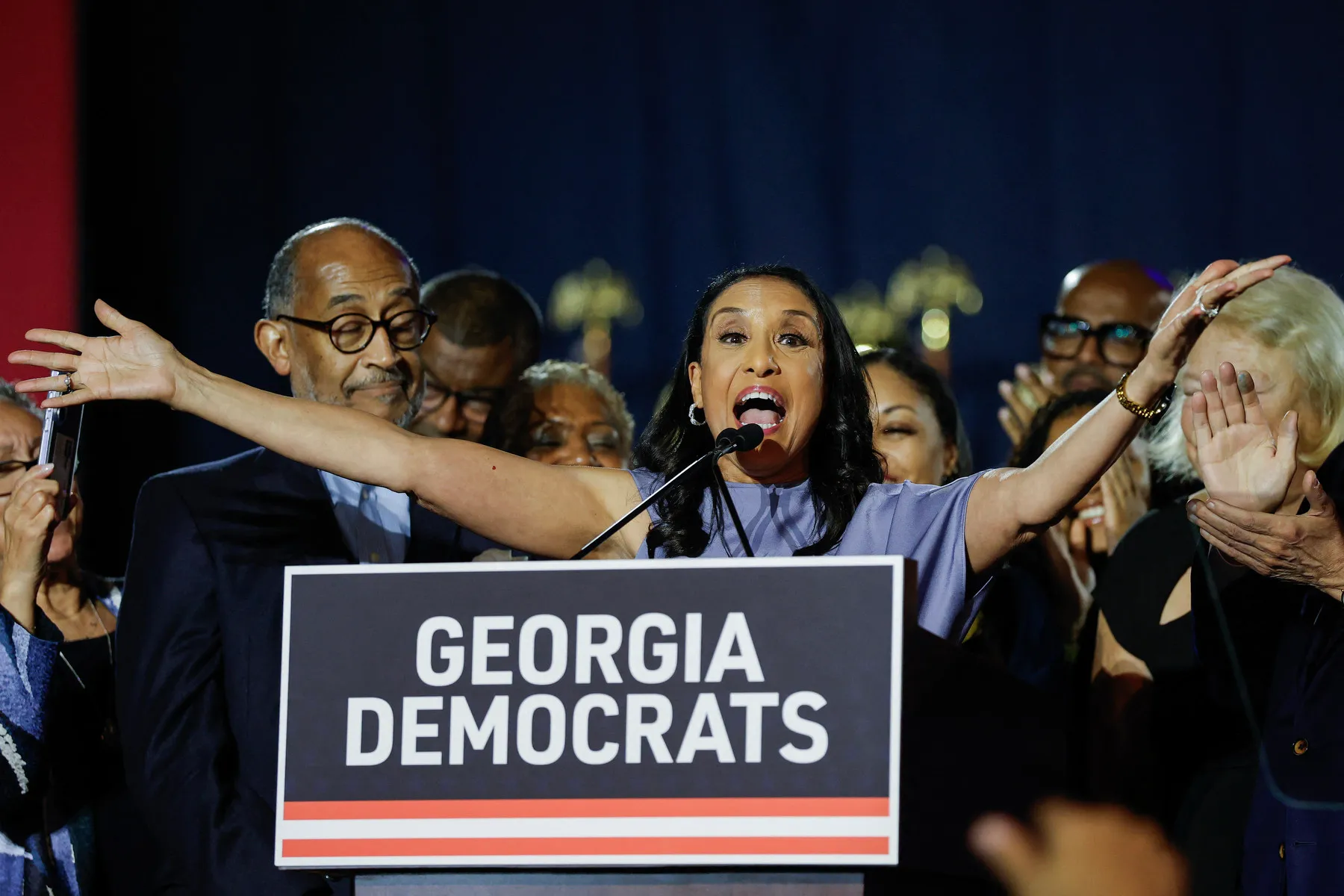
At 7:20 a.m. on Wednesday morning, Penny Brown Reynolds still hadn’t been to bed. The night before, she had been declared the winner of Georgia’s secretary of state race — the first Black person, and the first Black woman, ever elected to that office in state history.
Democrats took all 10 statewide races. Every one of the eight Black women on the ballot prevailed. The sweep ran from the governor’s mansion down to the school superintendent’s office, landing in a state once defined by segregation and Jim Crow.
The New Slate in Atlanta
Keisha Lance Bottoms will become the first Black woman governor in U.S. history. Penny Brown Reynolds will oversee the state’s elections as secretary of state. Tanya Miller won the attorney general’s race. The rest of the slate: Katherine Juhan-Arnold for agriculture commissioner, Keisha Waites for insurance commissioner, Nikki Porcher for labor commissioner, Sheila Edwards for public service commissioner, and Lydia Powell for state school superintendent. All are Democrats. Two White men running as Democrats — Sen. Jon Ossoff and Josh McLaurin for lieutenant governor — also won.
“Georgia Chose Competence”
Brown Reynolds framed the night as a referendum on capability. “Georgia chose competence,” she said. She noted that all eight women ran against White men, and voters still made their choice.
“We were not selected because we were Black women,” she said. “I believe that we were selected because all of us bring something that Georgia desperately needs.” More than 400,000 votes carried her to victory, she said, from a coalition that crossed racial, ethnic, and party lines.
Abortion, Elections, and a “Seismic” Ripple
“These wins are going to have an incredible impact for the people of Georgia right now, but they are also going to have a ripple impact in truly seismic ways for years to come.”
— Jessica Mackler, president of EMILY’s List, which supports women candidates nationwide
Mackler said the results showed voters wanted candidates whose lived experiences mirrored their own. The wins by Miller and Brown Reynolds carry concrete stakes for Georgians: they will shape the availability of abortion in the state and the rules governing elections.
Miller, in her victory speech, drew on her courtroom record. “I have stood in courtrooms alongside families experiencing unspeakable tragedy,” she said. “I have prosecuted violent crimes and fought for victims whose voices deserve to be heard.” She called herself a working-class kid raised by a hard-working mother who learned early that the world might not always be fair.

Black Women Drive Historic Georgia Gains
The Georgia results were part of a broader blue wave Tuesday night. Black women also won congressional seats in the state — Jasmine Clark in the 13th District, Nikema Williams in the 5th, and Lucy McBath in the 6th — and that Democrats flipped the Georgia House.
“For 250 years, Black women have helped build this democracy while being denied our rightful place in its leadership. This victory belongs to generations of Black women who registered our neighbors, organized our churches, mobilized our families, and refused to surrender our political power.”
— Nadine Smith, president and CEO of Color Of Change
The sweep also landed amid a Trump administration’s crackdown on diversity, equity, and inclusion programs. Brown Reynolds said her win felt like a direct answer to that narrative. “I won because of competence. I won because of experience,” she said. Voters had the choice to select someone else because the candidates were running against White men. Their ticket was all White men, but voters made the decision.
With the state House now in Democratic hands, Brown Reynolds called it a moment where “they’re allowing the A students to come to the front of the class.”
“There Will Never Be a Time”
Wednesday morning, Brown Reynolds FaceTimed her granddaughter, a junior at Howard University, before catching an early flight back to Washington, D.C. “I said, ‘My darling, my darling — there will never be a time when anybody can stop you from doing anything that you want to be or do.’” It is exactly the kind of message Georgia has rarely sent from its statewide offices — and now, for the first time, it is sending it from eight of them at once.
More on Penny Brown Reynolds

John Maxwell: Simple mortgage tweak could save $3,000 annually
Australian borrowers were bracing for another blow from the Reserve Bank, and they got it. On Melbourne Cup...

Tommy Thompson Says Wisconsin is a blue state after Democratic trifecta
Former Republican Gov. Tommy Thompson isn't mincing words about Tuesday's election results. In an interview with Wisconsin Public...

Wyoming Republicans Sweep Statewide Elections as Eric Barlow Wins Governor
Wyoming voters handed Republicans a clean sweep across the ballot Tuesday, electing state Sen. Eric Barlow as governor,...
Star Gospel Mission to Expand Services for Charleston’s Hope Center
People experiencing homelessness in Charleston are about to get more hours, more locations, and more ways to reach...