For years, a hive-filled reaction in infancy meant a peanut allergy diagnosis that stuck for life.
The stakes reach into nearly every family with a young child. Peanut allergies affect about one in 30 children in Australia, and the country carries one of the highest rates of food allergy in the world, according to Nine.com.au. When a baby reacts to peanuts, the current default pathway often runs from an emergency visit to a positive skin prick or blood test, then to a lifetime of avoidance. But that pathway may be over-labeling a substantial share of infants who never needed the diagnosis in the first place.
A study conducted by the Murdoch Children’s Research Institute and the National Allergy Centre of Excellence, together with 10 paediatric public hospitals throughout Australia, revealed that 35 per cent of infants who had previously reacted to peanut and tested positive on an allergy test showed no reaction during an oral food challenge. Nine.com.au described the broader ADAPT program as testing 1,800 children, with 778 babies exposed to increasing doses of peanut under doctor supervision; of those, 271 showed no signs of any allergy and are now considered not allergic to peanuts.
Clinical Tests Misidentify Peanut Allergy
Kirsten Perrett, director of the National Allergy Centre of Excellence, said the number of children who tolerated peanut during the supervised challenge was surprising.
“These were children that had had a history of reactions when they were introduced to peanuts and they’d had a positive test, be it a skin prick test or a blood test,” Kirsten Perrett told ABC News Breakfast. “Our results show that clinical history and allergy testing alone were not enough to accurately diagnose peanut allergy in many cases. A supervised oral food challenge should be routinely considered to confirm the diagnosis before an infant starts oral immunotherapy.”
The distinction matters because treatment follows diagnosis. The ADAPT Peanut Oral Immunotherapy Program requires infants to undergo a food challenge before beginning a regimen that exposes them to small, daily doses of peanut to build tolerance. Confirming the allergy first prevents children who are not actually allergic from entering a demanding therapy protocol, and it frees families from managing a suspected allergy that does not exist. The findings were published in the Journal of Allergy and Clinical Immunology: In Practice, and the researchers stressed that all tests were conducted in a medically supervised setting.
Lyle Gurrin, a biostatistics professor at the Melbourne School of Public Health who was not involved in the research, said he was not surprised the figure was so high.
“A lot of people think their children are allergic when they’re probably not, so I think this paper is good from that point of view that it’s encouraging people to seek proper advice,” he said. “I’m not surprised that a large proportion of these infants didn’t return a positive result in an oral food challenge.” Melbourne School
Arthur’s Second Chance at Peanuts
The human impact lands in kitchens and school lunchboxes. Victorian couple Leah and Jake introduced their infant son Arthur to peanuts when he was five months old. The response came immediately, his face flushing red and hives breaking out on his shoulders and beneath his nose. Referred to the ADAPT program, Arthur tolerated the supervised oral food challenge, and his allergy diagnosis was removed.

“It’s a huge relief knowing Arthur can tolerate peanut and we can move forward without the uncertainty of managing a suspected allergy,” Leah said. “Having the opportunity to find out he could tolerate peanuts has made a real difference to our family.”
Michael Bonning, president of the Australian Medical Association, told the Today Show that the trial works by re-challenging children to ascertain whether it is truly a peanut allergy or whether they have become tolerant. He said Australia’s high rate of diagnosed allergies reflects a cautious system rather than failed testing.
“As parents, we are cautious, in the medical profession, we want to make sure children aren’t put at risk. In that setting, we are often willing just to label children with a peanut allergy if they’ve had a reaction,” Michael Bonning said.
The Limits of the GP Surgery
The research does not mean diagnosis becomes simple in a family doctor’s office. Lyle Gurrin cautioned that oral food challenges still need appropriate clinical conditions. “You can’t really do that in a GP surgery or a child maternal health clinic,” he said, explaining that staff need the material and broader understanding to assist a child who is having a reaction, whether mild or right through to anaphylaxis.
Kirsten Perrett urged parents against attempting an oral food challenge at home, noting that 12 per cent of infants with a peanut allergy experienced a potentially life-threatening anaphylactic reaction during the procedure. The National Allergy Centre of Excellence is hoping to expand the ADAPT program to cover cashew allergy, which is almost as prevalent as peanut allergy.
With one in 30 Australian children diagnosed with peanut allergy and more than a third of suspected infant cases potentially reversible under supervision, the study suggests the healthcare system may be carrying a heavy burden of uncertainty that structured challenges could resolve.
- Mantle Currents May Explain the Grand Canyon’s Missing History
- Plant-Based Dairy Swaps Could Lead to Vital Nutrient Deficiencies, Study Warns
- Three years of imprisonment were requested by prosecutor Rossella Salvati on Wednesday, November 4 (world-today-news.com)
- ICJ's Myanmar Judgment Nov. 19: Three Outcomes and What Each Would Order (daybreakwire.com)
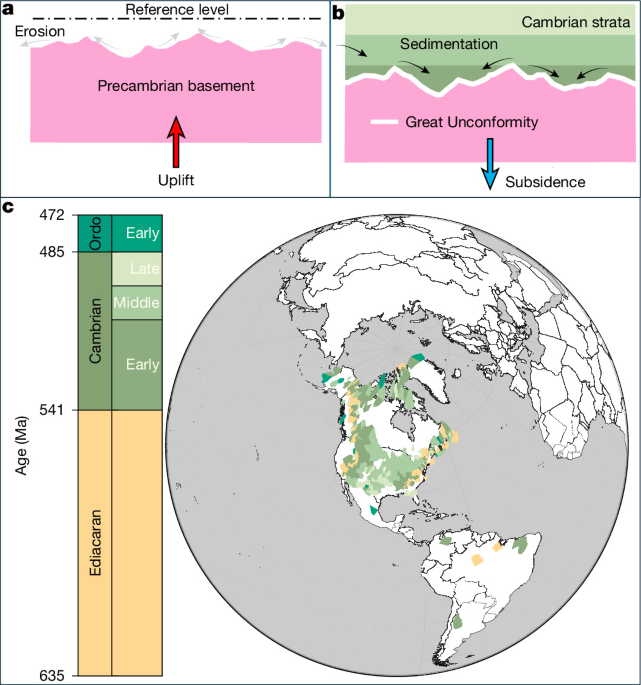
Mantle Currents May Explain the Grand Canyon’s Missing History
At the Grand Canyon, Cambrian sandstone about 540 million years old sits directly on crystalline basement up to...

Plant-Based Dairy Swaps Could Lead to Vital Nutrient Deficiencies, Study Warns
"There are known health effects of iodine deficiency and that's why we want to raise awareness of this,"...

108-Year-Old Theologian and NZ’s Oldest Man Sir Lloyd Geering Dies
Sir Lloyd Geering, the theologian who became the only man in New Zealand to stand trial for anti-Christian...

Sonic Racing: CrossWorlds datamine hints at potential Year 2 characters, unconfirmed by SEGA
A datamine of Sonic Racing: CrossWorlds' Version 2.0.0 files has turned up potential Year Two characters: Cloud Strife...