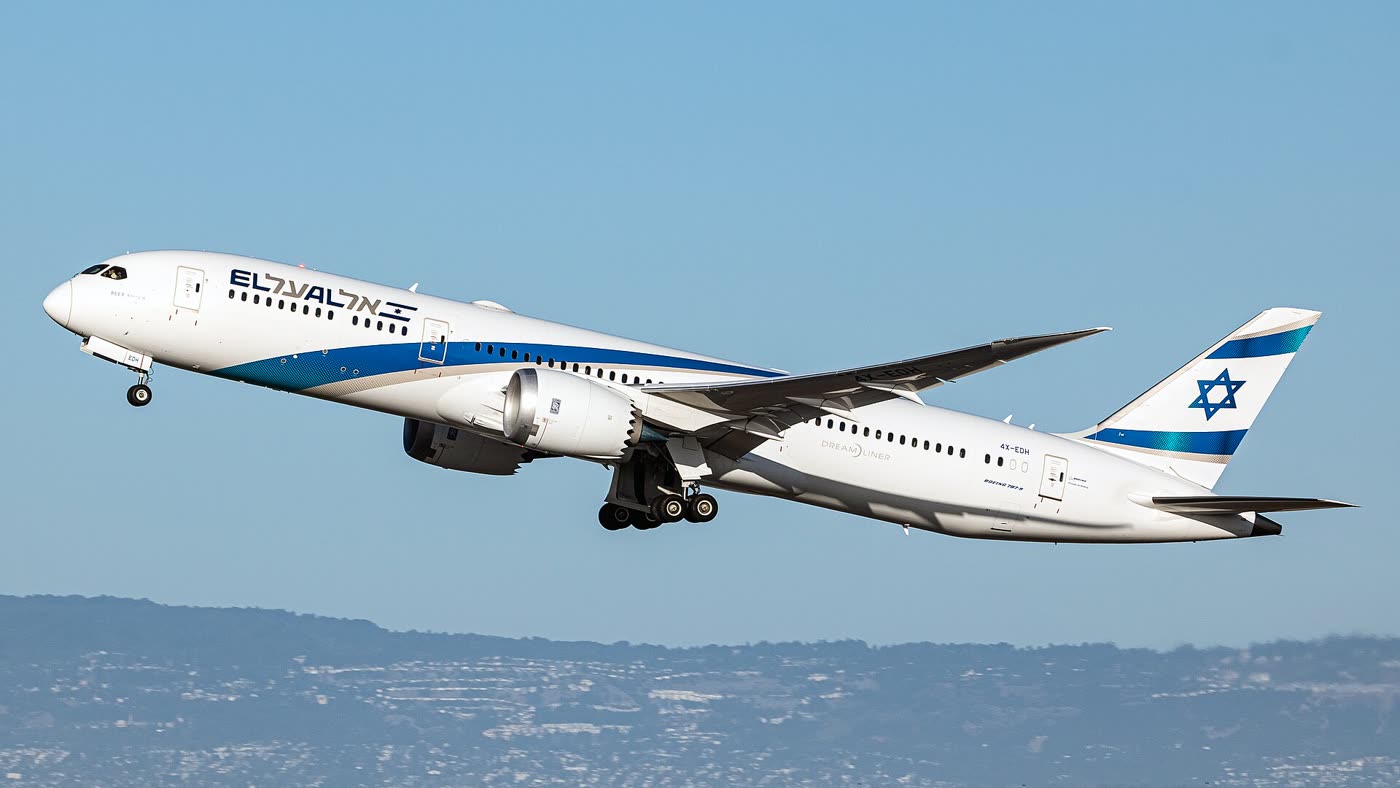
For travelers tracking the pulse of transatlantic transit, the landscape between Israel and the Americas is about to get significantly more crowded. El Al announced on Wednesday that it will launch its largest summer schedule in history, operating 63 weekly flights between Ben Gurion Airport and six metropolitan areas across the Americas. Starting in late March 2027, the airline expects to move roughly 35,000 passengers per week, a massive expansion that reflects both a surge in demand and a strategic tightening of the carrier’s grip on the North American market.
As YeahThatsKosher reported, this expansion covers seven major airports, with the New York metropolitan area serving as the primary engine of this growth. El Al is ramping up its presence at John F. Kennedy International Airport and Newark Liberty International Airport, jumping from 27 to 36 weekly flights. On peak days, travelers can expect as many as seven daily departures between Israel and the New York area.
Growing Footprints in Miami, Los Angeles, and Beyond
The expansion isn’t limited to the Northeast. Both Miami and Los Angeles are set to receive two and one additional weekly flights, respectively, bringing each city to nine weekly services. Boston is also seeing a modest but notable uptick, moving from three to four weekly flights. The Jerusalem Post notes that these additions are part of a deliberate push to strengthen the airline’s connection with Jewish and Israeli communities across the region, while simultaneously capturing the growing volume of business and leisure travel.
Perhaps the most interesting movement involves the West Coast and South America. San Francisco will maintain three weekly flights, marking the first time the route will operate through the summer season since its relaunch in late October. This move sets the stage for a competitive spring, as United Airlines is also slated to resume its own San Francisco-to-Tel Aviv service in March 2027. Meanwhile, the airline’s longest route—the service to Buenos Aires—will also run through the summer for the first time, maintaining its two-weekly frequency.
Fleet Upgrades and the Cabin Experience
Every flight under this new schedule is slated to operate on a Boeing 787 Dreamliner. The airline currently maintains a fleet of 17 such aircraft and has firm orders for 11 more, with deliveries arriving as recently as this month. These aircraft will feature the service upgrades introduced just this November, ranging from refreshed menus and amenity kits to updated sleep products.
For passengers, the logistical shifts go beyond just raw flight numbers. El Al is currently considering a move from its existing space at JFK’s Terminal 4 to the New Terminal One, which is currently under construction. The airline is also actively evaluating the re-establishment of King David Lounges in key hubs, including New York, Newark, Paris, London, and Bangkok—a reversal of the consolidation trend that saw the carrier shutter its London lounge in 2019 and its JFK and Paris locations in 2022.
Economic Stakes and Premium Flexibility
The decision to expand during a period of high global travel uncertainty highlights the airline’s bet on sustained demand. By introducing “flex fares” for premium and business classes—which include free changes and reduced-fee refunds—El Al is signaling a desire to capture the high-end traveler who prioritizes agility. Notably, the airline has explicitly stated that it is not considering “basic” or “lite” fares for its US routes, a move that keeps its product positioning firmly in the premium-service category.
Operational efficiency is also getting a digital overhaul. Starting next year, the fleet will begin a rollout of free Starlink WiFi. Additionally, the airline is developing a new app feature intended to manage overbooking more gracefully by allowing passengers to volunteer for compensation. Shlomi Zafrani, El Al’s vice president of commerce and sales, emphasized the strategic importance of these moves, telling reporters that the airline continues to invest heavily in the American market to provide the most comprehensive schedule it has ever offered.

“We continue to invest in the American market and introduce significant additions that make up the broadest summer schedule El Al has ever operated to the Americas,” said Shlomi Zafrani, the airline’s vice president of commerce and sales.
As the airline looks toward 2030, the horizon includes the potential debut of a next-generation business class seat, expected to arrive alongside the delivery of the larger 787-10 aircraft. For now, the focus remains on the rapid scale-up for late March. With tickets for the added flights and the Sukkos 2027 season heading to market later this week, the coming months will reveal whether the market can absorb this record-breaking capacity as effectively as the airline anticipates.
Keep reading

Meghan Markle’s Estranged Father Thomas Markle Sr. Arrested in Florida on Child Pornography Charges
Federal Agents Arrest Thomas Markle in Florida Thomas Markle Sr., the 82-year-old father of the Duchess of Sussex,...

Mumbai High-Rise Fire in Ghatkopar East: Three Injured as Blaze Hits 23rd Floor
Fire at Ghatkopar High-Rise Triggers Safety Concerns During Festive Season A Friday night turned chaotic in Mumbai’s Ghatkopar...

Mary Ebert argues U.S. healthcare system has systemic inefficiencies
The Rising Disconnect Between Healthcare Spending and Access In a recent column for InForum, Mary Ebert, a resident...

Witnesses describe Scarlett Faulkner assault at murder trial
The Scene at Birdhill: A Trial Unfolds On the afternoon of March 21, 2026, motorists driving near the...