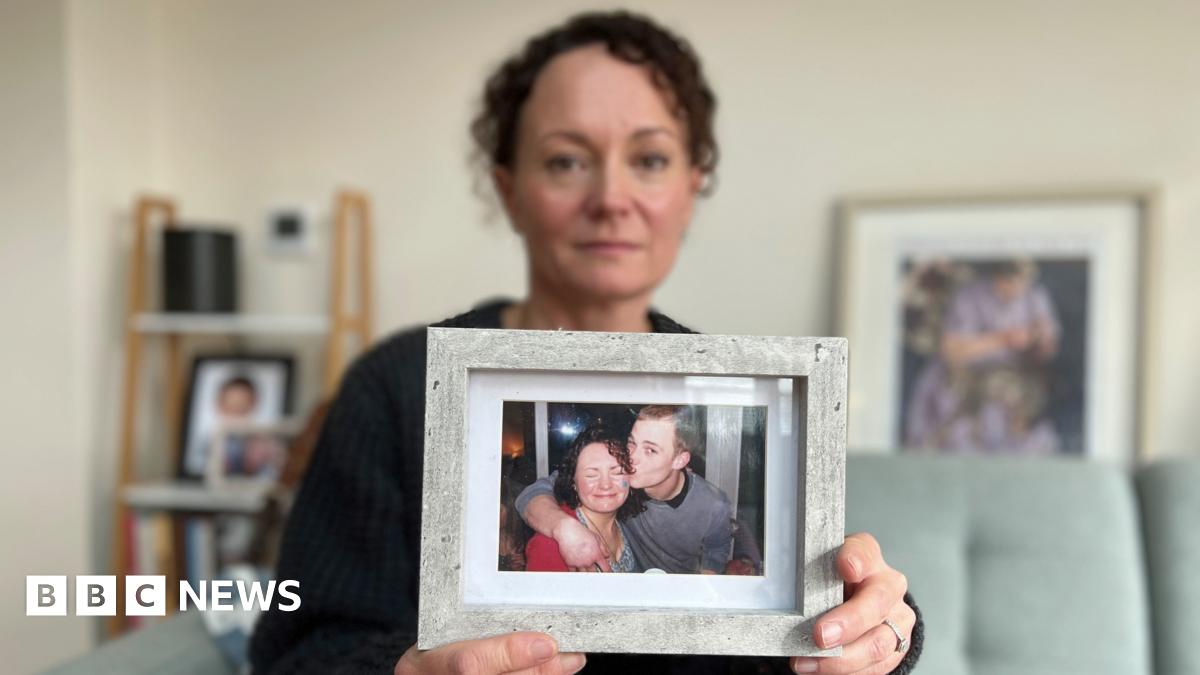
The mother of a 26-year-old woman who died by suicide after years of involvement with mental health services has testified to a public inquiry that her daughter was “lost to the system.” Lisa Wolff provided evidence at the Lampard Inquiry, which is investigating the deaths of more than 2,000 people under the care of Essex mental health services over a 24-year period.
The inquiry, chaired by Baroness Kate Lampard, is scrutinizing the Essex Partnership University NHS Foundation Trust (EPUT), as well as the care of Essex patients in private facilities.
Failures in Autism Care and Patient Safety
Lisa Wolff told the inquiry that her daughter, Abbigail Smith, was treated “through a very narrow lens” and that staff failed to take her autism seriously. Despite two formal diagnoses, healthcare professionals repeatedly dismissed the condition, with Wolff reporting that she was accused of fabricating the diagnosis.
Abbigail Smith, who was moved between units more than 10 times between the ages of 17 and 26, eventually died by suicide in February 2022, just 36 hours after being discharged. The inquiry heard there was “no plan to mitigate the real and immediate risk” regarding her discharge, a situation described as “a gross failure.”
Similar systemic failures were highlighted in the case of 16-year-old Elise Sebastian, who died in April 2021 after attempting suicide while a patient at the St Aubyn Centre in Colchester. An inquest and a subsequent “future deaths” report by coroner Sonia Hayes found that Sebastian’s death could have been prevented. Findings revealed:
* Staff were inexperienced, with the majority being new bank and agency staff.
* Observation records were falsified to suggest constant supervision while the patient was left alone.
* The Oxevision remote monitoring system, intended to assist with safety, was ineffective due to technical issues and staff muting alerts.
* Staffing levels were insufficient to meet the required observation frequencies, which in one instance would have required 66 checks in a single hour.
Technological and Administrative Deficiencies
The use of digital monitoring systems like Oxevision has faced scrutiny at the inquiry. During testimony, it was noted that the system was muted by staff in the case of Elise Sebastian, leaving her unobserved for 28 minutes. Concerns were raised regarding “alarm fatigue,” where staff may ignore or disable alerts.
While EPUT representatives have argued that digital transitions are in the best interests of patients, they acknowledged that existing mechanisms failed to ensure staff adherence to safety policies.
The inquiry’s own terms of reference put those cases inside a wider review of deaths under NHS mental-health care in Essex between 1 January 2000 and 31 December 2023. They also allow Baroness Lampard to examine staffing, training, ward safety, leadership culture, investigations and the way families were involved after deaths, which is why the testimony is being treated as evidence of possible system-wide failure rather than only a set of individual tragedies.
Leadership Transitions and Trust Accountability
The EPUT leadership has undergone significant changes during the inquiry. Paul Scott stepped down as chief executive in June, a move that drew sharp criticism from families of the bereaved, who described the timing as “cowardly” and a “disgrace.”
Trevor Smith and Alex Green have assumed interim leadership of the trust. Loy Lobo, acting chairman of the EPUT board, stated that the organization remains “absolutely committed” to supporting the Lampard Inquiry. EPUT has issued formal apologies to the families of Abbigail Smith and Elise Sebastian, with officials stating that the trust must work to improve the integration of mental and physical health care.
The Scope of the Lampard Inquiry
The Lampard Inquiry, which received statutory footing in 2023, is focused on a 24-year timeframe. It has the legal power to compel witnesses to give evidence, a significant step following previous investigations where participation from staff was limited.
Baroness Lampard, a former barrister who previously oversaw NHS investigations into abuse by Jimmy Savile, is tasked with providing answers to families who have long sought accountability. For families like the Sebastians and the Smiths, the inquiry serves as a final attempt to ensure that systemic failures are documented and addressed to prevent future tragedies.
“I can only hope that learning is taken forward from this because we can’t allow another Abbi Smith situation to happen,” Lisa Wolff told the inquiry. “This is so outrageously unjust that nobody else should ever have to be subject to what Abbi went through.”
Find more reporting in our News section.
Related reading

US Evacuates B-1 Bombers From UK Base Over Suspected Iranian Plot
The United States evacuated a dozen long-range B-1 bombers from RAF Fairford in the United Kingdom following security...

Singapore Authorities Catch 67 Travellers for Border-Related Offences
During a week-long border operation from September 22 to 28, Singapore authorities checked nearly 13,000 travellers and detected...

Robert De Niro Slams Trump and Republicans Over Voting Access
Actor Robert De Niro delivered a profanity-laced speech at an election-protection event in New York City on October...

Flávio Bolsonaro Edges Lula in Brazil Election First Round
Thomas Caldwell With 97 percent of ballots counted, Flávio Bolsonaro led with 47.45 percent of valid votes compared...